
Mercedes-Benz 300 SL: The Birth of a Motoring Legend.
The Mercedes-Benz 300 SL combined innovative engineering, iconic gullwing doors, and motorsport success to become one of the most celebrated collector cars ever built.

Some automobiles become successful because they are fast. Others earn admiration through beautiful design or technical innovation. Only a select few manage to achieve all three while leaving a lasting influence on automotive history. The Mercedes-Benz 300 SL belongs firmly in that rare category. More than seventy years after its introduction, it continues to be recognised as one of the most important sports cars ever built, admired by collectors, historians, and enthusiasts across the world.
When the 300 SL made its public debut in 1954, it represented something remarkably different from its contemporaries. Inspired by Mercedes-Benz's successful racing programme, it introduced advanced engineering, distinctive styling, and performance levels that were extraordinary for its era. Rather than creating a luxury grand tourer alone, Mercedes-Benz produced a road car that carried genuine motorsport DNA while remaining refined enough for everyday driving.
Today, the 300 SL is celebrated not only for its iconic Gullwing doors but also for the engineering philosophy that shaped generations of sports cars. It demonstrated that innovation, craftsmanship, and performance could coexist within a single automobile, setting new standards that continue to influence automotive design decades later.

Born from the Race Track
The origins of the 300 SL can be traced directly to motorsport. During the early 1950s, Mercedes-Benz returned to international racing with the W194 competition car, achieving impressive victories in events such as the 24 Hours of Le Mans and the Carrera Panamericana. Rather than treating these successes as isolated achievements, the company recognised an opportunity to create a production sports car inspired by its racing experience.
Many engineering principles developed for the W194 carried over into the road-going 300 SL. Lightweight construction, aerodynamic efficiency, and high-performance mechanical components became central to the project, allowing the production model to deliver capabilities rarely seen in road cars of its time.
This close relationship between competition and production gave the 300 SL a level of authenticity that distinguished it from many rivals. It was not designed merely to resemble a racing car—it was developed using genuine engineering knowledge gained through international competition.
For enthusiasts, this connection remains one of the model's greatest strengths. Every journey behind the wheel reflects an era when motorsport served as the foundation for automotive innovation.
The Story Behind the Gullwing Doors
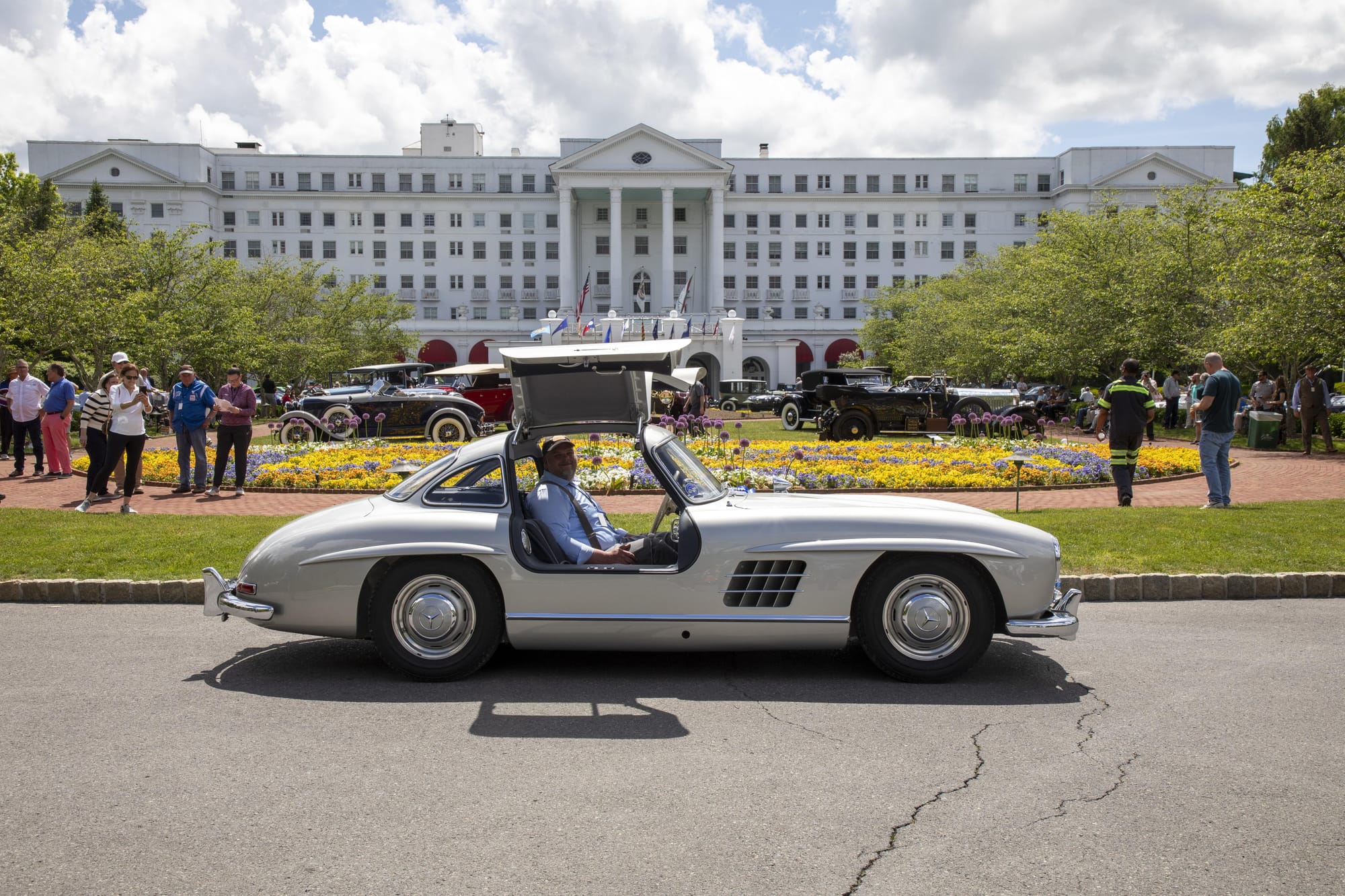
Although the Gullwing doors became the car's defining visual feature, they were never intended as a styling exercise. Their unusual design was the direct result of engineering necessity.
The 300 SL utilised an advanced tubular spaceframe chassis that delivered exceptional rigidity while remaining remarkably lightweight. However, the high structural side sections made conventional doors impractical. Mercedes-Benz engineers therefore developed roof-hinged doors that allowed occupants to enter and exit the cabin without compromising the strength of the chassis.
What began as a practical engineering solution quickly became one of the most recognisable design features in automotive history. Opening upward rather than outward, the Gullwing doors transformed every arrival into a memorable occasion while reinforcing the car's distinctive identity.
Few design elements have achieved such lasting influence. Decades later, the silhouette of an open Gullwing door remains instantly associated with the Mercedes-Benz 300 SL, proving that the most iconic designs often emerge from functional engineering rather than stylistic experimentation.
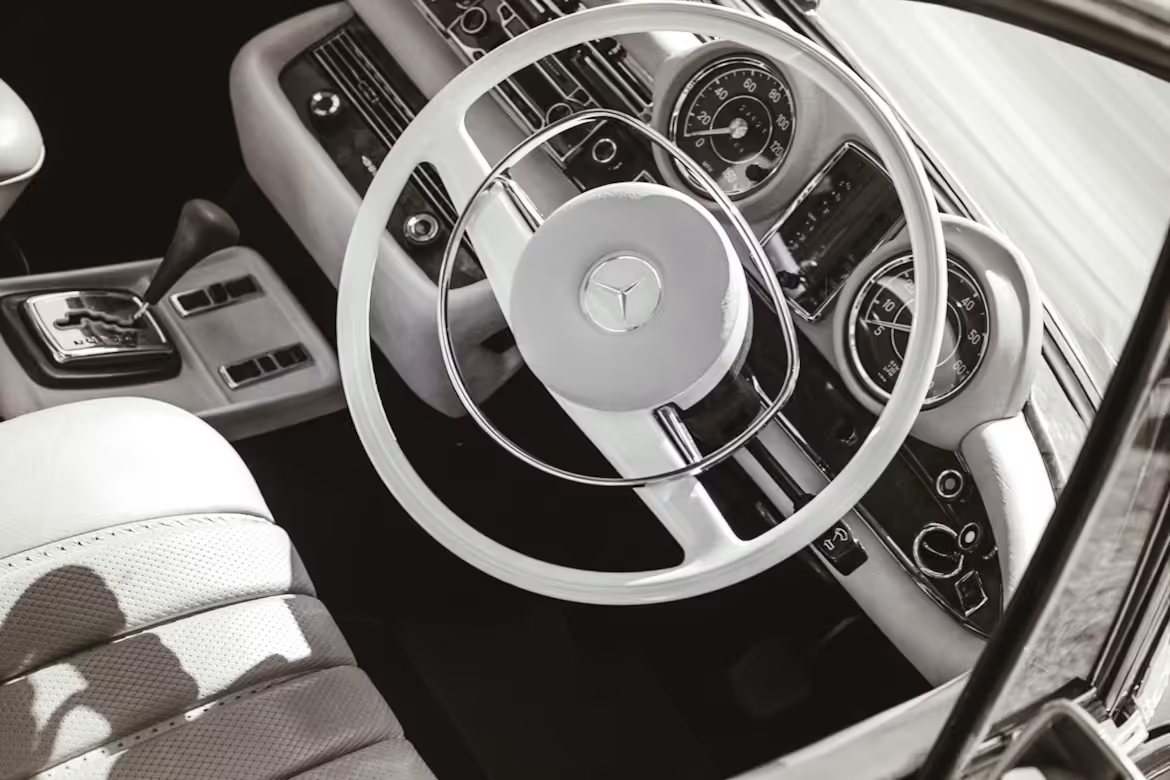
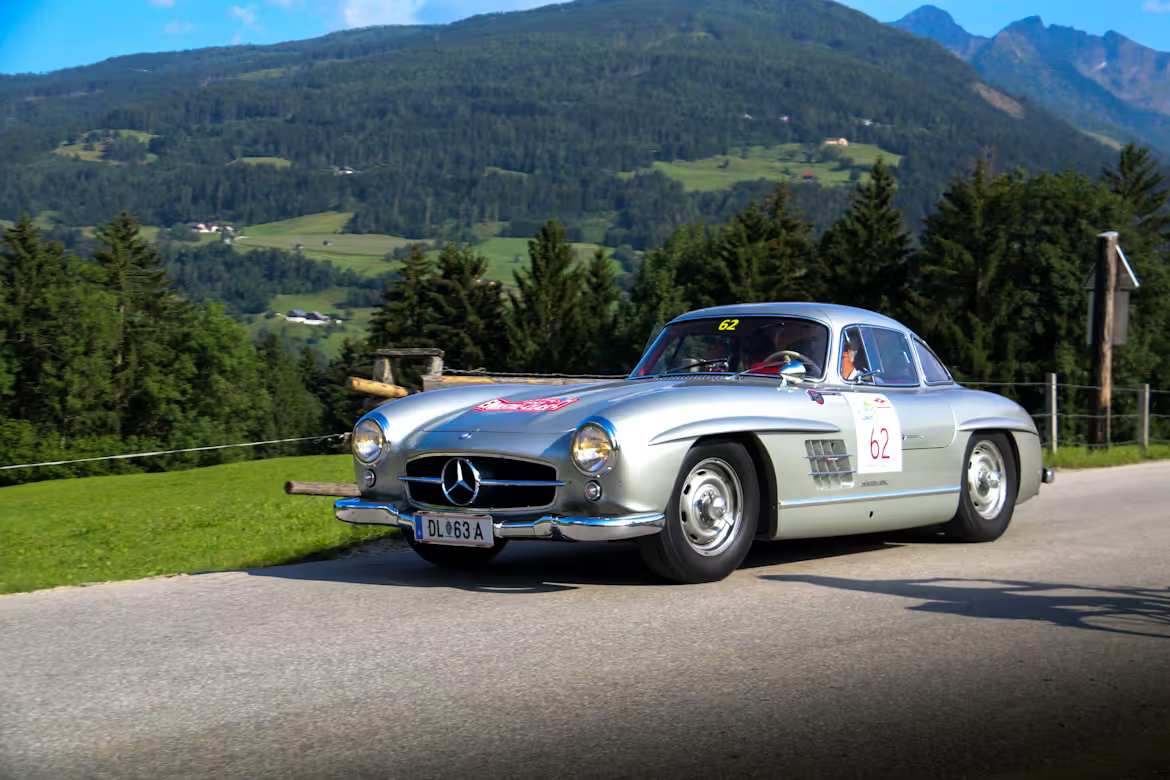
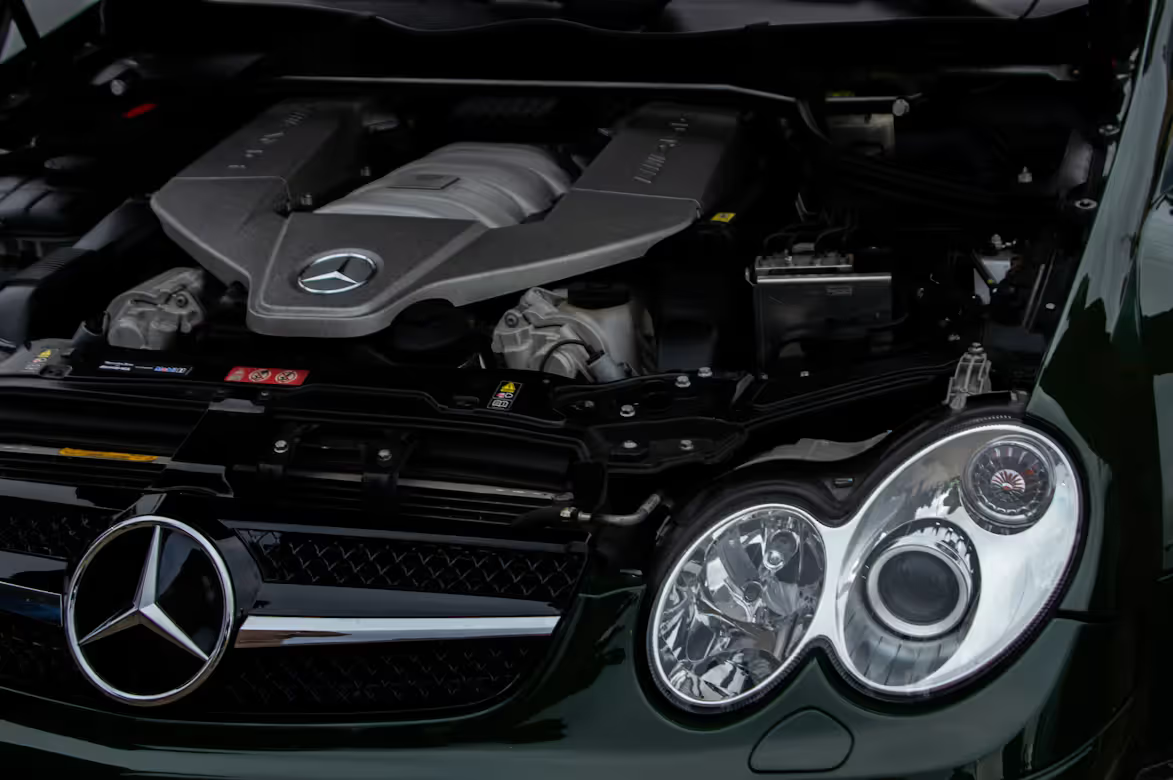
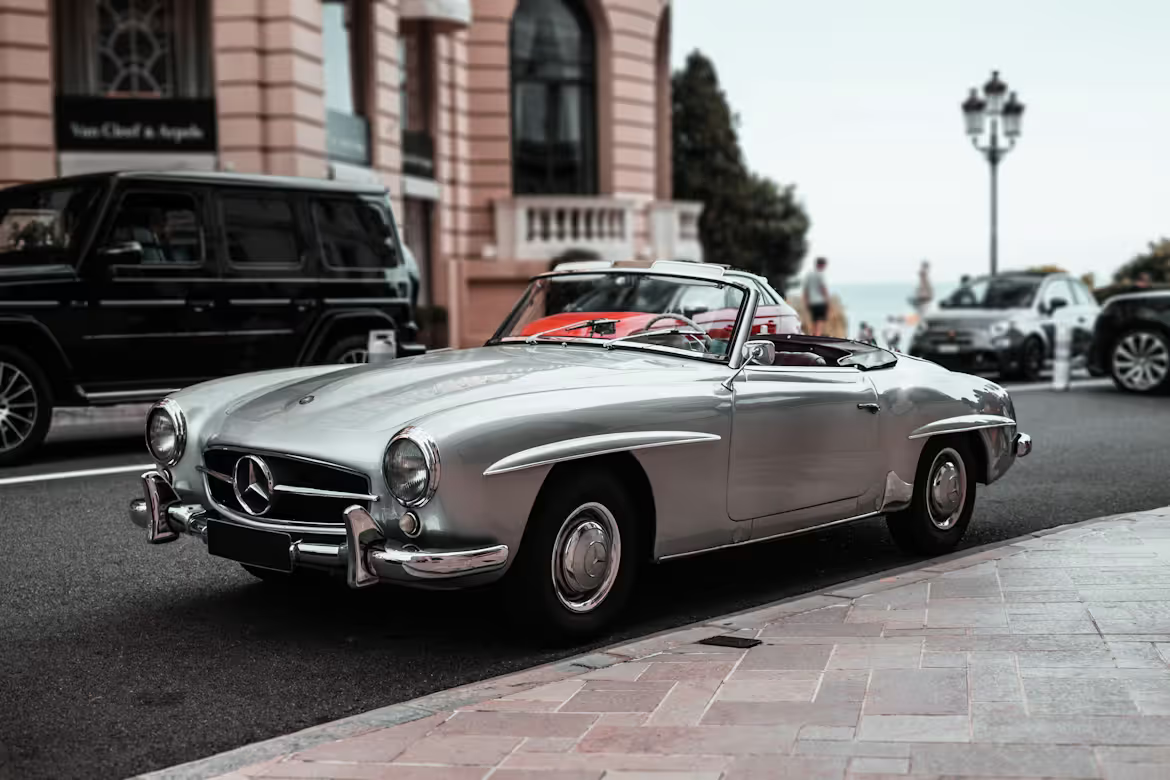
A Technological Breakthrough Ahead of Its Time
The Mercedes-Benz 300 SL was more than a beautifully engineered sports car—it introduced technology that fundamentally changed expectations for performance automobiles. One of its most remarkable achievements was becoming the first production car equipped with mechanical fuel injection, replacing the carburettor systems commonly used during the 1950s.
This innovation allowed the engine to deliver power more efficiently while improving throttle response and overall performance. At a time when many manufacturers were still relying on conventional engineering solutions, Mercedes-Benz demonstrated that advanced technology could provide meaningful advantages on both the road and the racetrack.
The 3.0-litre inline-six engine produced impressive performance for its era, enabling the 300 SL to achieve speeds that placed it among the fastest production cars in the world. More importantly, it proved that engineering innovation could coexist with refinement, creating a sports car that felt equally capable on long-distance journeys and spirited drives.
Rather than chasing performance through larger engines alone, Mercedes-Benz focused on efficiency, lightweight construction, and intelligent engineering—a philosophy that continues to influence performance car development today.
"The Mercedes-Benz 300 SL proved that true innovation isn't always visible—it is felt every time the driver turns the key."
A Collector's Dream Across Generations
Few collector cars have maintained the universal admiration enjoyed by the 300 SL. Decades after production ended, it continues to command attention at concours events, international auctions, and private collections around the world.
Part of its appeal lies in rarity, but rarity alone does not create an icon. Collectors value the 300 SL because it represents a defining moment in automotive history—a car that introduced groundbreaking engineering while remaining exceptionally elegant and enjoyable to drive.
Its timeless design has also contributed to its enduring desirability. Unlike many automobiles that clearly reflect the era in which they were built, the 300 SL possesses proportions and detailing that remain sophisticated even by modern standards. The long bonnet, compact cabin, flowing roofline, and unmistakable Gullwing doors continue to inspire admiration more than seventy years after their debut.
For many enthusiasts, owning a 300 SL means preserving an important chapter of automotive history rather than simply acquiring a valuable classic.
An Influence That Still Shapes Modern Sports Cars
Although the automotive industry has changed dramatically since the 1950s, many principles demonstrated by the 300 SL remain central to sports car engineering today. Lightweight construction, aerodynamic efficiency, fuel injection technology, and racing-inspired development have become standard practices among leading performance manufacturers.
The 300 SL also demonstrated that engineering and design should evolve together. Its Gullwing doors were born from structural necessity, proving that practical engineering solutions could become defining design features. This philosophy continues to influence manufacturers seeking to combine technical innovation with timeless aesthetics.
Beyond engineering, the 300 SL helped establish the idea that a high-performance automobile could also be beautifully crafted and comfortable enough for long-distance touring. That balance between performance, refinement, and usability remains one of the defining characteristics of many modern grand tourers and sports cars.
Its legacy therefore extends far beyond Mercedes-Benz. It influenced an entire generation of automotive thinking.
More Than a Classic Car
The Mercedes-Benz 300 SL occupies a unique place within automotive history because it appeals to enthusiasts for many different reasons. Engineers admire its innovative construction, designers appreciate its timeless proportions, historians value its motorsport heritage, and collectors recognise its extraordinary significance.
Unlike many classics that are remembered primarily through nostalgia, the 300 SL continues to earn admiration because its achievements remain genuinely impressive. Its engineering was revolutionary, its appearance remains elegant, and its influence can still be seen in modern performance cars.
Very few automobiles manage to combine historical importance with lasting desirability so successfully. The 300 SL is one of those rare exceptions.
Conclusion
The Mercedes-Benz 300 SL was never simply another sports car. It represented a bold vision of what performance, innovation, and craftsmanship could achieve when developed together without compromise.
From its race-inspired engineering and pioneering fuel injection system to its unforgettable Gullwing doors, every aspect of the 300 SL reflected a commitment to progress. More than seventy years later, those achievements continue to inspire manufacturers, collectors, and enthusiasts alike.
Its enduring reputation reminds us that the greatest automobiles are not remembered solely for their performance figures. They are remembered for the ideas they introduced, the standards they established, and the generations they continue to inspire. The Mercedes-Benz 300 SL remains one of those extraordinary automobiles—a true motoring legend whose influence extends far beyond its own era.
Discover the automobiles that shaped history through groundbreaking engineering, timeless design, and enduring craftsmanship.
About the Writer

Isabelle Fontaine
Automotive Heritage Editor covering collector cars, automotive history, concours events, and the iconic vehicles that continue to influence generations of enthusiasts.
Discussion
More from this issue.
The Craft of Automotive Interiors.
An automobile's interior is where design becomes an experience, combining materials, ergonomics, craftsmanship, and atmosphere in a space built around the driver.
 Genevieve Laurent

Why the Porsche 911 Remains a Timeless Sports Car Icon.
For more than six decades, the Porsche 911 has balanced heritage, innovation, and everyday usability to become one of the world's most respected sports cars.
 Isabelle Fontaine

The Enduring Passion Behind Automotive Enthusiasm.
Automotive enthusiasm extends far beyond horsepower and performance. It is built on memories, craftsmanship, community, and the emotional connection people share with extraordinary automobiles.
 Theme Anax
· Printed in pixels, with care.