
The Future of Electric Grand Touring: Can EVs Make the Journey Better?.
Electric grand tourers are redefining long-distance travel with silent performance, sophisticated technology, and a new interpretation of automotive luxury.

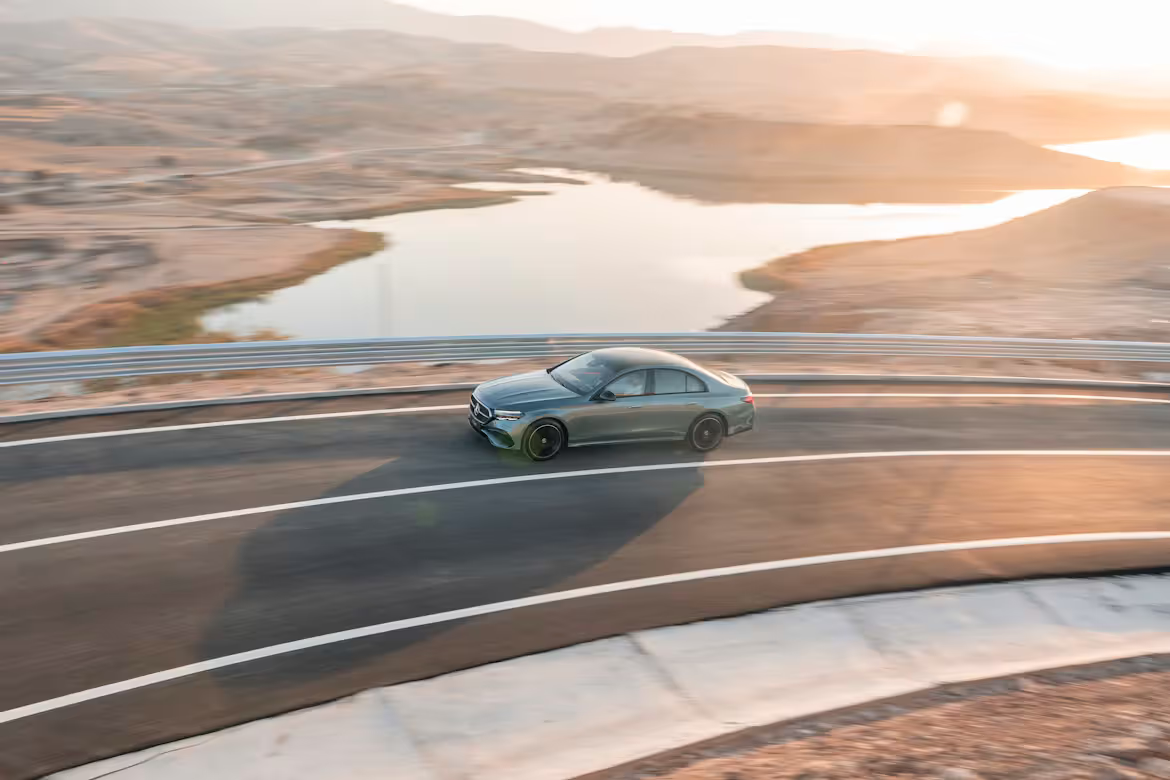
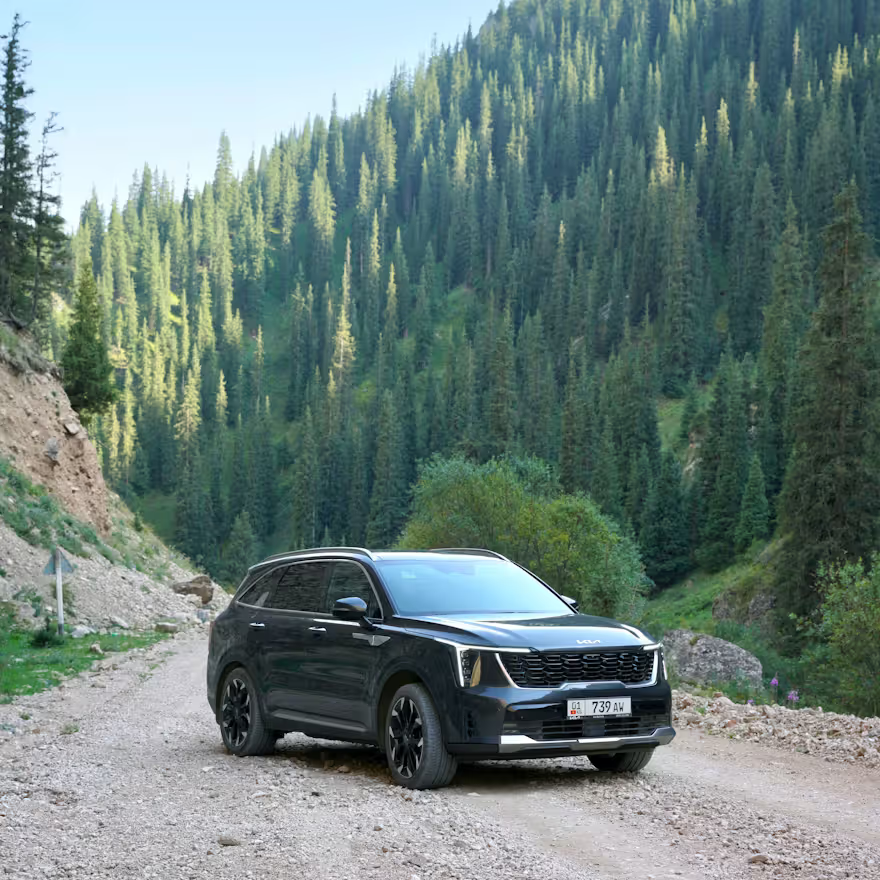
Grand touring has always been about more than covering distance. It is the art of making the journey itself worth remembering. For decades, the finest GT cars have combined effortless performance, refined interiors, sophisticated design, and the ability to cross hundreds of kilometres without demanding too much from their occupants.
Electrification is now introducing a new interpretation of that philosophy.
Electric vehicles bring qualities that naturally complement grand touring. Their power delivery is exceptionally smooth, cabin noise can be remarkably low, and instant torque makes effortless acceleration possible without requiring an engine to build revs. These characteristics create a relaxed driving experience that feels fundamentally different from traditional combustion-powered grand tourers.
Yet electric grand touring also presents challenges. Long-distance travel depends heavily on charging infrastructure, battery efficiency, thermal management, and careful energy planning. The experience must therefore evolve alongside the technology.
The question is no longer whether electric cars can be fast enough for grand touring. It is whether they can make long-distance driving feel even more effortless.
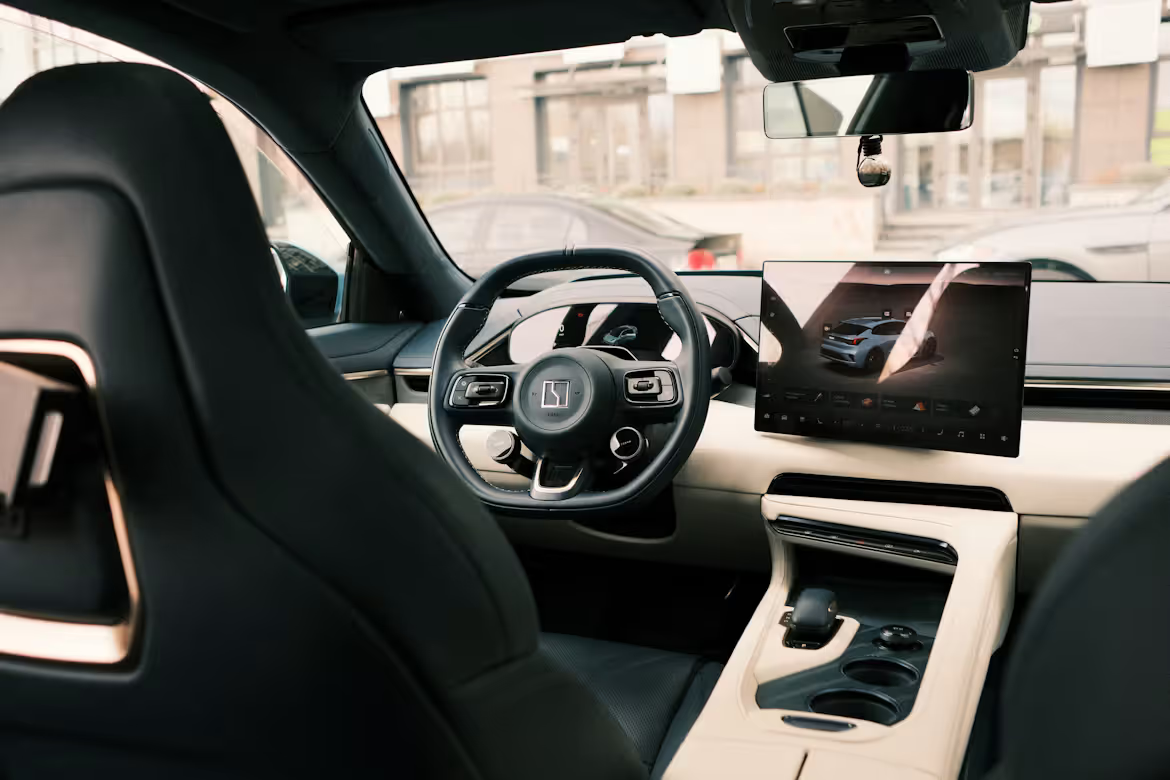
Silence as a New Kind of Luxury
One of the most noticeable differences between electric and combustion-powered grand tourers is the character of the cabin.
Traditional GT cars often use engine sound as part of their identity. A refined V8 or V12 can provide a distinctive soundtrack that becomes inseparable from the experience of travelling long distances. Electric vehicles approach luxury from the opposite direction.
Without a conventional engine dominating the acoustic environment, designers can create exceptionally quiet cabins. Road and wind noise become more noticeable by comparison, encouraging manufacturers to invest heavily in insulation, acoustic glass, suspension refinement, and carefully controlled airflow.
This quietness changes the experience of travelling. Conversations become easier, music becomes more immersive, and long motorway journeys can feel remarkably calm.
For enthusiasts accustomed to the mechanical character of traditional grand tourers, this may initially feel unfamiliar. But it also represents a new interpretation of luxury—one where refinement comes from removing noise rather than creating it.
Effortless Performance
Electric powertrains are particularly well suited to the fundamental philosophy of a grand tourer. Immediate torque allows effortless acceleration without the need for high engine speeds or frequent gear changes.
This is especially valuable during long-distance driving. Overtaking can be accomplished smoothly, while motorway cruising requires minimal effort from the driver. Sophisticated power management systems can continuously optimise energy consumption without compromising the sense of effortless performance expected from a premium GT.
The experience is different from driving a traditional high-performance grand tourer, but the underlying philosophy remains remarkably similar.
Both approaches seek to make distance disappear.
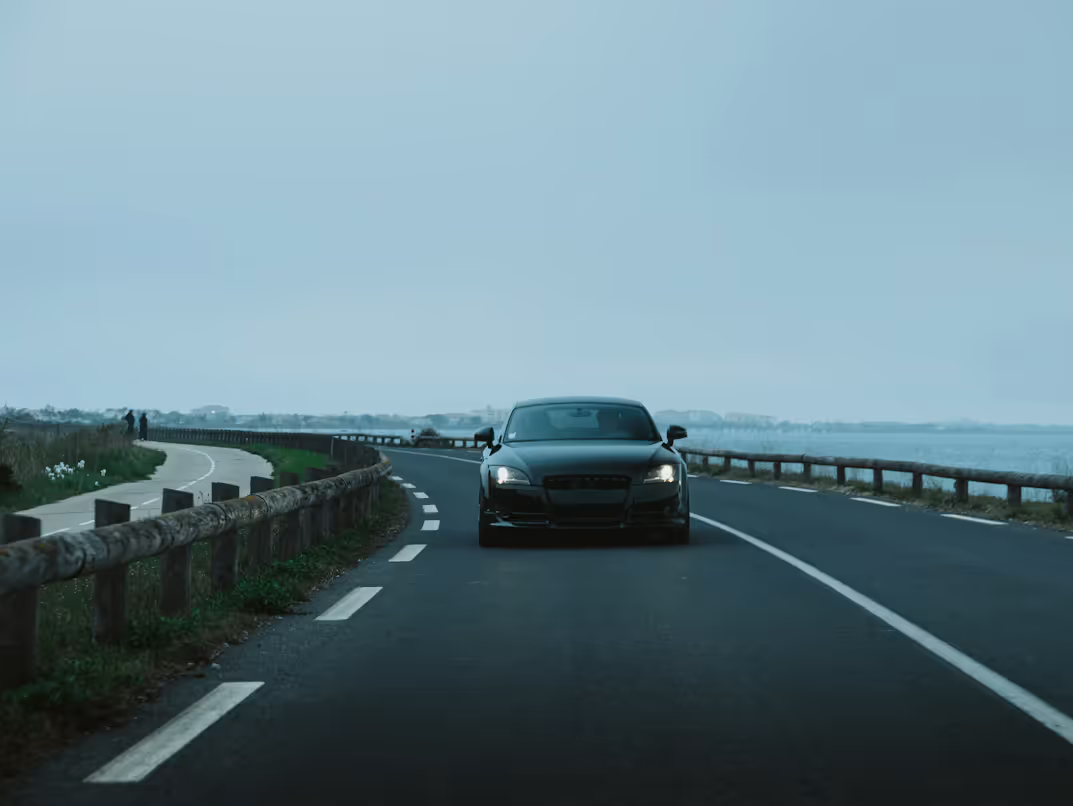
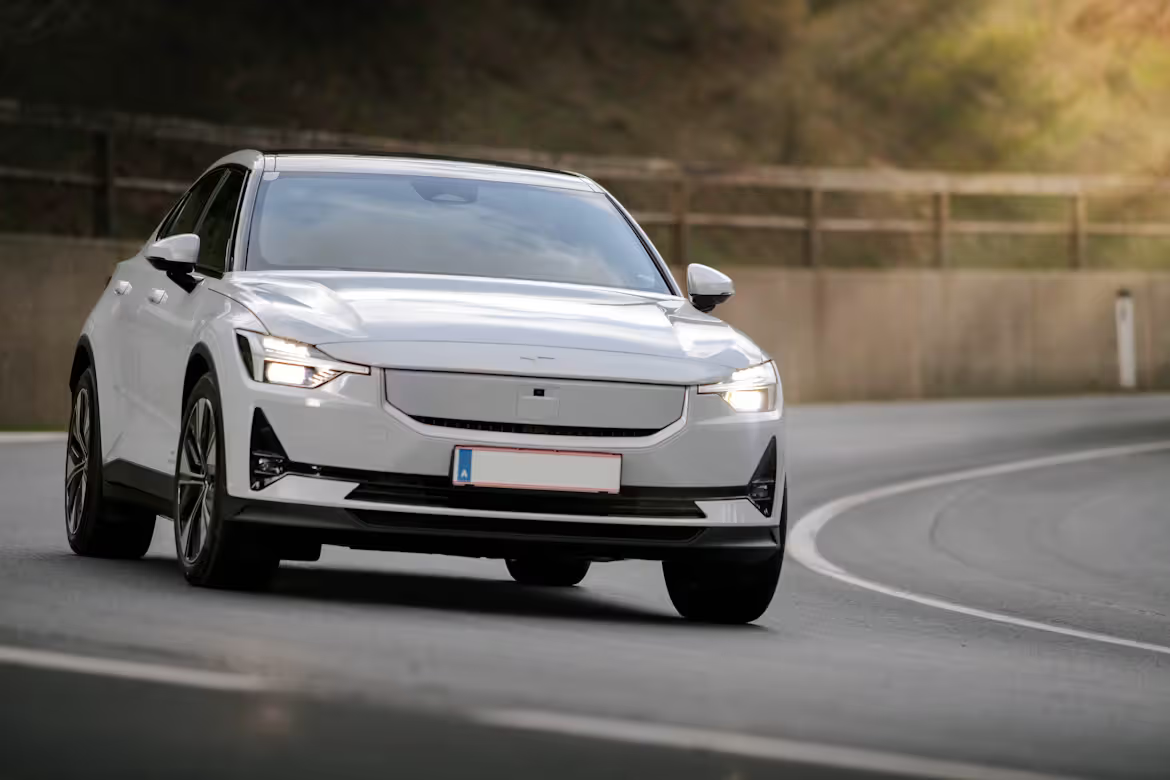
The Challenge of Long-Distance Charging
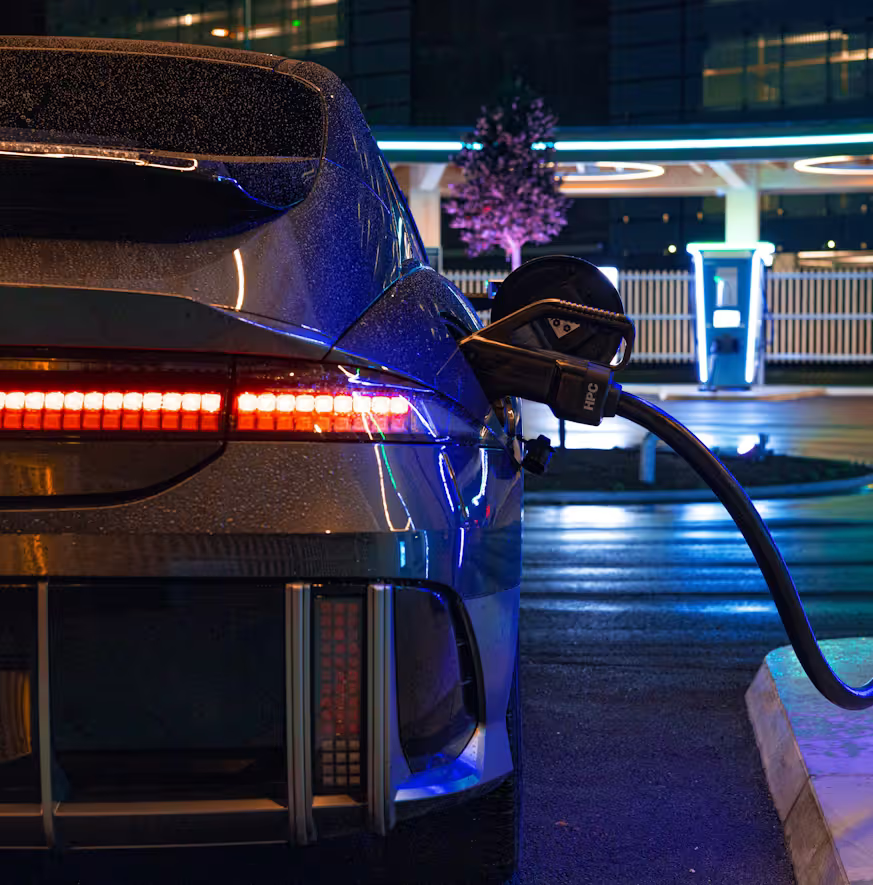
For electric grand touring to become genuinely effortless, charging must become as convenient and predictable as refuelling a conventional automobile. Battery capacity has improved considerably, but long-distance journeys still require drivers to think differently about planning, charging locations, and energy consumption.
Modern EVs are increasingly equipped with sophisticated navigation systems that can calculate energy requirements, identify charging stops, and adjust routes according to available infrastructure. This reduces much of the uncertainty associated with earlier electric vehicles.
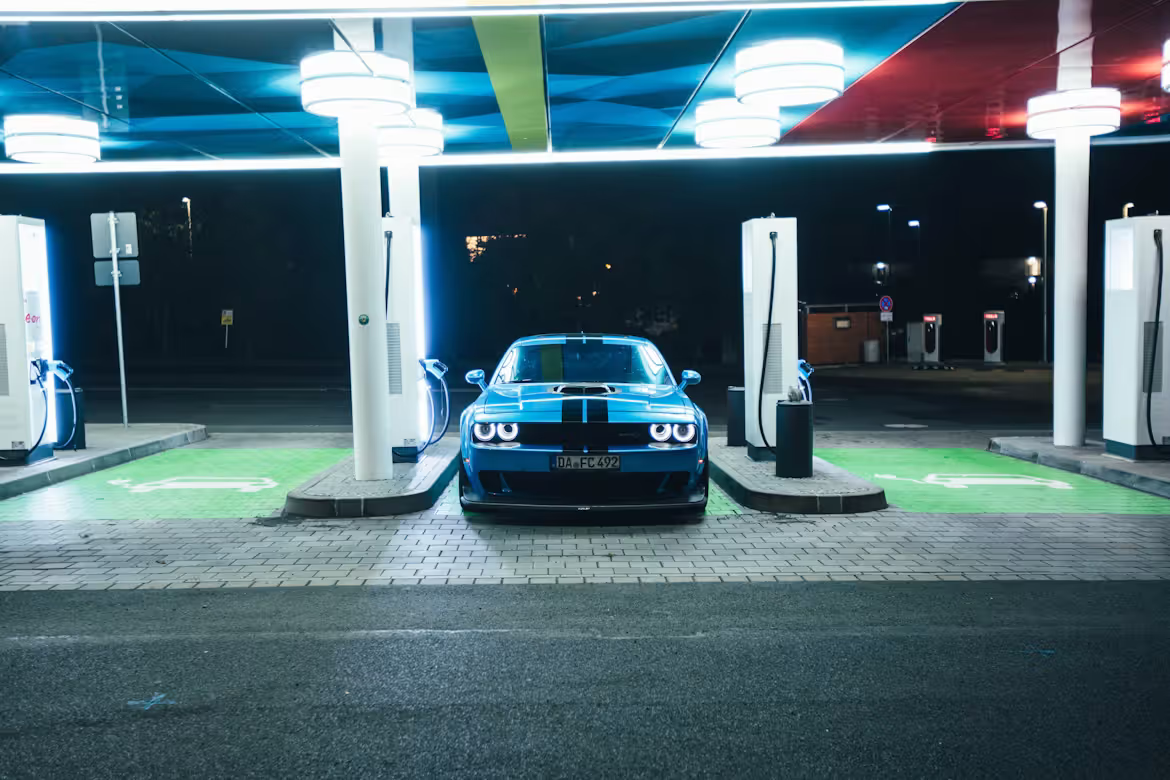
Charging speed is also becoming an important part of the experience. Faster charging can turn a necessary stop into a short break rather than a significant interruption to the journey. As charging networks expand and technology improves, the distinction between travelling in an electric GT and a conventional grand tourer will gradually become less significant.
The ultimate objective is simple: charging should become part of the journey rather than something that dominates it.
"The future of grand touring isn't about travelling farther without stopping. It's about making every stop feel effortless."
Battery Technology Is Changing the Equation
The battery remains the defining technological challenge for electric grand touring. Unlike traditional fuel tanks, batteries are relatively heavy, making weight management particularly important for performance-oriented vehicles.
Engineers are therefore working to improve energy density while reducing unnecessary mass. Advanced battery chemistry, improved thermal management, and more efficient electric motors are allowing manufacturers to extract greater range and performance from increasingly sophisticated platforms.
Thermal management is especially important during long-distance journeys. Batteries must operate within carefully controlled temperature ranges to maintain consistent performance and charging capability. Sophisticated cooling systems monitor battery conditions continuously, ensuring energy can be delivered efficiently even during demanding driving.
These developments will gradually make electric grand tourers lighter, more capable, and more efficient. As battery technology improves, designers will have greater freedom to focus on driving dynamics rather than simply maximising capacity.
A New Approach to Automotive Design
Electrification has also changed how designers think about the grand touring automobile. Without a traditional engine occupying the front of the vehicle, designers gain greater flexibility when shaping the cabin and storage areas.
Longer wheelbases can create generous interior space, while carefully positioned batteries provide a low centre of gravity that benefits handling. Smooth body surfaces and carefully optimised airflow help reduce aerodynamic drag, improving efficiency without sacrificing visual presence.
The result is a different interpretation of luxury. Instead of relying primarily on large engines and elaborate mechanical systems, electric GT cars increasingly express sophistication through simplicity, quietness, digital integration, and intelligent packaging.
This doesn't mean traditional design language is disappearing. Proportions, craftsmanship, lighting, materials, and visual character remain essential. But electrification gives designers an opportunity to reinterpret these elements for a new generation.
When Technology Becomes Part of the Journey
The best electric grand tourers are not defined solely by their battery or motor technology. Their success depends on how naturally technology integrates into the driving experience.
Navigation systems can anticipate charging requirements. Regenerative braking can recover energy without requiring conscious input from the driver. Adaptive suspension can adjust to road conditions, while intelligent climate systems optimise cabin comfort and energy consumption.
When these technologies operate quietly in the background, they reduce the number of decisions required from the driver. This creates a sense of effortless travel that perfectly matches the traditional grand touring philosophy.
The most successful systems are therefore not necessarily the ones with the greatest number of features. They are the ones that make a long journey feel simpler.
The Next Generation of Electric Grand Touring
As electric technology continues to mature, the grand touring segment could become one of the most natural homes for performance EVs. Long-distance driving benefits from quiet power delivery, refined cabins, sophisticated energy management, and effortless acceleration.
Future electric GT cars will likely become more efficient without sacrificing performance. Faster charging, improved battery density, lighter structures, and smarter software will gradually reduce the compromises associated with today's vehicles.
The character of the journey may also change. Instead of planning around fuel stations, drivers may choose routes around scenic charging destinations, cafés, hotels, or places worth exploring. Charging stops could become integrated into the travel experience rather than treated as interruptions.
That possibility represents a broader shift in automotive culture: technology may not reduce the joy of travelling, but give drivers new ways to experience it.
Conclusion
Electric grand touring is still developing, but its fundamental philosophy is already clear. The combination of smooth performance, quiet cabins, advanced technology, and intelligent energy management makes electrification remarkably well suited to long-distance luxury.
There are still challenges, particularly around charging infrastructure, battery weight, and journey planning. Yet each generation of technology is reducing those compromises while expanding what electric vehicles can accomplish.
The future grand tourer may no longer announce its arrival with the sound of a powerful engine. Instead, it may glide silently across mountain roads and coastal highways, delivering immense performance with almost effortless refinement.
The destination will remain important.
But the journey will always be the point.
Discover how electrification, advanced technology, and innovative design are redefining the future of performance automobiles.
About the Writer

Victoria Pemberton
Automotive Culture Editor covering concours events, museums, private collections, historic racing, and the people preserving automotive heritage around the world.
Discussion
More from this issue.
· Printed in pixels, with care.