
Why Endurance Racing Remains the Ultimate Test of a Car.
Endurance racing demands far more than outright speed, testing reliability, engineering precision, strategy, and driver endurance over extraordinary distances.

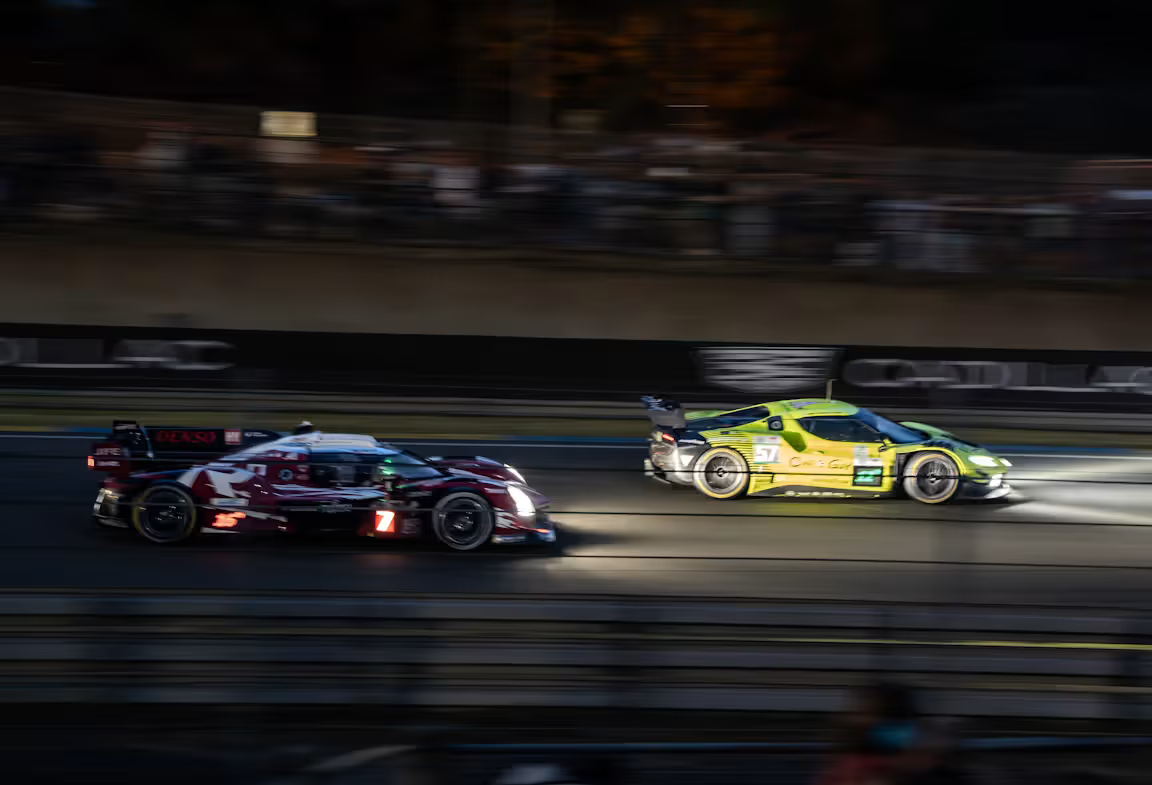
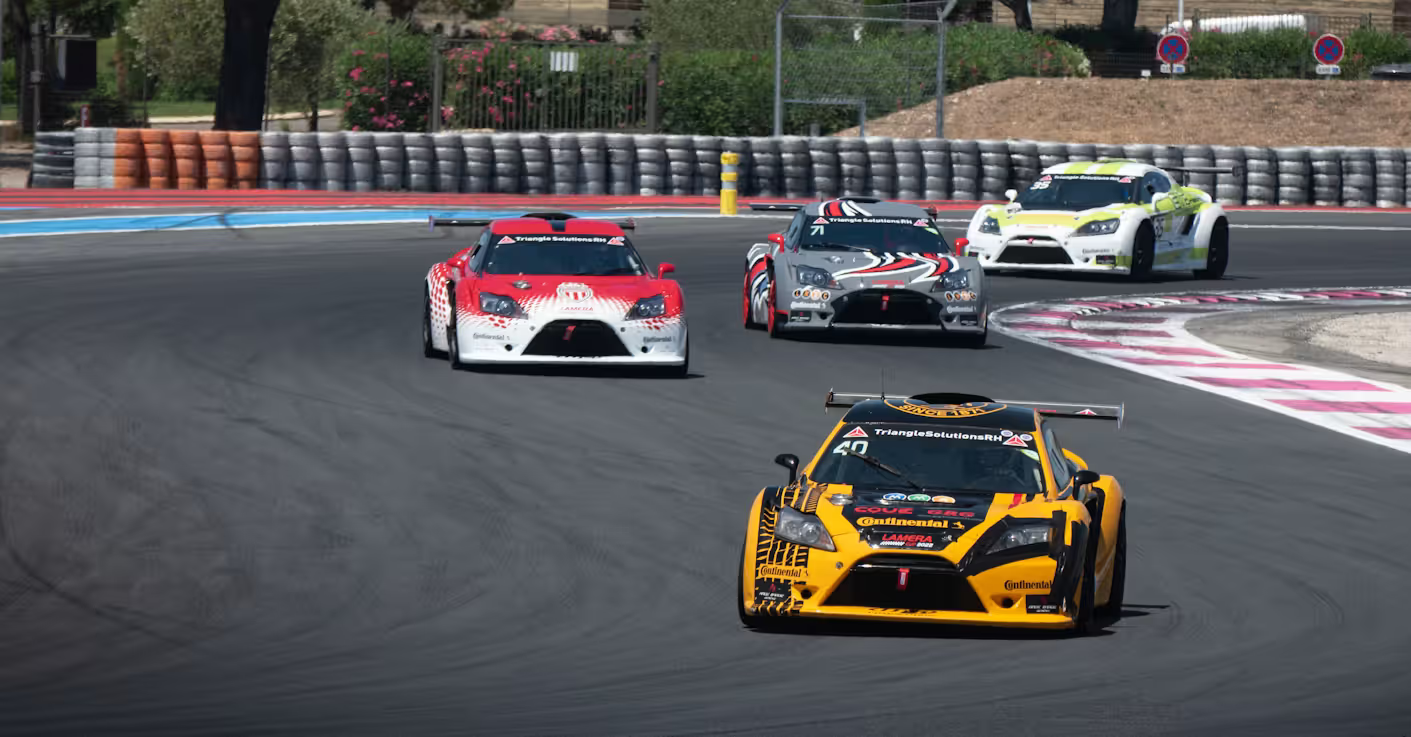
Few forms of motorsport demand as much from a car as endurance racing. A sprint race can be decided by outright pace, but endurance competition asks a far more complicated question: can a machine remain fast, reliable, efficient, and predictable for hours at a time?
That distinction has made endurance racing one of the most important proving grounds in automotive history. From legendary circuits to gruelling long-distance events, manufacturers have used endurance competition to test ideas under conditions that closely challenge the fundamental principles of road-car engineering. Engines must withstand enormous loads, brakes must repeatedly survive extreme temperatures, tyres must remain consistent, and every component must function with remarkable reliability.
The challenge extends beyond the machine. Drivers share responsibility for maintaining performance over long periods, engineers monitor the car continuously, and strategists make decisions based on fuel, tyres, weather, traffic, and changing track conditions. A winning car is therefore rarely the fastest machine in isolation. It is the one capable of maintaining a competitive rhythm while avoiding the failures that can turn hours of preparation into a lost opportunity.
Endurance racing is ultimately a test of everything working together.
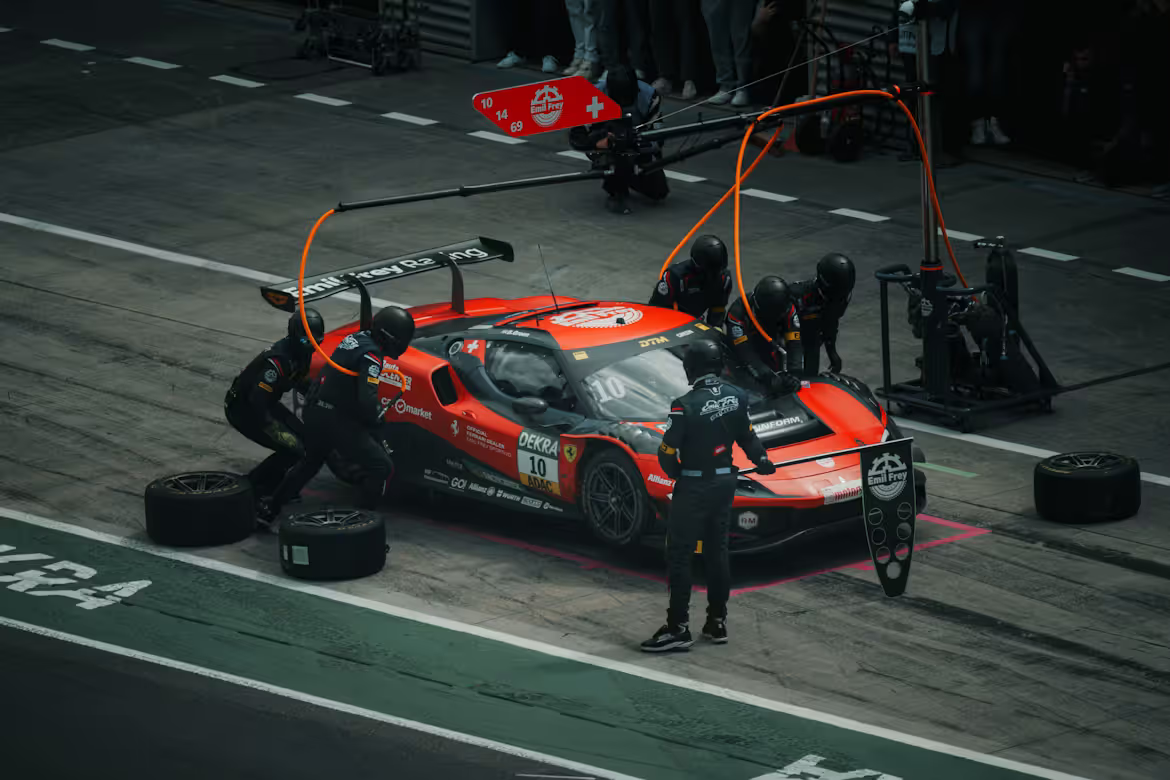
Speed Is Only the Beginning
The first requirement of any racing car is performance, but endurance competition changes the meaning of speed. Engineers cannot simply extract maximum power from an engine and expect it to survive indefinitely. Every increase in performance must be balanced against durability, thermal management, fuel consumption, and mechanical reliability.
This creates a fascinating engineering compromise. A component that produces slightly more performance but significantly increases the possibility of failure may be less valuable than a solution that delivers consistent performance for the entire race.
The same principle applies to tyres and brakes. A car must maintain predictable grip and stopping performance over long stints rather than delivering exceptional performance for only a handful of laps. Cooling systems must continuously manage temperatures, while aerodynamic components need to remain effective despite vibration, heat, and constant high-speed loads.
This emphasis on durability has made endurance racing an important environment for testing engineering solutions before they influence production vehicles. The lessons learned under extreme conditions can reveal weaknesses that might remain invisible during shorter testing programmes.
The Human Element
Although modern endurance racing relies heavily on technology, the driver remains central to the experience. Unlike a short sprint race, endurance competition requires drivers to manage their own performance while preserving the vehicle's capabilities over long periods.
Smooth inputs become particularly important. Aggressive acceleration, braking, or steering can increase tyre wear, fuel consumption, and mechanical stress. The fastest approach is therefore not always the most dramatic one. Experienced endurance drivers understand how to maintain a competitive pace while leaving enough margin for the car and themselves to perform consistently.
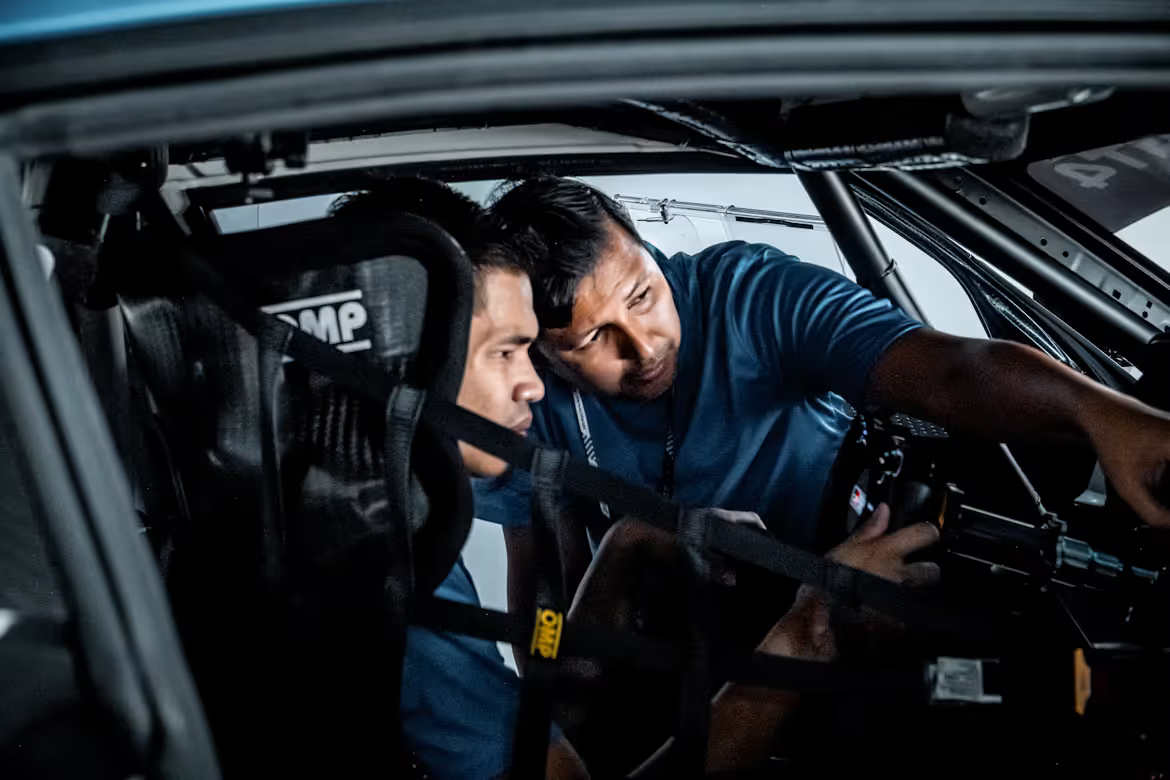
Driver changes introduce another layer of complexity. Each competitor must quickly adapt to the car's condition, track temperature, traffic, and evolving race strategy. Communication between drivers and engineers becomes essential, particularly when unexpected problems emerge.
The result is a form of motorsport where discipline can be just as valuable as outright aggression.
Reliability Is the Real Race
Endurance racing rewards consistency in a way few other forms of motorsport can match. A car may have extraordinary pace, but a mechanical problem that costs several laps can erase hours of competitive performance in an instant.
Engineers therefore spend enormous effort understanding how components behave under prolonged stress. Temperature, vibration, lubrication, electrical systems, suspension loads, and aerodynamic components are monitored throughout the race. Data collected from the car allows teams to identify developing problems before they become major failures.
This philosophy has influenced road-car engineering as well. Manufacturers have learned that performance means little without durability. Materials, cooling systems, electronic controls, and component testing are all developed with reliability in mind, ensuring modern performance cars can deliver their capabilities repeatedly rather than only under ideal conditions.
In endurance racing, reliability isn't a supporting characteristic.
It is performance.
"In endurance racing, the fastest car is not always the winner. The most complete car often is."
Strategy Behind the Wheel
Endurance racing is also a battle of decisions. Teams must constantly evaluate fuel consumption, tyre performance, traffic, weather, driver condition, and the changing behaviour of the car.
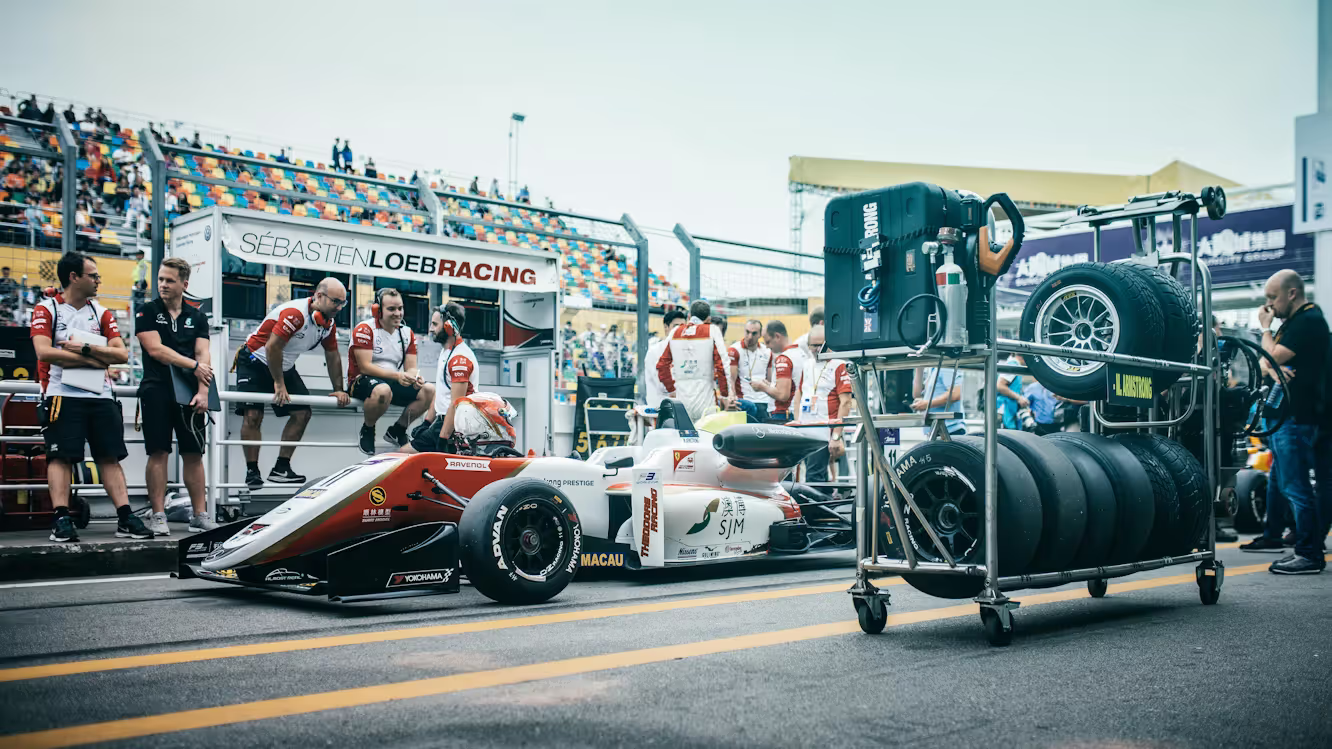
A pit stop that saves a few seconds can become significant after several hours. Choosing the right tyre at the right moment can transform a race when rain begins to fall. A driver may need to conserve fuel during one stint before pushing harder later when the strategic situation changes.
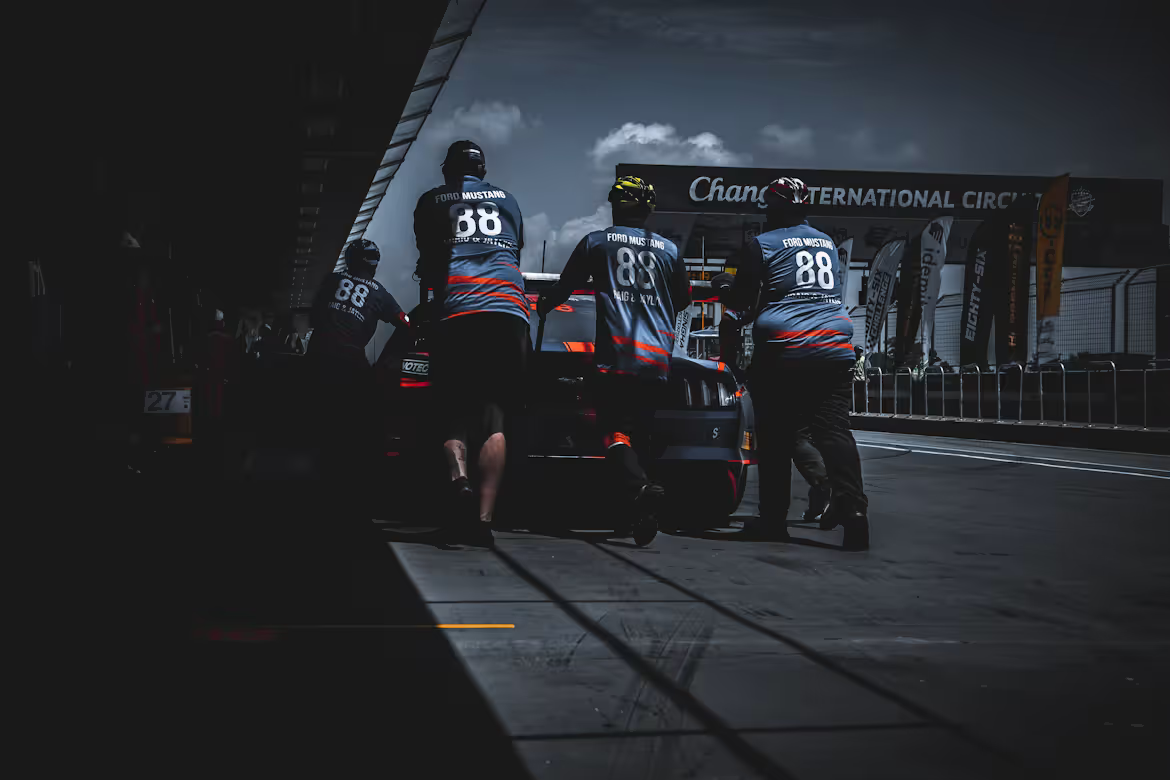
These decisions require engineers, strategists, mechanics, and drivers to operate as one coordinated team. The race is continuously recalculated as new information becomes available.
This makes endurance racing particularly fascinating because victory can emerge from hundreds of small decisions rather than one dramatic moment.
Where Motorsport Meets the Road
The relationship between endurance racing and production cars has always been significant. Technologies developed under competition have frequently influenced road-car engineering, particularly in areas where reliability, efficiency, and performance must coexist.
Lightweight materials help reduce vehicle mass, advanced braking systems improve stopping performance, and aerodynamic development enhances both stability and efficiency. Hybrid powertrains have also benefited from motorsport research, demonstrating how energy recovery and electric assistance can be integrated into high-performance vehicles.
Perhaps more importantly, endurance racing teaches engineers how different systems behave when pushed continuously. A solution that works for a few fast laps may not survive an entire race. Testing under these conditions reveals weaknesses and encourages manufacturers to develop technologies that combine performance with durability.
The benefits therefore extend beyond the circuit. Racing becomes a demanding laboratory where ideas can be challenged before reaching the road.
Why the Night Changes Everything
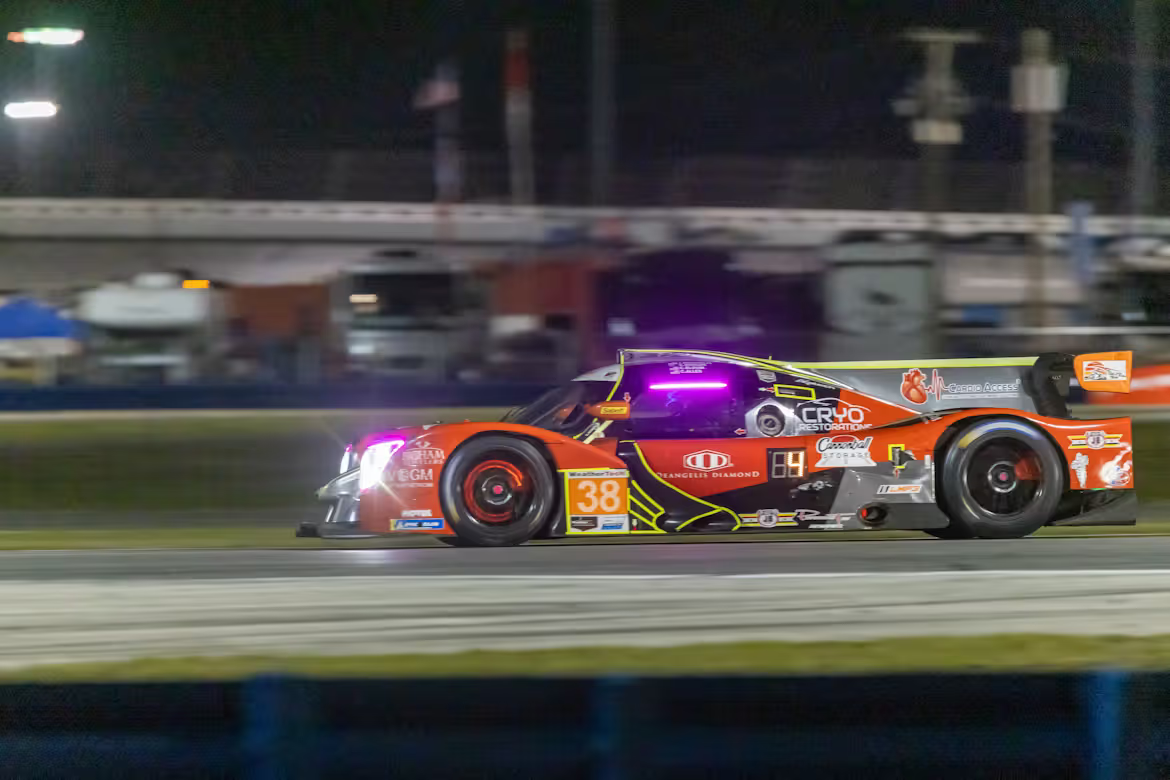
Night racing gives endurance competition an atmosphere unlike almost any other form of motorsport. As daylight disappears, visibility becomes limited and the relationship between driver, headlights, track, and traffic changes completely.
Drivers must process information more quickly while judging distances from reflections, brake lights, and headlights. Engineers monitor changing temperatures, while teams prepare for weather conditions that can shift dramatically over several hours.
For spectators, the visual character is equally distinctive. Racing prototypes moving through darkness, illuminated by headlights and track lighting, create an atmosphere that connects modern competition with the romance of classic endurance racing.
The transition from day to night is also a reminder of what makes endurance racing unique: the race continues regardless of how conditions change.
A Legacy Built on Persistence
Endurance racing has retained its importance because it represents something fundamental about automotive engineering. It rewards machines that can withstand pressure, teams that can adapt, and drivers who understand that success often depends on patience rather than aggression.
Its influence extends beyond trophies and lap records. The discipline has helped manufacturers develop more reliable technologies, encouraged innovations in efficiency and performance, and created some of motorsport's most enduring stories.
Most importantly, endurance racing continues to capture the imagination because it turns automotive engineering into a test of persistence. The challenge isn't simply to go fast.
It is to keep going.
Conclusion
Endurance racing remains one of the purest tests of automotive engineering because it demands a complete package. Speed matters, but so do reliability, efficiency, strategy, teamwork, and driver discipline.
Across hours of competition, every component is pushed to its limits and every decision can influence the final result. That extraordinary pressure has made endurance racing an invaluable engineering laboratory while creating a motorsport tradition that continues to inspire enthusiasts around the world.
As automotive technology evolves, the lessons of endurance racing will remain relevant. Whether the power comes from combustion, electricity, or a combination of both, the fundamental challenge remains unchanged: build a machine capable of performing when everything is pushed to the limit.
That is why endurance racing remains the ultimate test of a car.
Discover the races, engineering breakthroughs, and enduring traditions that continue to shape the world of performance automobiles.
About the Writer

Marcus Chen
Performance EV Editor covering electric supercars, next-generation propulsion, battery innovation, and the future of high-performance automotive engineering.
Discussion
More from this issue.
· Printed in pixels, with care.