
Inside the Engineering of the Bugatti Tourbillon.
The Bugatti Tourbillon represents a new era of hypercar engineering, combining a naturally aspirated V16 engine, hybrid technology, and uncompromising craftsmanship.
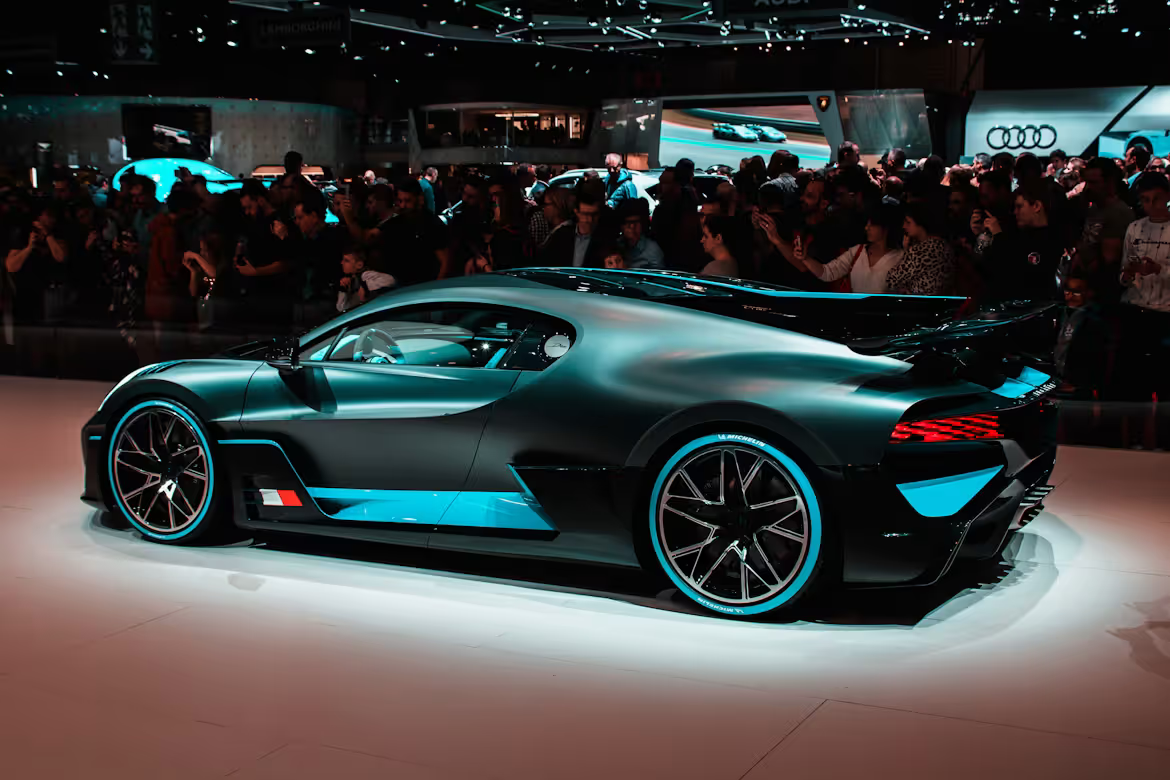
For more than a century, Bugatti has occupied a unique place in automotive history, creating automobiles that combine extraordinary engineering with artistic craftsmanship. From the legendary Type 35 race car to the record-breaking Veyron and Chiron, every generation has pushed the boundaries of what a road-going automobile could achieve. The Bugatti Tourbillon continues that tradition while marking one of the most significant engineering transitions in the company's history.
Unlike its predecessors, which relied on the iconic quad-turbocharged W16 engine, the Tourbillon introduces an entirely new naturally aspirated V16 powertrain supported by an advanced hybrid system. Rather than following industry trends for smaller turbocharged engines, Bugatti chose an approach that prioritises emotion, responsiveness, and long-term engineering ambition. The result is a hypercar that embraces modern electrification without sacrificing the mechanical character enthusiasts expect from the marque.
Beyond its impressive performance figures lies a deeper story of innovation. Every component, from the lightweight chassis to the analogue-inspired instrument cluster, reflects Bugatti's belief that true luxury is measured not only by speed but by craftsmanship, precision, and timeless design. The Tourbillon is not simply the successor to the Chiron—it represents Bugatti's vision for the future of high-performance motoring.
A New Chapter for Bugatti Engineering
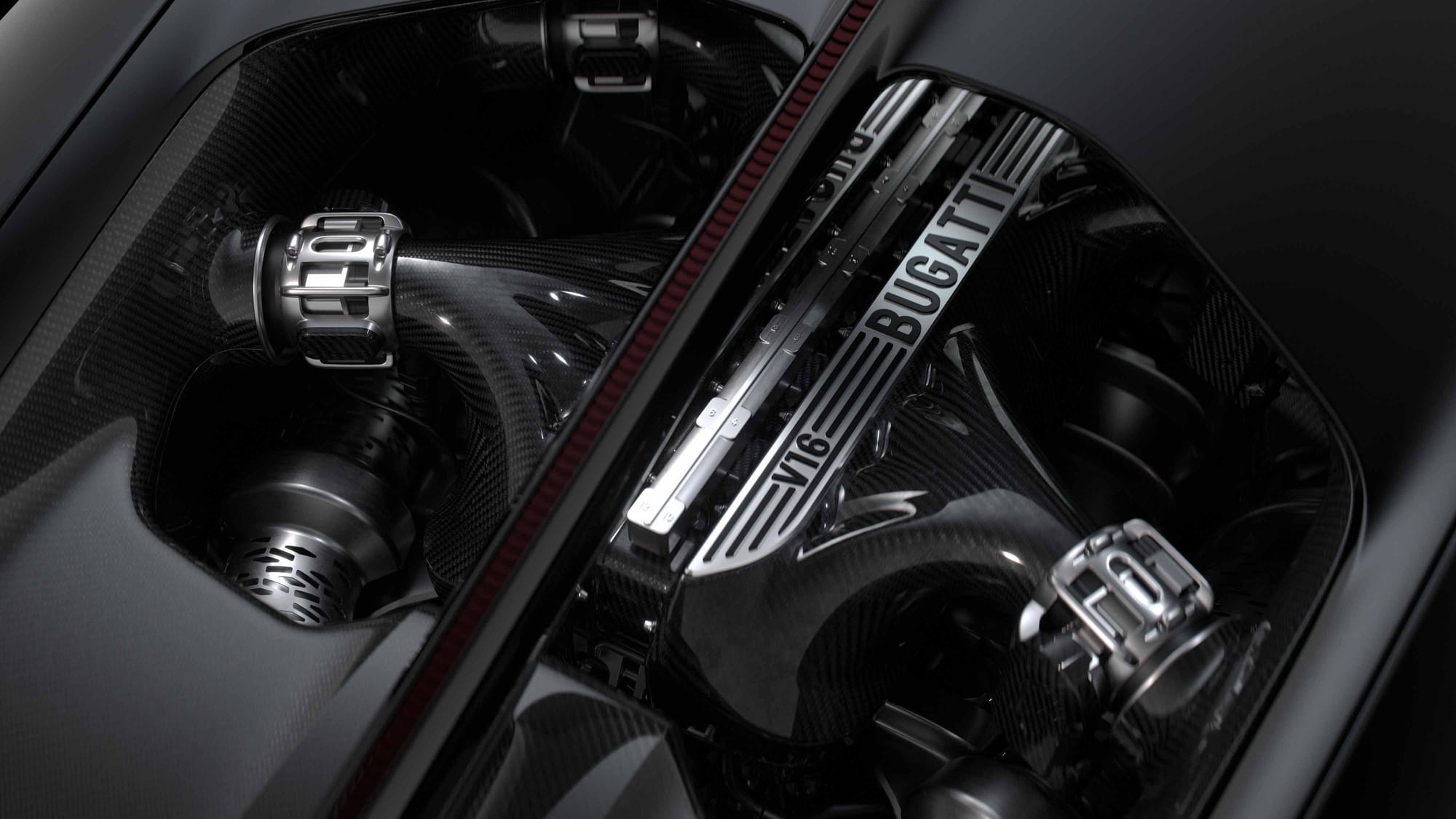
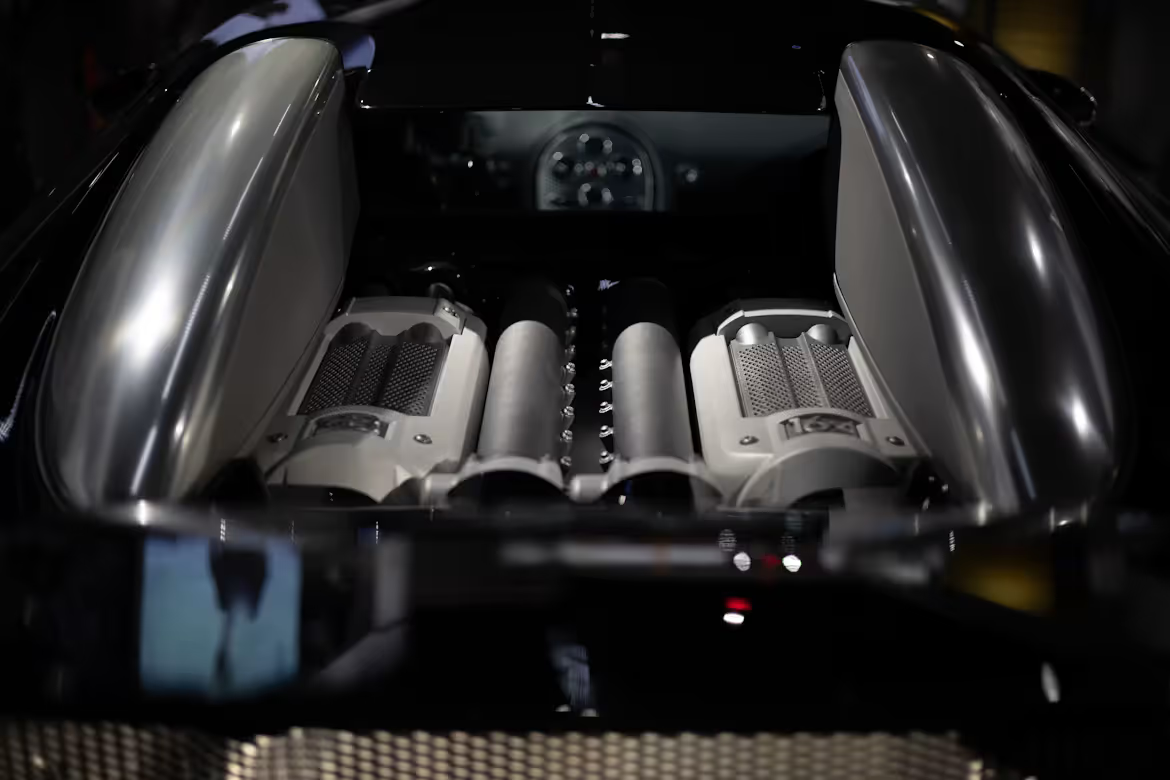
Replacing the legendary W16 engine was one of the greatest engineering challenges Bugatti has ever faced. Rather than developing a direct successor, engineers reimagined the entire powertrain with a naturally aspirated V16 engine working alongside three electric motors. This configuration delivers immediate electric response while preserving the sound, character, and progressive power delivery that only a high-revving naturally aspirated engine can provide.
The hybrid system is not intended to replace the driving experience but to enhance it. Instant torque improves acceleration at lower speeds, while the V16 remains the emotional centrepiece of the car. Together, these technologies demonstrate that electrification can complement mechanical engineering rather than diminish it.
Bugatti also pursued significant weight savings throughout the vehicle. Advanced composite materials, an integrated battery structure, and lightweight suspension components contribute to improved agility without compromising structural rigidity or refinement. Every engineering decision supports the same objective: creating a hypercar that feels as engaging to drive as it is technologically advanced.
Aerodynamics Designed for Performance, Not Attention
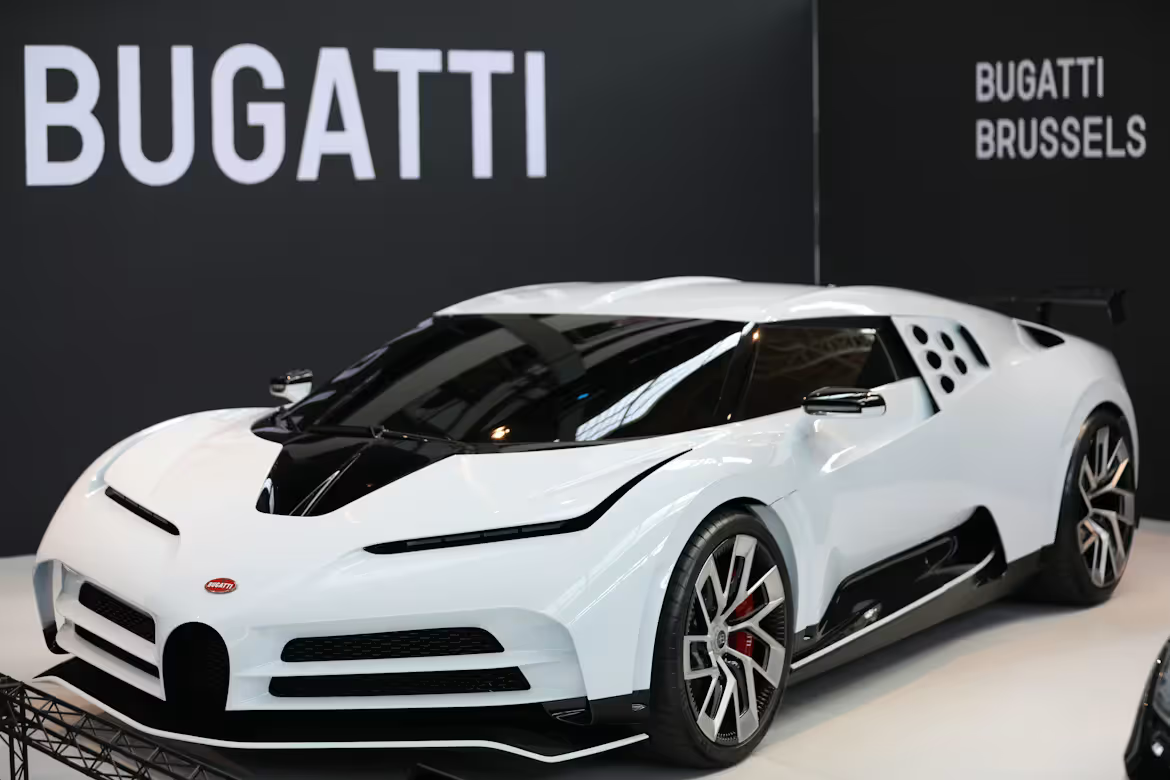
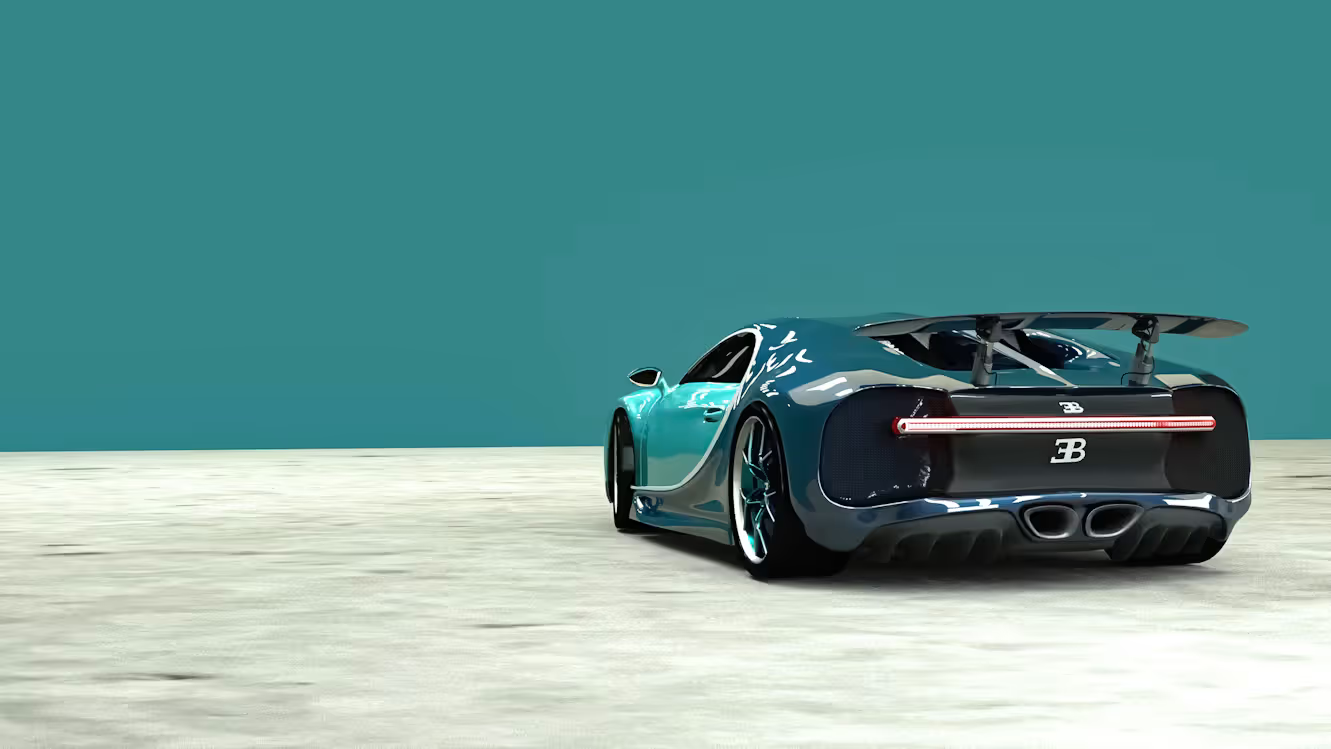
Modern hypercars often rely on dramatic wings, oversized vents, and aggressive styling to communicate performance. Bugatti took a more disciplined approach with the Tourbillon. Every aerodynamic element has been carefully integrated into the vehicle's overall design so that it improves airflow without compromising visual elegance.
The body has been sculpted to reduce drag while generating the downforce required for high-speed stability. Air is guided through precisely engineered channels that cool the powertrain, improve efficiency, and increase aerodynamic balance. Even the smallest details—from the front splitter to the rear diffuser—perform multiple functions, ensuring that every surface contributes to the car's performance.
Rather than adding aerodynamic components as visual statements, Bugatti treats them as essential engineering tools. This philosophy allows the Tourbillon to remain instantly recognizable as a Bugatti while delivering the stability and confidence expected from one of the world's most capable road cars.
"The greatest engineering achievements are often the ones that appear effortless."
Craftsmanship That Rivals Fine Art
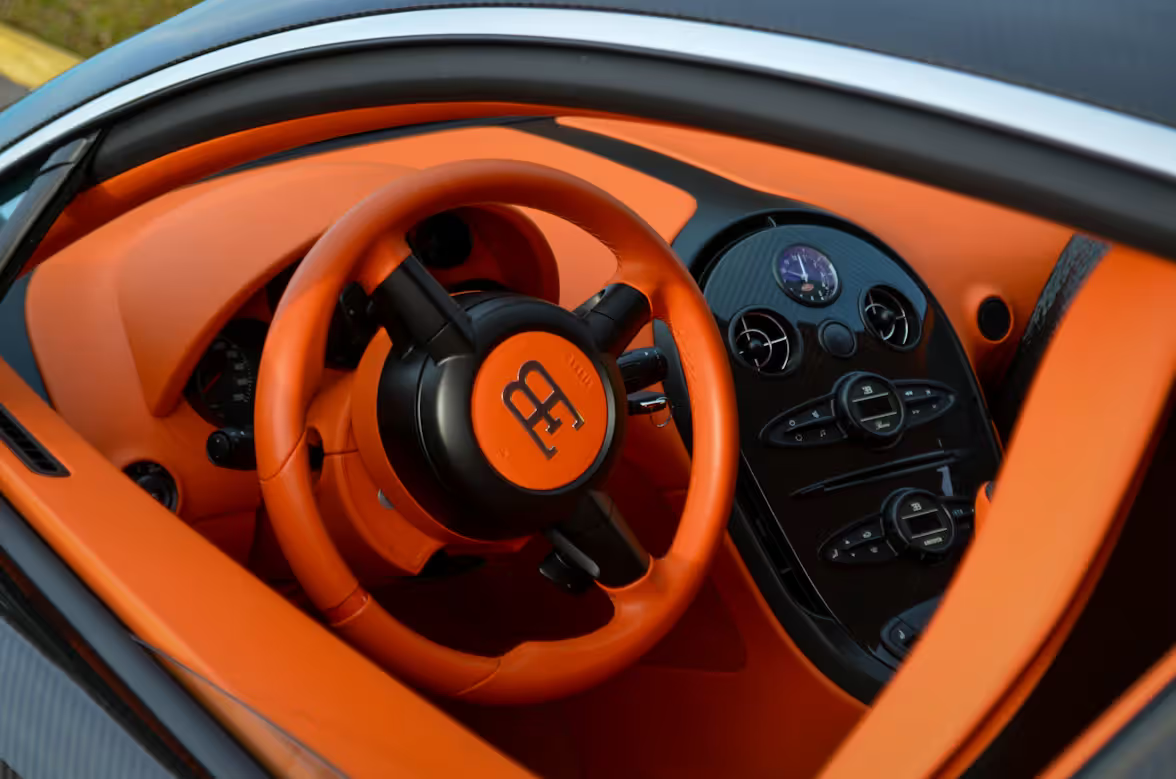
While the Tourbillon represents the future of automotive engineering, its interior reflects Bugatti's appreciation for traditional craftsmanship. Every material has been selected with longevity and tactile quality in mind, creating an environment that feels timeless rather than technology driven.
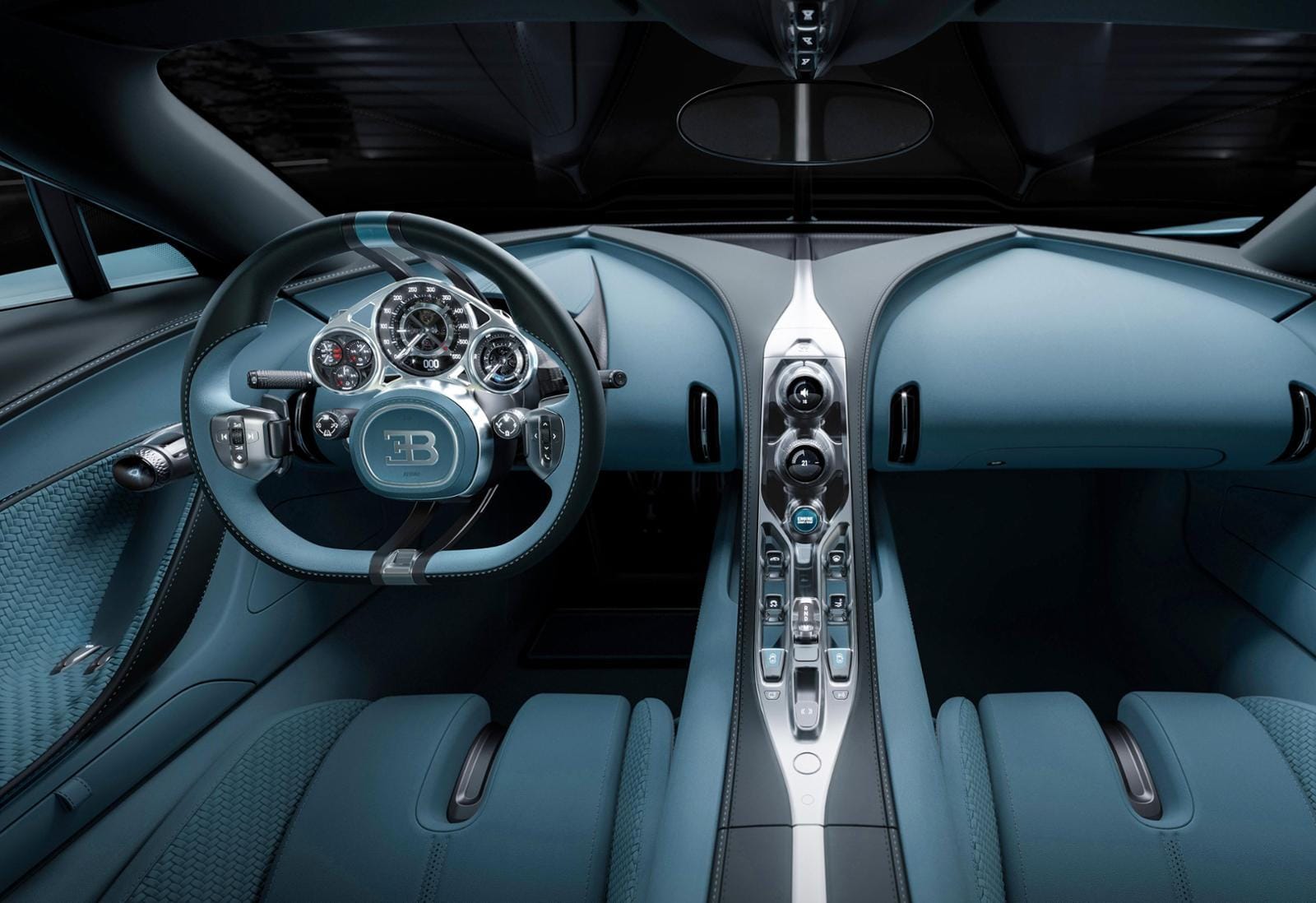
One of the most distinctive features is the instrument cluster, developed in collaboration with Swiss watchmakers. Instead of relying entirely on digital displays, Bugatti created a beautifully engineered analogue-inspired cluster with intricate mechanical components. It serves as both a functional instrument and a piece of precision craftsmanship, reinforcing the idea that luxury should endure beyond changing technology trends.
Leather, aluminium, titanium, crystal glass, and carbon fibre are combined with exceptional attention to detail. Every switch, surface, and control has been designed to deliver a satisfying tactile experience, ensuring the cabin remains engaging whether the car is travelling through city streets or crossing continents at high speed.
The result is an interior that feels remarkably different from many modern performance cars. Rather than overwhelming occupants with screens and software, the Tourbillon creates an atmosphere centred on craftsmanship, precision, and the joy of driving.
Why a Naturally Aspirated V16 Still Matters
In an era dominated by downsized turbocharged engines and electrification, Bugatti's decision to develop a naturally aspirated V16 was both ambitious and unexpected. The choice reflects the company's belief that a hypercar should engage more than the stopwatch—it should engage the senses.
A naturally aspirated engine delivers power progressively, responds instantly to throttle inputs, and produces a distinctive soundtrack that evolves throughout the rev range. These qualities create a level of involvement that many enthusiasts continue to value, even as automotive technology advances.
The hybrid system complements rather than replaces this experience. Electric motors provide immediate torque and improve efficiency, while the V16 remains the emotional centre of the car. Together they demonstrate that modern performance does not have to abandon mechanical character in pursuit of innovation.
This balance between tradition and progress may ultimately become the Tourbillon's greatest achievement. It embraces the future while preserving the qualities that have defined exceptional performance cars for generations.
Redefining the Future of the Hypercar
The Bugatti Tourbillon is more than the successor to the Chiron. It represents a new philosophy for the hypercar segment—one where engineering excellence, sustainable innovation, and timeless craftsmanship exist together rather than competing with one another.
As manufacturers continue exploring new powertrain technologies, the Tourbillon demonstrates that electrification can enhance the driving experience without diminishing the emotion that enthusiasts seek. It proves that innovation does not require abandoning heritage, and that technological progress is most meaningful when it strengthens the connection between driver and machine.
For Bugatti, the Tourbillon is not simply another extraordinary automobile. It is a statement of intent, showing how one of the world's most respected manufacturers plans to shape the future while remaining true to its identity.
Conclusion
The Bugatti Tourbillon represents one of the most significant engineering milestones in modern automotive history. By replacing the legendary W16 with an innovative naturally aspirated V16 hybrid powertrain, Bugatti has demonstrated that performance, craftsmanship, and emotion can continue to evolve together.
Beyond its remarkable specifications lies a philosophy built on precision, artistry, and purposeful engineering. Every detail, from its aerodynamic bodywork to its handcrafted interior, reflects a commitment to excellence that extends far beyond speed alone.
As the automotive industry enters a new era, the Tourbillon stands as a reminder that the world's greatest hypercars are defined not only by technological innovation but also by the passion, craftsmanship, and vision behind their creation.
Explore our latest editorial features covering engineering breakthroughs, iconic manufacturers, and the world's most extraordinary hypercars.
About the Writer

Thomas Ashworth
Hypercars Editor specializing in Bugatti, Pagani, Koenigsegg, and other engineering masterpieces that redefine speed, exclusivity, and automotive innovation.
Discussion
More from this issue.
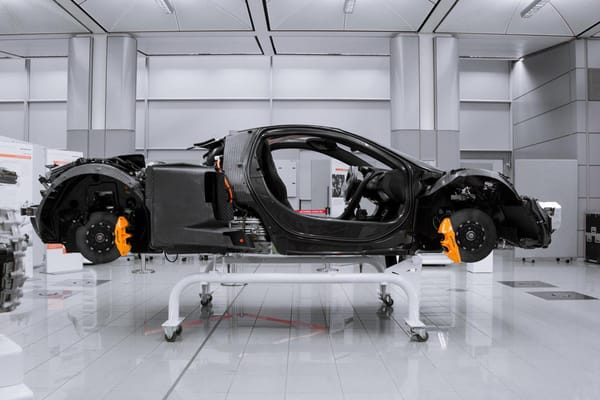
How Carbon Fiber Changed High-Performance Engineering.
Carbon fiber transformed modern performance cars by reducing weight, increasing structural strength, and enabling engineers to build faster, safer, and more agile automobiles.
 James Villiers
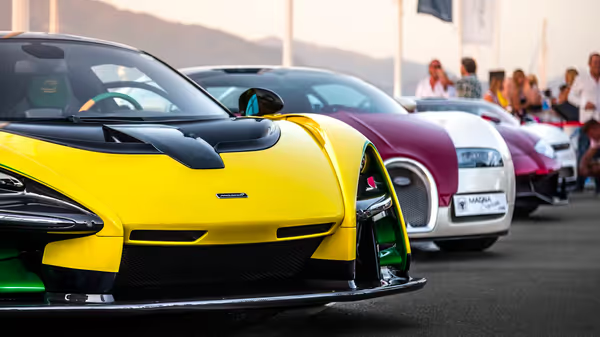
What Defines a Modern Hypercar?.
Modern hypercars represent the highest level of automotive engineering, combining extraordinary performance, advanced technology, and uncompromising innovation.
 Thomas Ashworth
· Printed in pixels, with care.