
What Defines a Modern Hypercar?.
Modern hypercars represent the highest level of automotive engineering, combining extraordinary performance, advanced technology, and uncompromising innovation.
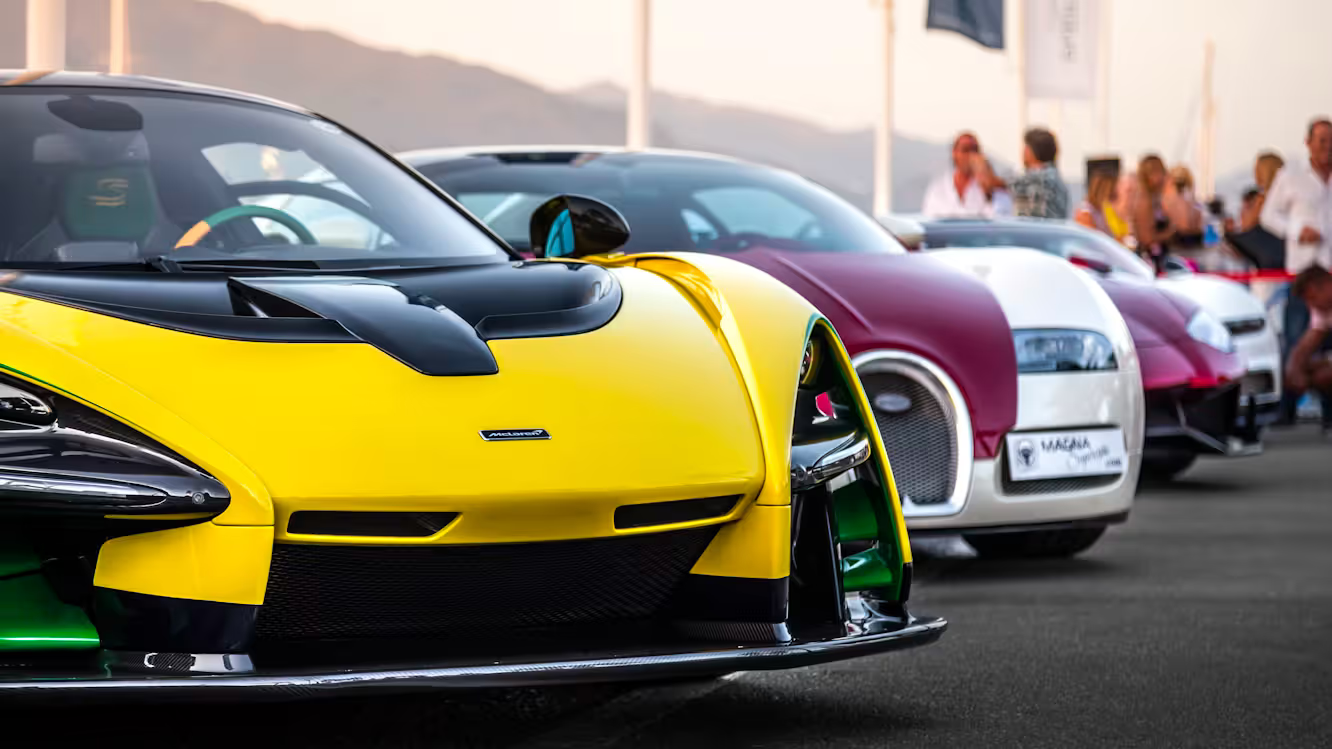
Every generation produces automobiles that redefine the boundaries of engineering, but only a select few earn the title of hypercar. These machines exist at the very highest level of automotive development, where innovation is limited less by convention than by imagination. They are built to demonstrate what manufacturers can achieve when performance, technology, and craftsmanship are pursued without compromise.
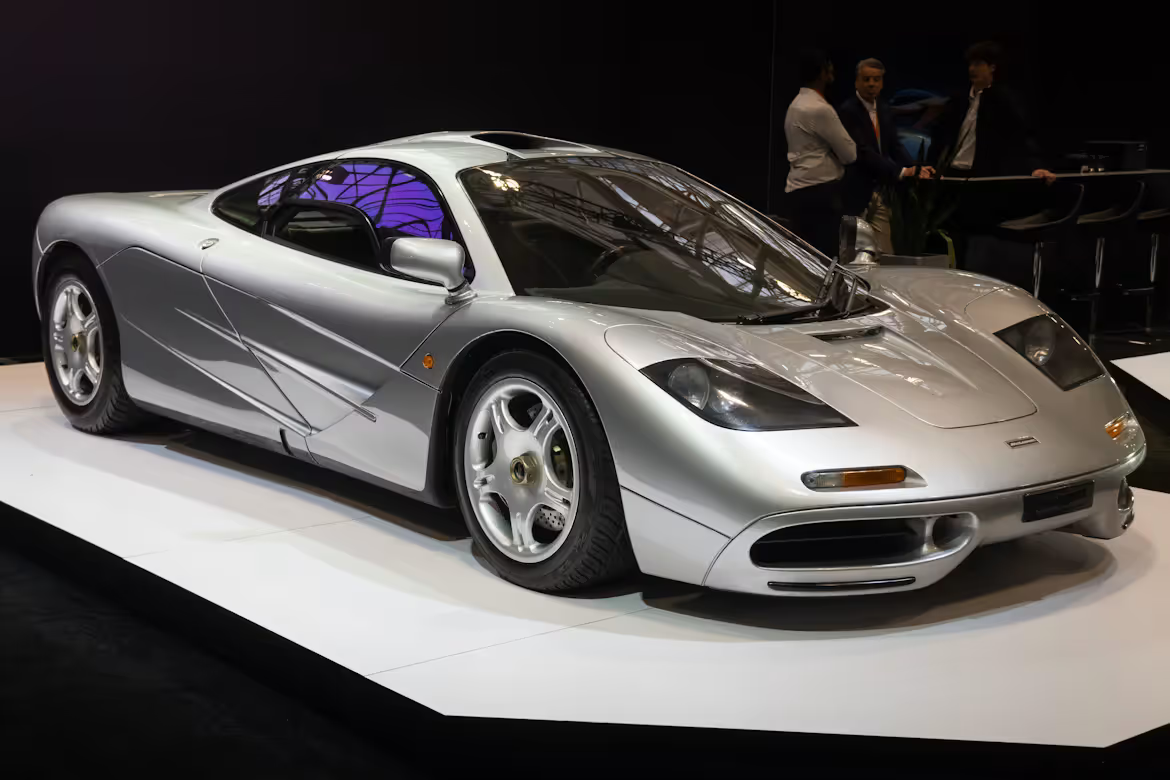
Unlike traditional supercars, which balance everyday usability with exceptional performance, hypercars are designed to push the absolute limits of automotive capability. They introduce groundbreaking technologies, advanced materials, and engineering solutions that often influence the wider automotive industry for years to come. Every component is developed with extraordinary precision, from lightweight chassis structures and active aerodynamic systems to sophisticated hybrid powertrains capable of delivering astonishing performance.
Despite their exclusivity, hypercars represent far more than impressive statistics. They serve as engineering flagships, proving grounds where ambitious ideas are tested before gradually shaping the next generation of performance automobiles. Their significance lies not only in how fast they travel but also in how they expand the possibilities of automotive design and engineering.
Beyond More Power
It is tempting to define a hypercar simply by horsepower, yet performance figures alone tell only part of the story. Modern hypercars achieve their extraordinary capabilities by combining multiple engineering disciplines into a single, highly integrated system.
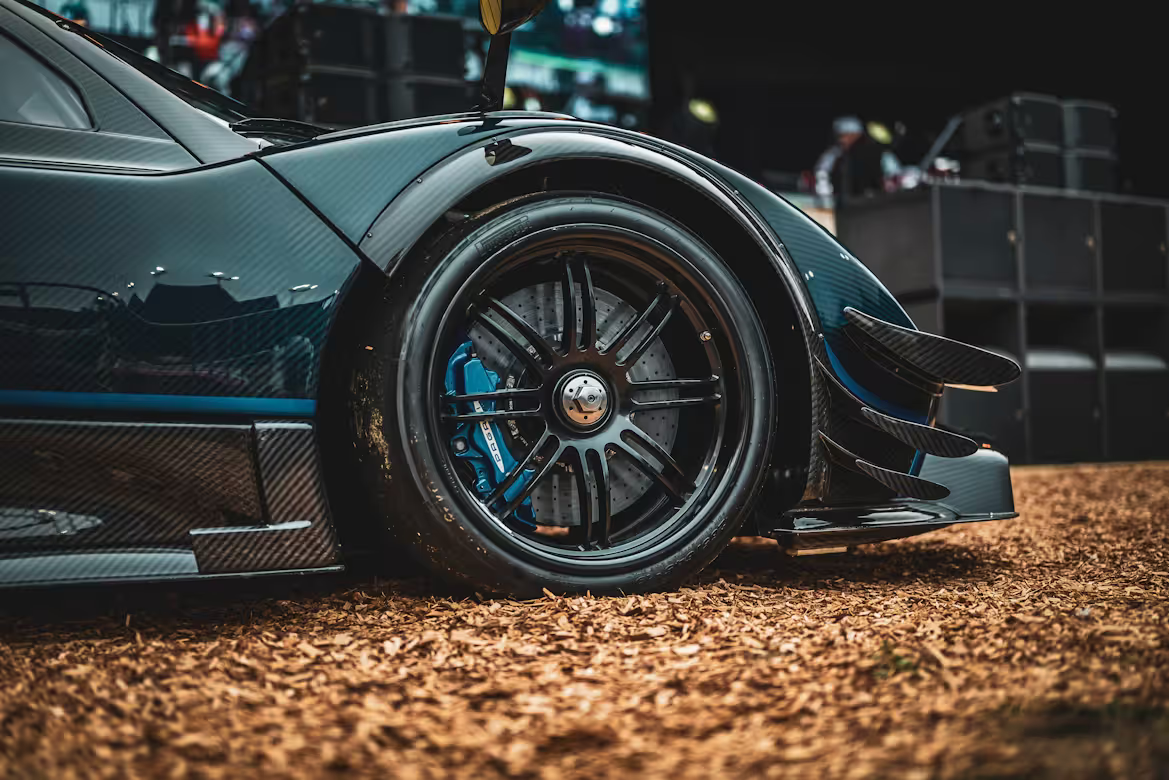
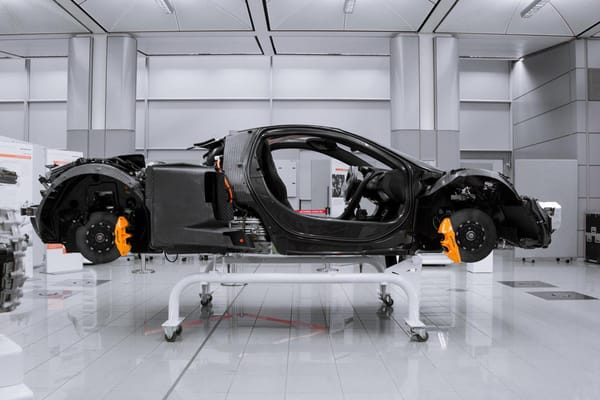
Lightweight carbon-fibre monocoques provide exceptional structural rigidity while minimising weight. Sophisticated suspension systems continuously adapt to changing road conditions, maintaining stability without sacrificing responsiveness. Hybrid powertrains combine internal combustion engines with electric motors, delivering immediate torque while improving efficiency and throttle response.
Every component is developed with remarkable attention to detail. Cooling systems manage immense thermal loads, braking technologies provide consistent stopping power under extreme conditions, and intelligent software continuously monitors vehicle dynamics to optimise performance. Rather than relying on one spectacular innovation, hypercars succeed because hundreds of carefully engineered solutions work together in perfect harmony.
This holistic approach explains why modern hypercars continue to set new standards for performance while remaining surprisingly composed and confidence-inspiring to drive.
Engineering Without Compromise
Perhaps the defining characteristic of every hypercar is the freedom engineers are given to pursue innovation without the limitations typically associated with large-scale production. Limited production volumes allow manufacturers to experiment with advanced materials, specialised manufacturing techniques, and highly sophisticated technologies that would be impractical for mainstream vehicles.
Many hypercars feature hand-assembled powertrains, bespoke suspension systems, titanium exhaust components, and extensively optimised aerodynamic surfaces. Digital simulations, wind tunnel testing, and advanced computational analysis ensure every design decision contributes to measurable improvements in performance, efficiency, or stability.
This uncompromising philosophy also extends to craftsmanship. Every interior is carefully assembled using premium materials selected not only for appearance but also for weight, durability, and tactile quality. Carbon fibre, precision-machined aluminium, fine leather, and bespoke finishes combine to create cabins that reflect the same engineering excellence found beneath the bodywork.
The result is an automobile where innovation, craftsmanship, and performance are inseparable.
Intelligent Aerodynamics at Extreme Speeds
As performance reaches extraordinary levels, airflow becomes one of the most important engineering challenges facing hypercar manufacturers. At speeds exceeding 300 km/h, even subtle changes in aerodynamics can significantly influence stability, cooling efficiency, braking performance, and driver confidence.
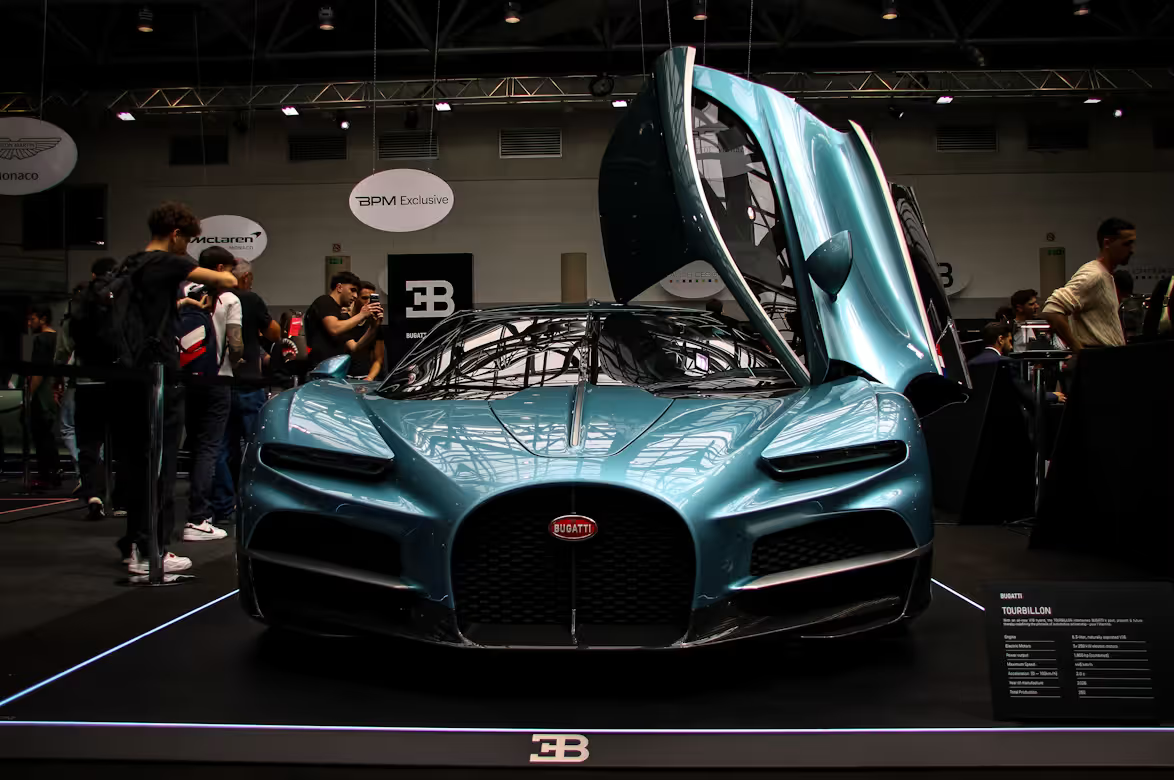
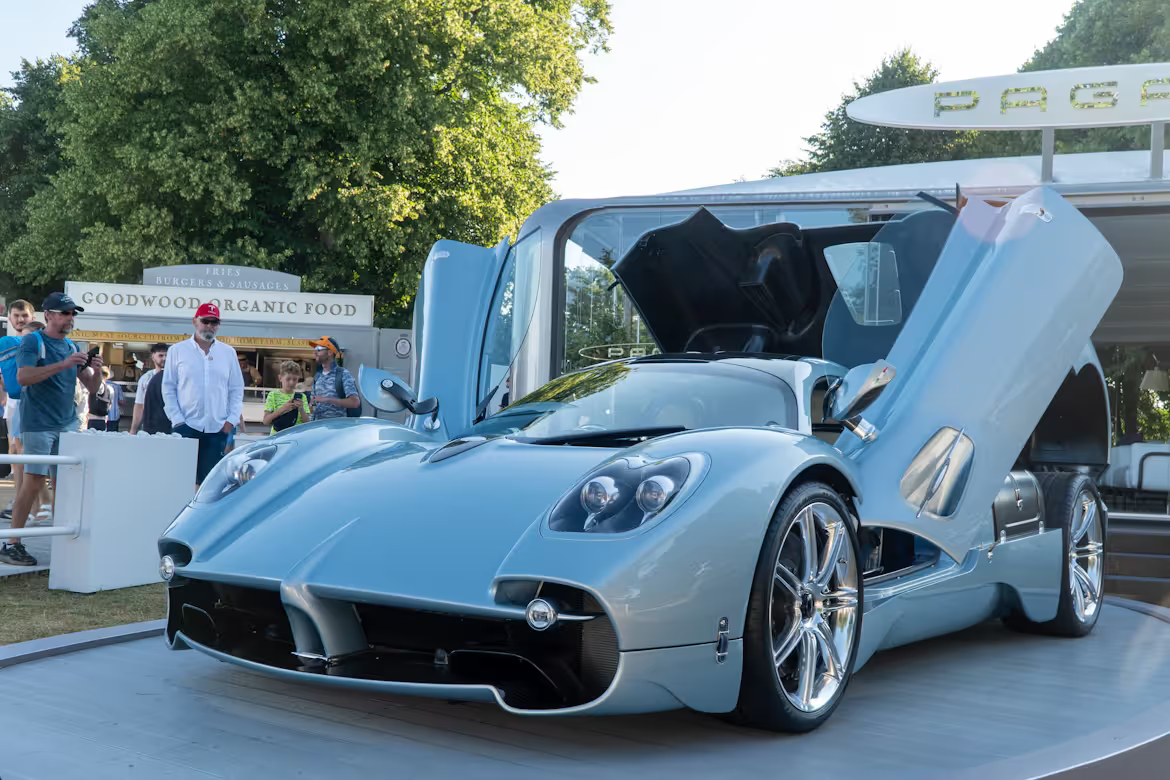
Modern hypercars therefore rely on sophisticated active aerodynamic systems that continuously adapt to changing conditions. Adjustable rear wings, movable front splitters, active diffusers, and electronically controlled air vents work together to balance aerodynamic drag with maximum downforce. During acceleration, the body is optimised to minimise resistance, while heavy braking or high-speed cornering automatically triggers additional aerodynamic support where it is needed most.
Unlike fixed aerodynamic components of earlier generations, these intelligent systems constantly communicate with suspension, braking, and stability-control software. Every adjustment happens within milliseconds, ensuring the vehicle remains balanced regardless of speed or driving conditions.
This seamless integration allows today's hypercars to achieve remarkable performance while maintaining an impressive level of stability and driver confidence.
"A modern hypercar is not built to chase numbers—it is built to redefine what automotive engineering can achieve."
Electrification Has Expanded the Limits
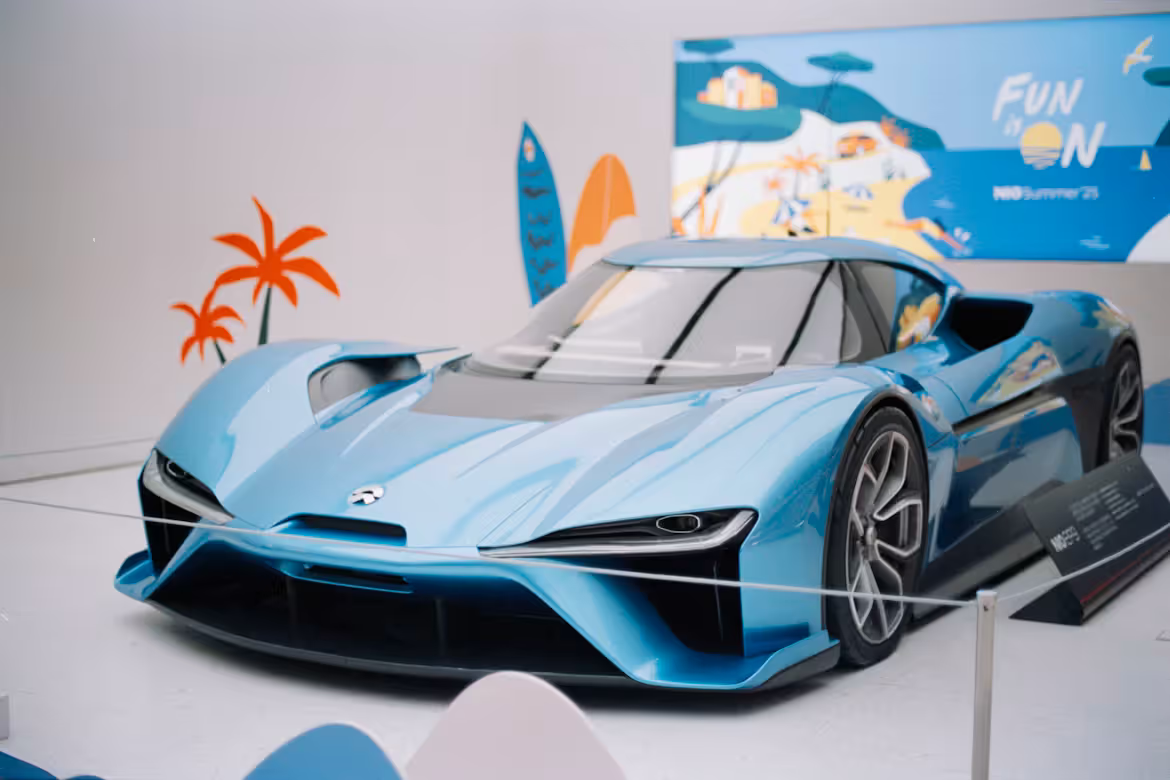
The modern hypercar is no longer defined solely by a large displacement engine. Electrification has introduced entirely new possibilities for performance, allowing manufacturers to enhance acceleration, improve efficiency, and refine vehicle dynamics without compromising excitement.
Hybrid powertrains combine the strengths of combustion engines and electric motors, delivering immediate torque alongside sustained high-speed performance. Electric assistance improves responsiveness during acceleration, while advanced energy management systems recover and redistribute power with exceptional efficiency.
Beyond outright performance, electrification has encouraged engineers to rethink packaging, cooling strategies, and chassis design. Batteries, motors, and electronic control systems are carefully integrated into lightweight structures to maintain ideal weight distribution and optimise handling characteristics.
Rather than replacing traditional engineering, electrification has become another powerful tool that enables hypercars to reach performance levels once considered unattainable.
Exclusivity Through Innovation
Every hypercar is rare, but exclusivity is about far more than limited production numbers. What truly distinguishes these automobiles is the extraordinary level of engineering, craftsmanship, and innovation invested in every example.
Manufacturers often dedicate years to developing a single hypercar, combining advanced materials, precision manufacturing, and extensive testing to achieve objectives that would be impossible within conventional production programmes. Every detail, from the carbon-fibre structure to the interior craftsmanship, reflects countless hours of design refinement and engineering expertise.
Owners value these automobiles not simply because few exist, but because each represents the highest expression of a manufacturer's technical capability during its era. Every hypercar becomes a snapshot of engineering progress—a benchmark that future generations will study, admire, and build upon.
This is why hypercars often achieve lasting significance long after newer models appear. They represent milestones rather than trends.
The Next Frontier of Hypercar Engineering
The future of hypercars will continue to be shaped by relentless innovation. Advances in lightweight composite materials, sustainable manufacturing, intelligent software, and electrified powertrains are already redefining how extreme performance is achieved.
Artificial intelligence is expected to play a greater role in chassis control, predictive vehicle dynamics, and energy management. Active aerodynamics will become even more sophisticated, adapting not only to speed but also to road conditions and driver behaviour. Improvements in battery technology and lightweight construction will further expand performance while reducing environmental impact.
Yet despite these technological changes, the purpose of the hypercar will remain remarkably familiar. It will continue serving as the automotive industry's ultimate engineering laboratory, where ambitious ideas are explored before influencing future generations of performance vehicles.
Every era has its defining automobile. Tomorrow's hypercars will continue that tradition by proving that innovation has no finish line.
Conclusion
Modern hypercars represent the highest expression of automotive engineering. They combine advanced materials, intelligent aerodynamics, hybrid technology, digital innovation, and exceptional craftsmanship to create machines capable of extraordinary performance without compromise.
Their significance extends well beyond speed or exclusivity. Hypercars challenge engineers to rethink established solutions, accelerate technological progress, and inspire the wider automotive industry through ambitious innovation. Many of today's performance technologies will eventually find their way into future production vehicles, continuing the cycle of advancement that has always defined the automobile.
As engineering enters a new era of electrification and intelligent mobility, the hypercar remains an enduring symbol of what becomes possible when creativity, technology, and craftsmanship pursue a single goal: pushing the limits of automotive excellence.
Discover the engineering breakthroughs, design philosophies, and extraordinary machines redefining the future of high-performance automobiles.
About the Writer

Thomas Ashworth
Hypercars Editor specializing in Bugatti, Pagani, Koenigsegg, and other engineering masterpieces that redefine speed, exclusivity, and automotive innovation.
Discussion
More from this issue.
Inside the Engineering of the Bugatti Tourbillon.
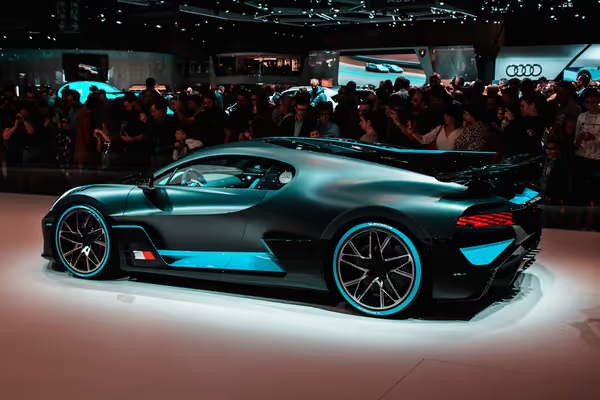
The Bugatti Tourbillon represents a new era of hypercar engineering, combining a naturally aspirated V16 engine, hybrid technology, and uncompromising craftsmanship.
 Thomas Ashworth
How Carbon Fiber Changed High-Performance Engineering.
Carbon fiber transformed modern performance cars by reducing weight, increasing structural strength, and enabling engineers to build faster, safer, and more agile automobiles.
 James Villiers
· Printed in pixels, with care.