
How Carbon Fiber Changed High-Performance Engineering.
Carbon fiber transformed modern performance cars by reducing weight, increasing structural strength, and enabling engineers to build faster, safer, and more agile automobiles.
Modern performance cars are expected to be faster, safer, more efficient, and more responsive than ever before. Achieving all of these goals simultaneously is one of the greatest challenges in automotive engineering, where increasing power often adds weight, and additional safety features can reduce agility. For decades, engineers searched for a material capable of overcoming these compromises. The answer arrived not through more powerful engines or advanced electronics, but through a remarkably strong and lightweight material known as carbon fiber.
Today, carbon fiber has become one of the defining technologies behind the world's finest supercars and hypercars. From Formula 1 race cars to road-going machines produced by Ferrari, McLaren, Pagani, and Koenigsegg, the material has transformed how performance vehicles are designed and built. What was once reserved for aerospace and motorsport is now an essential part of modern automotive engineering.
Its influence extends far beyond weight reduction. Carbon fiber allows engineers to improve structural rigidity, enhance crash protection, optimise aerodynamics, and create complex body shapes that would be difficult to achieve using traditional materials. More importantly, it enables manufacturers to develop cars that feel sharper, more responsive, and more engaging without sacrificing comfort or durability.

From Aerospace Innovation to the Open Road
Long before carbon fiber appeared in production automobiles, it earned its reputation in industries where every kilogram mattered. Aerospace engineers adopted the material because of its exceptional strength-to-weight ratio, allowing aircraft to become lighter without compromising structural integrity. Motorsport quickly recognised the same advantages, particularly in Formula 1, where reducing weight while increasing safety could dramatically improve performance.
The automotive industry began exploring carbon fiber for limited-production performance cars during the late twentieth century. Initially, the material was expensive and difficult to manufacture, restricting its use to racing prototypes and ultra-exclusive road cars. Over time, however, improvements in manufacturing techniques allowed manufacturers to integrate carbon fiber into a wider range of high-performance vehicles.
Companies such as McLaren pioneered the use of carbon-fiber monocoques in production supercars, demonstrating that advanced composite construction could improve both performance and occupant safety. Ferrari, Lamborghini, Pagani, and Koenigsegg soon expanded their own use of carbon fiber, incorporating it into chassis structures, body panels, suspension components, and interior elements.
Today, carbon fiber has become a defining characteristic of modern supercar engineering, representing both technological innovation and uncompromising performance.
Why Less Weight Changes Everything
Automotive engineers often describe weight as the greatest enemy of performance. Every additional kilogram influences acceleration, braking, handling, fuel efficiency, tyre wear, and overall driving dynamics. Reducing mass therefore delivers improvements across nearly every aspect of vehicle performance.
Carbon fiber makes this possible because it combines remarkable strength with exceptional lightness. Compared with traditional steel construction, carbon-fiber components can provide similar or greater structural performance while weighing significantly less. Even when compared with aluminium, advanced composite materials frequently offer meaningful weight savings.
These reductions create benefits that drivers immediately notice. Lighter vehicles accelerate more efficiently, require shorter braking distances, and respond more precisely to steering inputs. Suspension systems work more effectively because they control less mass, while tyres experience reduced stress during aggressive driving.
Perhaps most importantly, lower weight improves driver confidence. A lighter car changes direction more willingly, communicates more clearly through the steering wheel, and remains composed during demanding cornering. Rather than relying solely on increased engine output, engineers can enhance the entire driving experience simply by reducing unnecessary mass.

Structural Strength Beyond Traditional Materials
While carbon fiber is often celebrated for reducing weight, its contribution to structural strength is equally important. Modern performance cars are expected to deliver exceptional rigidity while protecting occupants under demanding conditions. Achieving both goals with traditional materials often results in heavier construction, forcing engineers to balance performance against safety.
Carbon fiber changes that equation. When woven into composite structures and combined with advanced resins, the material forms an incredibly rigid passenger cell capable of resisting twisting forces that occur during high-speed cornering and rapid acceleration. Increased chassis stiffness allows the suspension to operate more precisely because less energy is lost through body flex, giving drivers more predictable handling and greater confidence.
The material also behaves differently during an impact. Instead of bending like steel or aluminium, carbon-fiber composites are engineered to absorb and dissipate energy through carefully designed deformation patterns. Modern crash structures combine composite materials with aluminium and other engineered components to manage impact forces while protecting the passenger compartment. The result is a structure that delivers impressive safety without carrying unnecessary weight.
For engineers, this combination of strength, stiffness, and energy absorption makes carbon fiber one of the most valuable materials available in high-performance vehicle development.
"The fastest cars are not simply built with more power—they are engineered with smarter materials."
Why Hypercar Manufacturers Depend on Carbon Fiber
Few segments demonstrate the advantages of carbon fiber more clearly than the hypercar market. Manufacturers such as McLaren, Pagani, Koenigsegg, Ferrari, and Bugatti rely on advanced composite construction because every engineering decision influences overall performance.
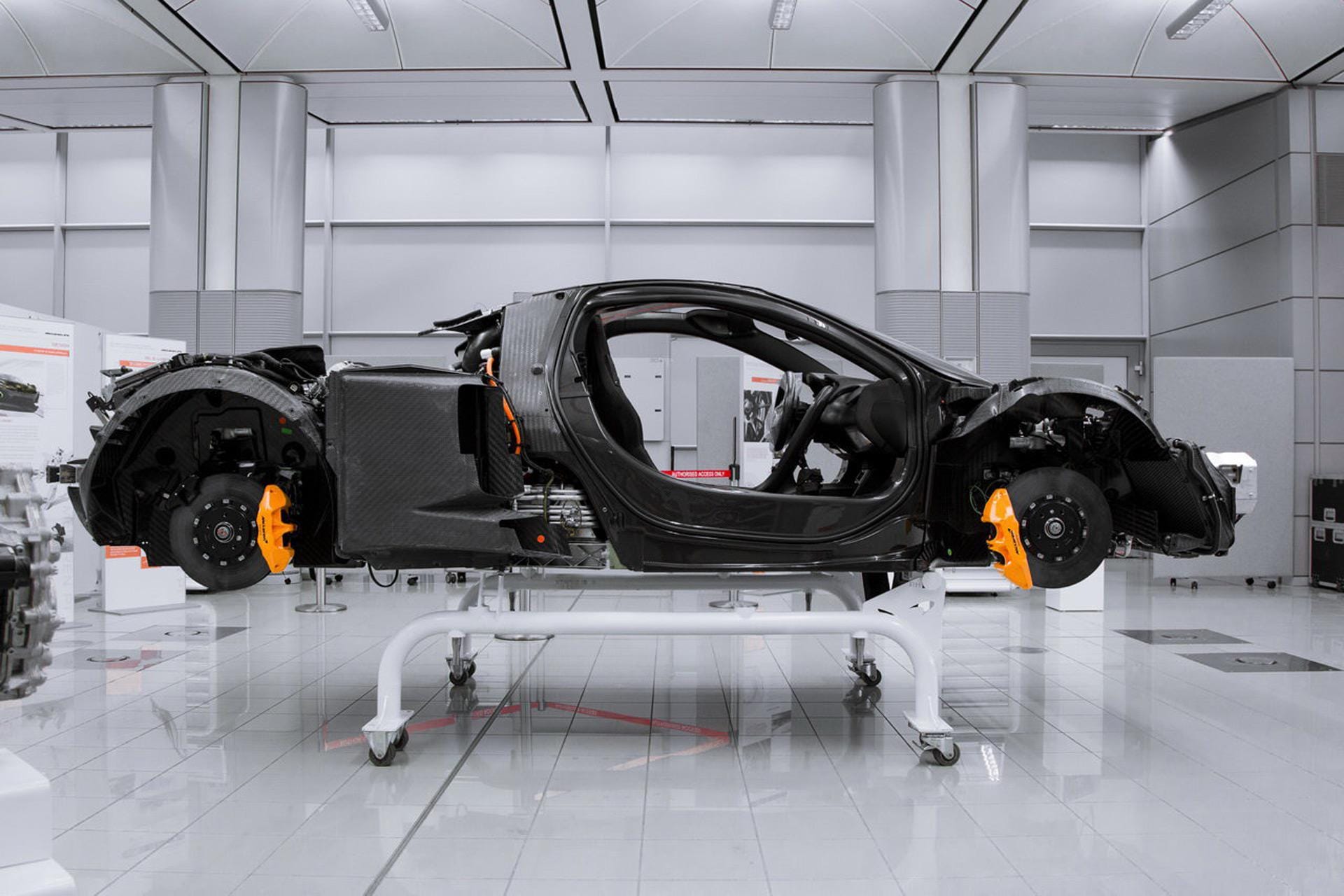
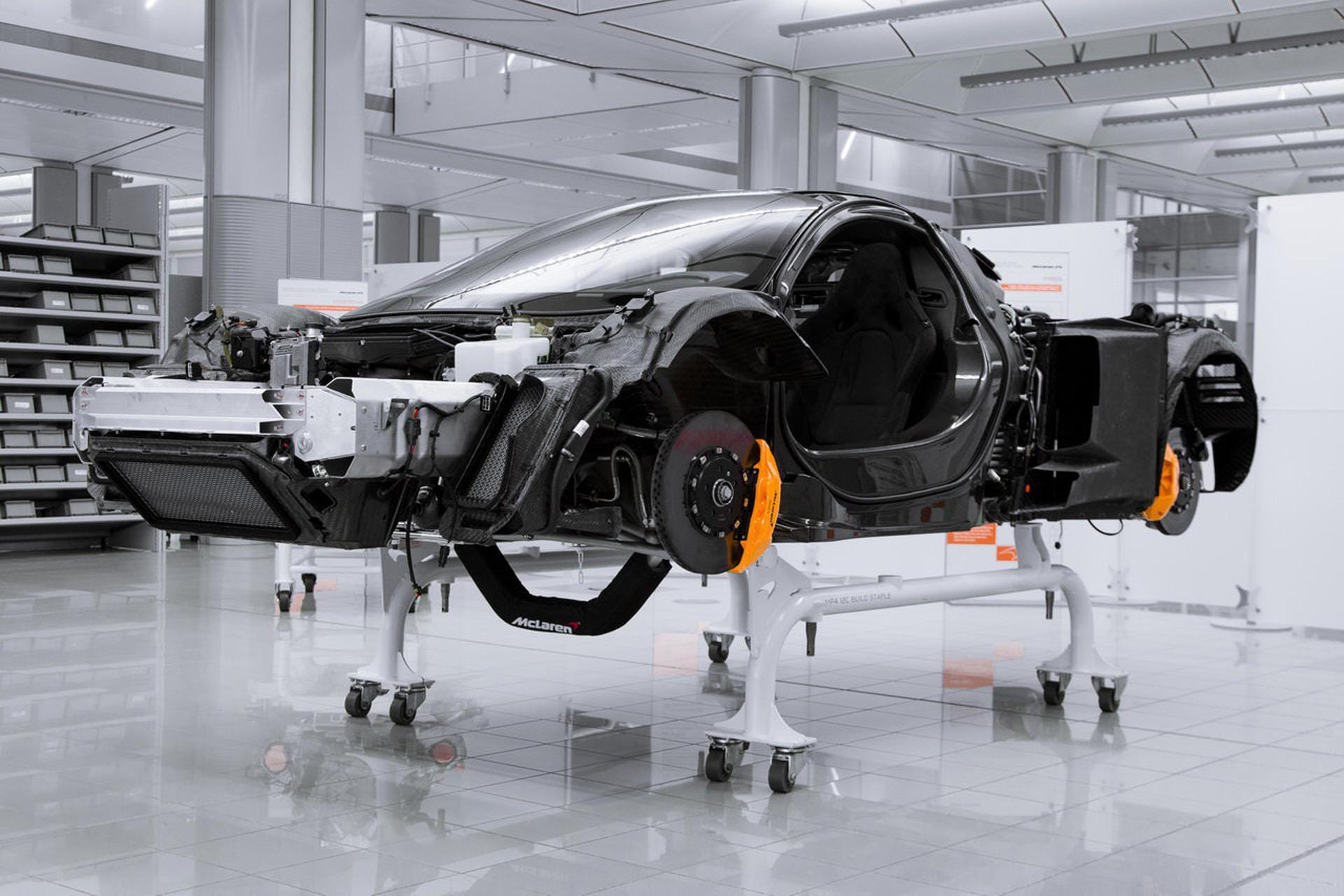
A carbon-fiber monocoque forms the structural heart of many modern hypercars. This single-piece passenger cell provides exceptional rigidity while serving as the foundation for suspension, powertrain, and aerodynamic systems. Engineers can then attach lightweight subframes, body panels, and crash structures without compromising the integrity of the central chassis.
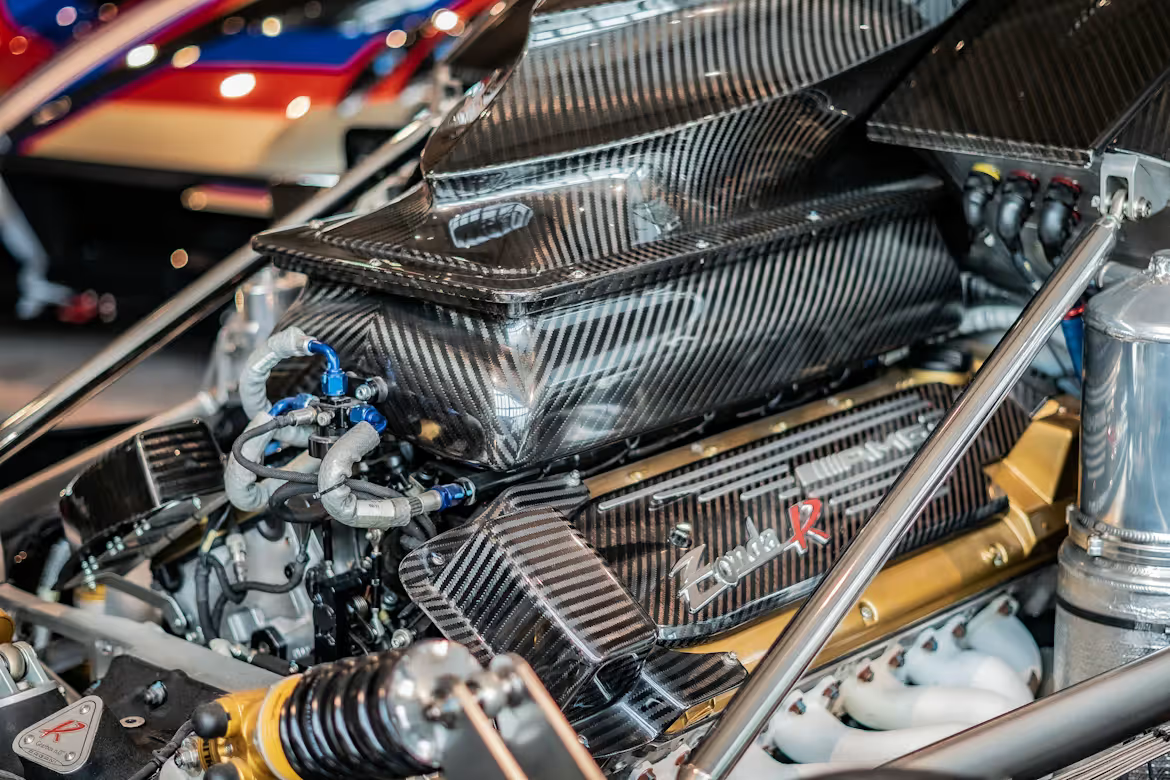
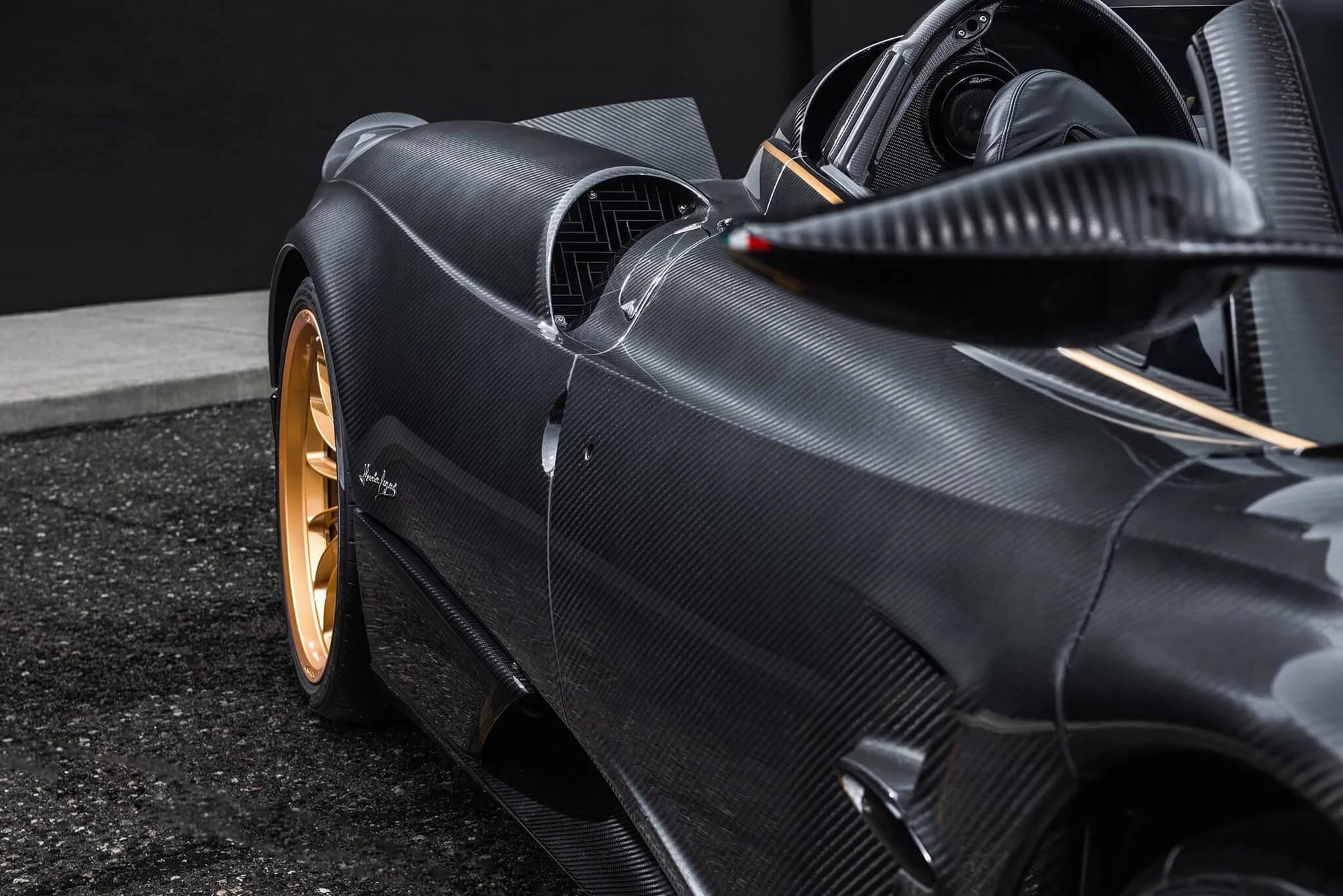
Beyond structural components, carbon fiber appears throughout the vehicle. Exterior panels reduce overall mass while allowing designers to create complex aerodynamic surfaces. Interior trim, racing seats, steering wheels, and even suspension elements often use composite construction to maximise performance and maintain consistent material quality.
For manufacturers operating at the highest level of automotive engineering, carbon fiber is no longer a luxury feature—it has become a fundamental design tool.
The Challenges Behind Composite Manufacturing
Although carbon fiber offers remarkable advantages, working with the material remains significantly more complex than manufacturing traditional metal components. Each panel or structural element requires carefully layered carbon-fiber sheets, specialised resins, precision moulds, controlled curing temperatures, and rigorous quality inspections.
Unlike stamped steel panels that can be produced rapidly in large volumes, composite components demand time, skilled craftsmanship, and meticulous attention to detail. Even minor imperfections during the manufacturing process can affect strength, appearance, or long-term durability.
Repairing damaged carbon-fiber structures also requires specialised expertise. In many cases, technicians must evaluate whether a component can be repaired safely or whether complete replacement is necessary. These manufacturing and maintenance challenges contribute to the higher production costs associated with many supercars and hypercars.
Despite these complexities, manufacturers continue investing heavily in composite technology because the performance benefits consistently outweigh the additional effort and expense.
The Future of Lightweight Engineering
Carbon fiber will continue playing an essential role in performance car development, but engineers are already exploring ways to improve both its sustainability and manufacturing efficiency. New production methods aim to reduce waste, shorten manufacturing times, and increase the availability of recyclable composite materials.
At the same time, electrification is creating fresh opportunities for lightweight engineering. Batteries add considerable mass to performance vehicles, making weight reduction elsewhere even more important. Carbon fiber enables engineers to offset some of that additional weight while maintaining the agility and responsiveness expected from modern performance cars.
Future innovations may combine advanced composites with new materials and manufacturing techniques, but the engineering principle will remain unchanged: reducing unnecessary weight improves nearly every aspect of vehicle performance.
As automotive technology evolves, carbon fiber will likely remain one of the cornerstones of high-performance engineering.
Conclusion
Carbon fiber has fundamentally changed the way performance automobiles are designed, engineered, and driven. Its remarkable combination of lightweight construction, structural strength, and design flexibility has enabled manufacturers to create faster, safer, and more responsive vehicles without compromising durability or refinement.
From Formula 1 circuits to the world's most exclusive hypercars, composite engineering continues to shape the future of automotive innovation. More than simply replacing traditional materials, carbon fiber has redefined what engineers can achieve when performance, safety, and efficiency are pursued together.
As the next generation of supercars embraces electrification and new technologies, carbon fiber will remain a vital ingredient in the pursuit of automotive excellence—proving that sometimes the greatest performance gains come not from adding more power, but from building smarter.
Discover how innovative materials, advanced aerodynamics, and cutting-edge engineering continue to redefine the world's most exceptional performance cars.
About the Writer

James Villiers
Performance Engineering Editor focusing on engines, aerodynamics, chassis development, lightweight construction, and the technologies behind today's fastest road cars.
Discussion
More from this issue.
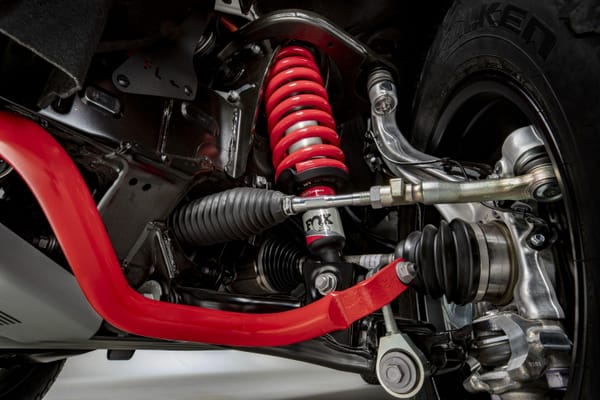
Why Suspension Is the Hidden Foundation of Performance.
Suspension rarely receives the attention given to engines or aerodynamics, yet it determines how effectively a performance car connects its power, tyres, and driver to the road.
 James Villiers

Why the Mid-Engine Layout Changed Performance Cars Forever.
The mid-engine layout transformed the way performance cars distribute weight, manage traction, and approach high-speed handling, becoming a defining architecture of the modern supercar.
 Marcus Chen

Inside the Engineering of the Bugatti Tourbillon.
The Bugatti Tourbillon represents a new era of hypercar engineering, combining a naturally aspirated V16 engine, hybrid technology, and uncompromising craftsmanship.
 Thomas Ashworth
· Printed in pixels, with care.