
Why Suspension Is the Hidden Foundation of Performance.
Suspension rarely receives the attention given to engines or aerodynamics, yet it determines how effectively a performance car connects its power, tyres, and driver to the road.
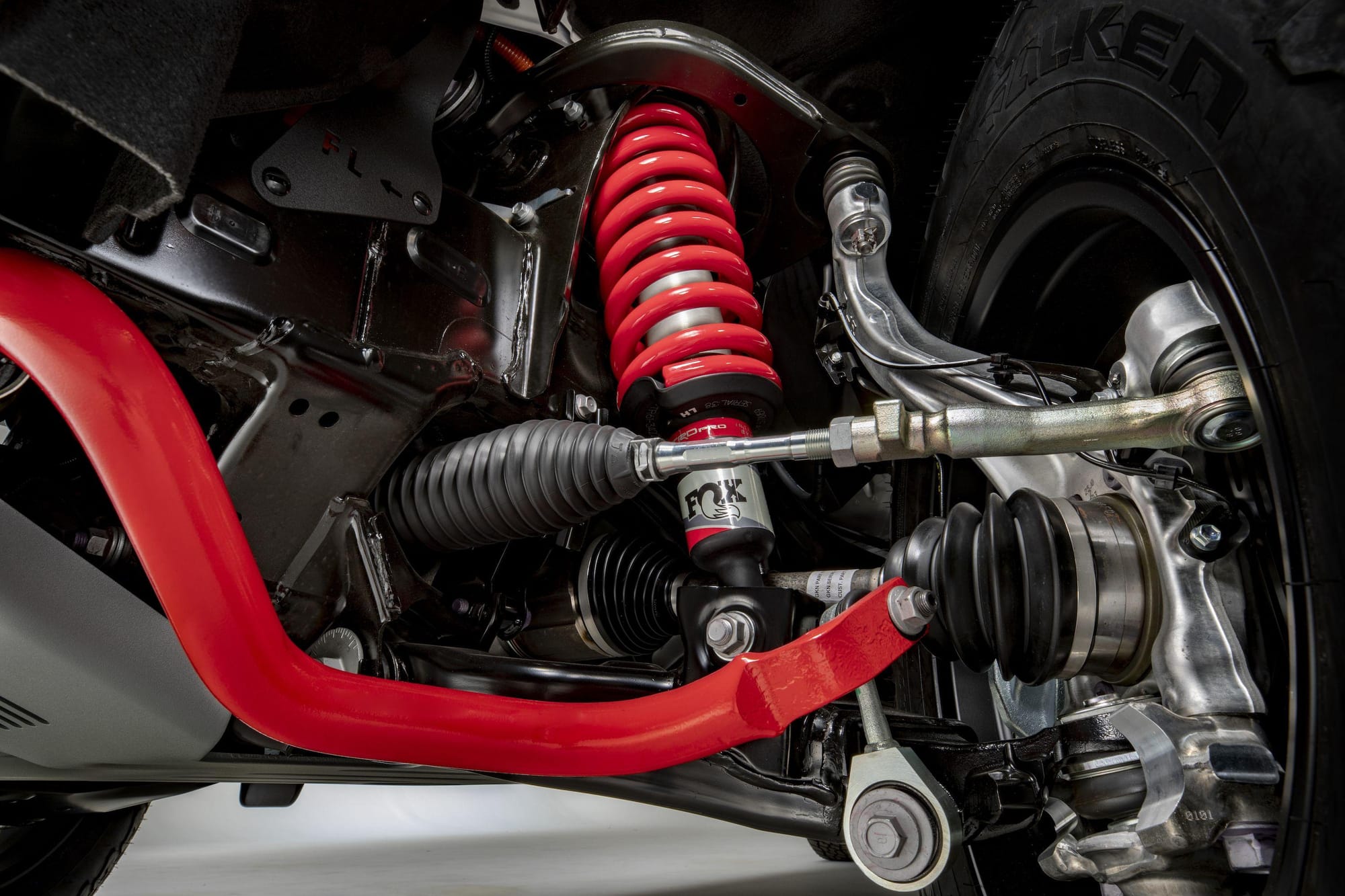
Engines tend to receive the attention. Brakes receive admiration when performance becomes serious, while aerodynamics often provides the most dramatic visual details. Suspension, however, quietly determines how effectively all of these systems work together.
It is the connection between the car and the road.
Every acceleration, braking manoeuvre, corner, and change in direction creates movement that the suspension must control. It needs to keep the tyres connected to the road while managing the forces acting on the body. At the same time, it must provide enough comfort to make the automobile usable beyond perfectly smooth surfaces.
For a performance car, this balance becomes particularly demanding.
A suspension system that is too soft may allow excessive body movement. One that is too stiff can reduce comfort and, on imperfect roads, potentially make it harder for the tyres to maintain consistent contact with the surface.
The best systems therefore do something deceptively difficult.
They make a complex engineering problem feel completely natural from behind the wheel.
More Than Springs and Dampers
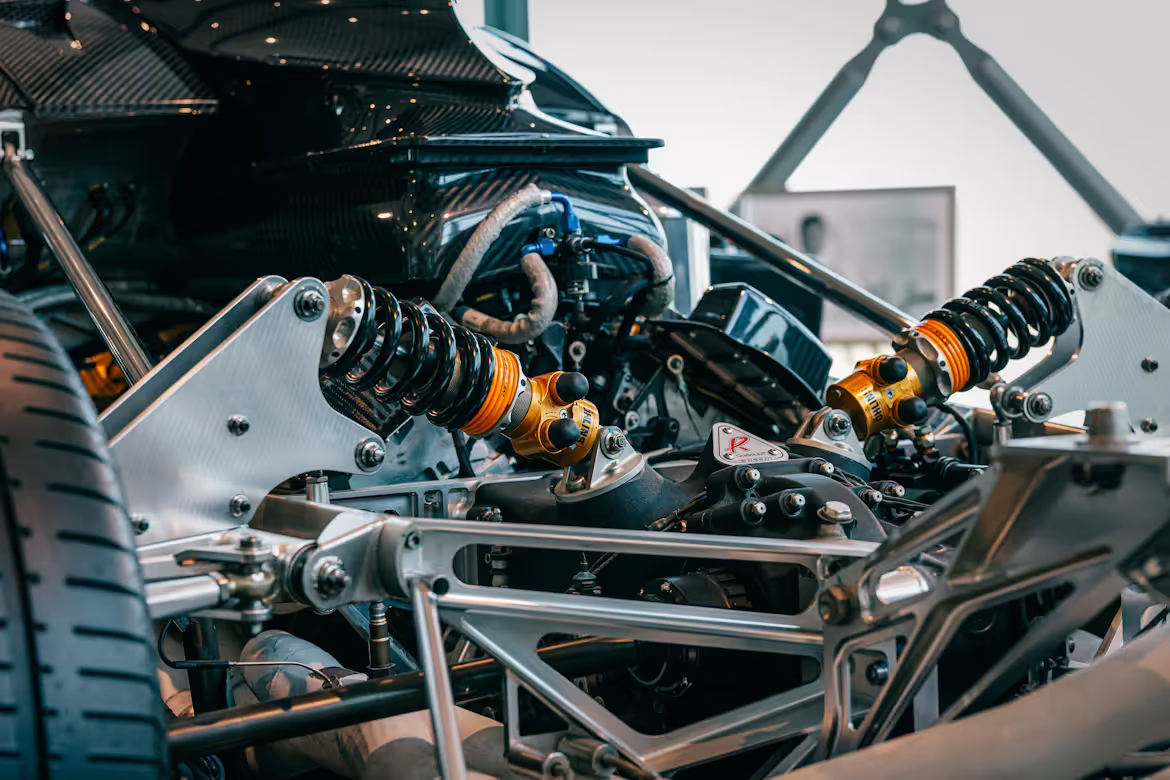
When people think about suspension, springs and shock absorbers are usually the first components that come to mind. They are important, but a modern suspension system is much more than these individual parts.
Control arms, bushings, anti-roll systems, steering components, wheel geometry, and increasingly electronic systems all influence how an automobile responds to the road.
The geometry determines how the wheel moves as the suspension travels. Engineers carefully consider how changes in wheel position, camber, and alignment affect grip and stability.
The goal is to maintain predictable tyre behaviour while controlling the movement of the vehicle's body.
This is why suspension development requires such detailed testing.
A small change in one component can influence the behaviour of the entire chassis.
Controlling Body Movement
Whenever a car accelerates, brakes, or turns, its weight shifts.
During acceleration, the body tends to move rearward. Under braking, weight transfers toward the front. During cornering, forces act across the vehicle and create body roll.
Suspension engineers work to control these movements without eliminating the natural behaviour of the vehicle entirely.
Too much movement can make a performance car feel slow to respond and difficult to place accurately. Excessive stiffness, however, can make the vehicle harsh and reduce its ability to cope with uneven surfaces.
The objective is therefore controlled movement.
A well-developed suspension system allows the driver to understand what the chassis is doing while keeping the tyres in a useful operating range.
The car feels stable without becoming lifeless.
Springs and Dampers
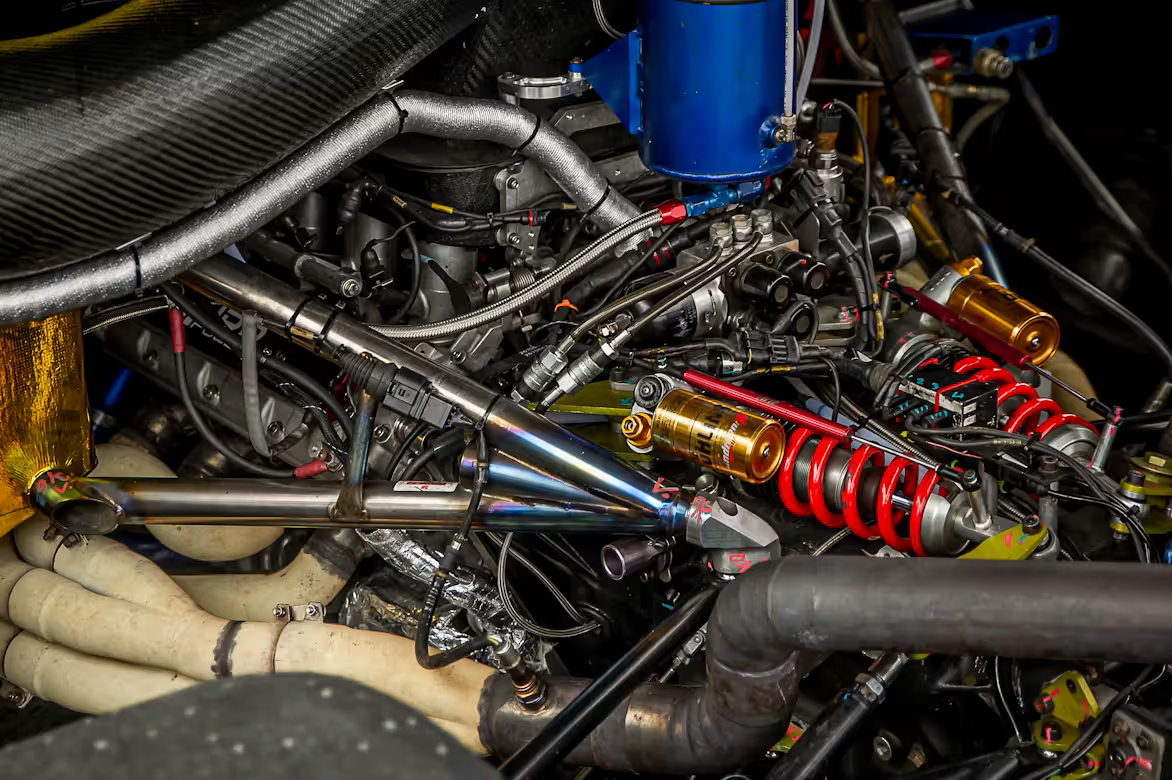
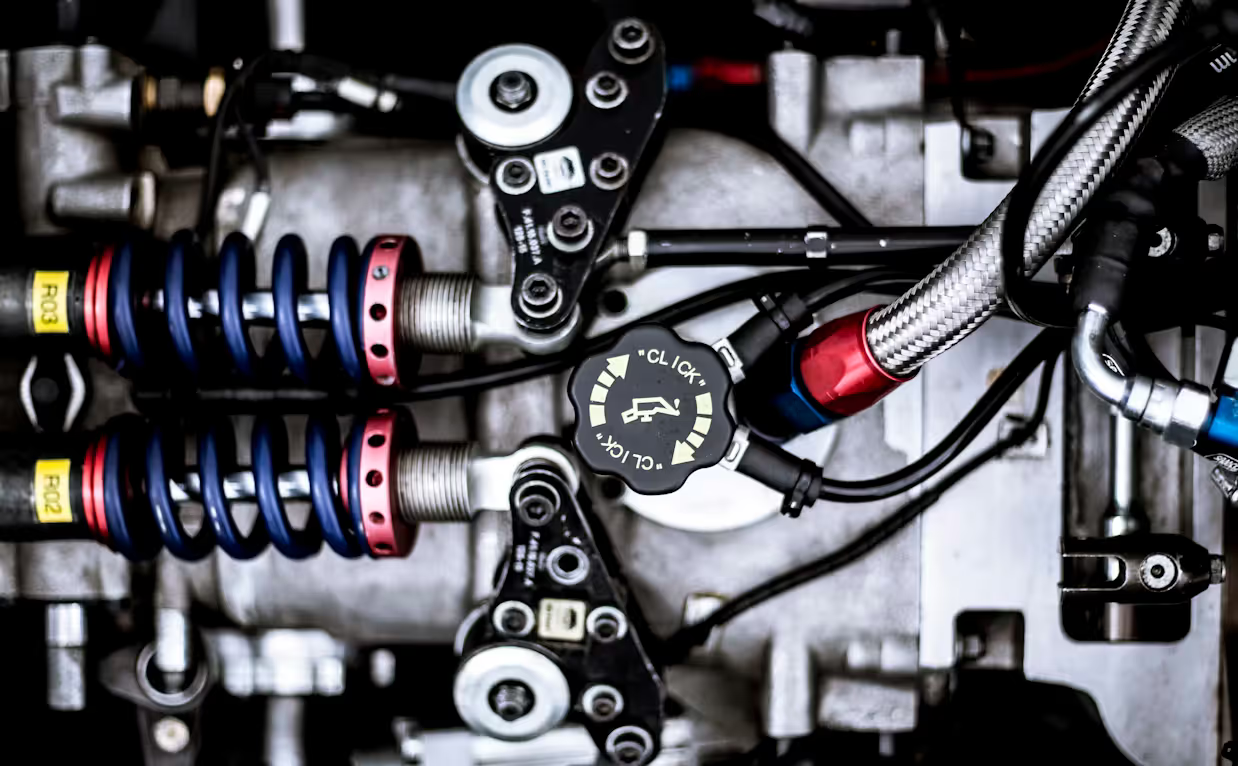
Springs support the vehicle's weight and allow the wheels to move relative to the body. Dampers control the speed and character of that movement.
The relationship between them is critical.
If a spring compresses or extends without sufficient damping, the vehicle can continue moving after an input, creating unwanted oscillation. If damping is too aggressive, the suspension may struggle to respond naturally to road imperfections.
Performance engineers therefore spend considerable time finding the right balance.
The ideal setup depends on the automobile's purpose. A track-focused sports car may require a more controlled chassis response, while a grand tourer needs to absorb long stretches of imperfect road without exhausting its occupants.
Keeping the Tyres Connected
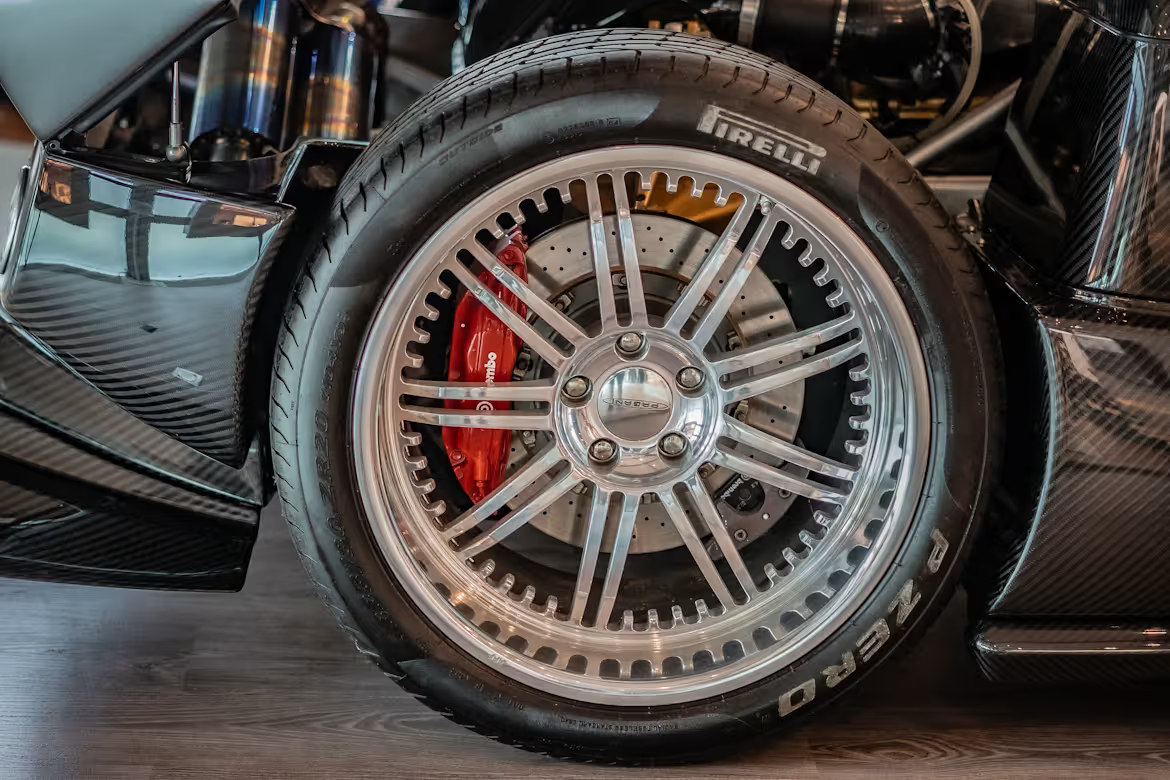
Ultimately, suspension exists to help the tyres do their job.
Tyres are the only components physically connecting the automobile to the road. Their ability to accelerate, brake, and generate cornering grip depends heavily on how consistently they remain in contact with the surface.
This becomes especially important on imperfect roads.
A perfectly smooth track can allow engineers to focus heavily on controlling body movement. Public roads introduce bumps, changes in surface texture, undulations, and unexpected imperfections.
The suspension must allow the wheels to respond to these changes without destabilising the rest of the vehicle.
Performance Versus Comfort
The defining challenge of performance suspension is finding the point where control and comfort can coexist.
A track-focused automobile can accept a firm suspension because its environment is predictable and its primary purpose is performance. A road-going sports car has to deal with potholes, expansion joints, uneven surfaces, and long journeys.
This is where suspension tuning becomes an exercise in compromise.
A well-developed road car does not need to eliminate body movement completely. Instead, it needs to control that movement while allowing the wheels to respond naturally to changes in the road.
The result should feel composed rather than rigid.
That distinction is important. A suspension system that feels extremely firm is not automatically a better performance system. If the wheels cannot follow an imperfect surface effectively, additional stiffness can actually work against the objective of maintaining grip.
"The finest suspension does not fight the road. It works with it."
Adaptive Suspension
Modern technology has given engineers a new way to approach this compromise.
Adaptive suspension systems can change damping characteristics according to driving conditions, allowing one automobile to offer different personalities. A softer setting can prioritise comfort during everyday driving, while a more controlled configuration can sharpen the response when the driver wants greater involvement.
The advantage is versatility.
A grand tourer can remain comfortable on a long journey and become more controlled on a winding road. A performance car can provide a relaxed setting for urban driving without abandoning its dynamic character.
Electronic control systems can continuously monitor vehicle behaviour and adjust the suspension accordingly.
Instead of asking engineers to choose one permanent character, modern systems allow them to create a broader range of responses.
Motorsport as a Laboratory
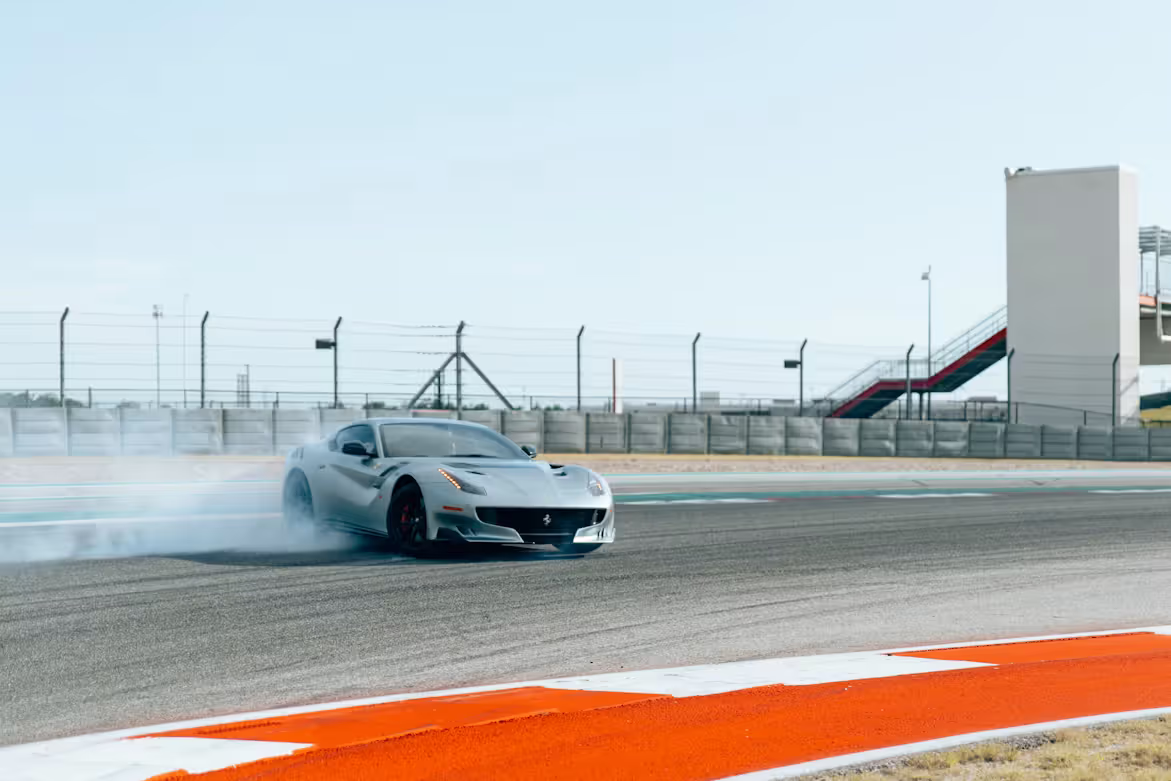
Motorsport has provided engineers with an environment where suspension behaviour can be studied under demanding conditions.
Race cars need to maintain tyre contact while braking heavily, accelerating, and changing direction repeatedly. Small differences in suspension behaviour can influence how effectively the tyres operate throughout a lap.
Competition has therefore encouraged the development of sophisticated suspension geometry, damping strategies, lightweight components, and increasingly advanced control systems.
Some of these ideas eventually influence road cars, although the requirements are different.
A racing car can prioritise performance almost exclusively. A road car must also provide comfort, durability, safety, and usability.
The most interesting developments occur when engineers adapt competition knowledge rather than simply copying racing hardware.
Suspension Defines the Driving Experience
Two automobiles can share similar engines, tyres, and power outputs yet feel completely different because of their suspension tuning.
One may feel calm and effortless, while another feels immediate and highly communicative. Both can be capable performance cars, but their characters will be fundamentally different.
Suspension influences how quickly the car responds to steering, how confidently it brakes, how it handles road imperfections, and how much information reaches the driver.
This is why suspension is so closely connected with the personality of an automobile.
The engine determines how the car produces its performance.
The suspension determines how that performance reaches the road.
The Future of Suspension Engineering
Suspension development is likely to become increasingly intelligent.
Advanced sensors and electronic control systems can allow vehicles to react to changes in road conditions more quickly. Electrification may also encourage new approaches to chassis design as engineers work to manage the additional mass associated with batteries.
At the same time, lightweight materials will remain important. Reducing unsprung mass can help the suspension respond more effectively to changes in the road, improving both ride quality and handling.
Future systems may therefore combine lightweight mechanical components with increasingly sophisticated electronic control.
Conclusion
Suspension is one of the least visible yet most influential parts of a performance automobile.
It controls body movement, manages weight transfer, helps maintain tyre contact, and determines how the driver experiences acceleration, braking, and cornering. Springs and dampers remain fundamental, but modern systems increasingly combine mechanical engineering with electronic intelligence.
The best suspension does not simply make a car stiffer or softer.
It makes the automobile feel coherent.
Every steering input, braking manoeuvre, and change in direction becomes part of a controlled interaction between the driver, chassis, tyres, and road.
That is why suspension deserves to be considered the hidden foundation of performance.
The engine may create the excitement.
But the suspension determines whether the rest of the car can use it.
Discover the engineering principles, materials, and technologies shaping the world's most engaging performance automobiles.
About the Writer

James Villiers
Performance Engineering Editor focusing on engines, aerodynamics, chassis development, lightweight construction, and the technologies behind today's fastest road cars.
Discussion
More from this issue.

Why the Mid-Engine Layout Changed Performance Cars Forever.
The mid-engine layout transformed the way performance cars distribute weight, manage traction, and approach high-speed handling, becoming a defining architecture of the modern supercar.
 Marcus Chen

Inside the Engineering of the Bugatti Tourbillon.
The Bugatti Tourbillon represents a new era of hypercar engineering, combining a naturally aspirated V16 engine, hybrid technology, and uncompromising craftsmanship.
 Thomas Ashworth
How Carbon Fiber Changed High-Performance Engineering.
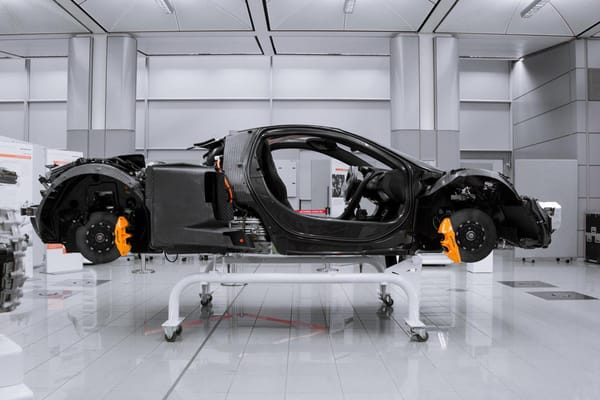
Carbon fiber transformed modern performance cars by reducing weight, increasing structural strength, and enabling engineers to build faster, safer, and more agile automobiles.
 James Villiers
· Printed in pixels, with care.