
Why the Mid-Engine Layout Changed Performance Cars Forever.
The mid-engine layout transformed the way performance cars distribute weight, manage traction, and approach high-speed handling, becoming a defining architecture of the modern supercar.


Some automotive innovations change a single component. Others change the entire philosophy of how a performance car is designed.
The mid-engine layout belongs firmly in the second category.
By positioning the engine between the front and rear axles, engineers can place a significant amount of the automobile's mass closer to its centre. This changes how the vehicle responds to steering inputs, acceleration, braking, and changes in direction.
The result is an architecture that became closely associated with some of the world's most celebrated performance cars.
But the appeal of the mid-engine layout is not simply about placing an engine in a different location. It is about what that decision allows engineers to do with the rest of the automobile.
Weight distribution, traction, suspension geometry, aerodynamics, cabin position, and cooling systems can all be reconsidered around the central powertrain.
The mid-engine automobile is therefore less a single engineering solution than a complete design philosophy.
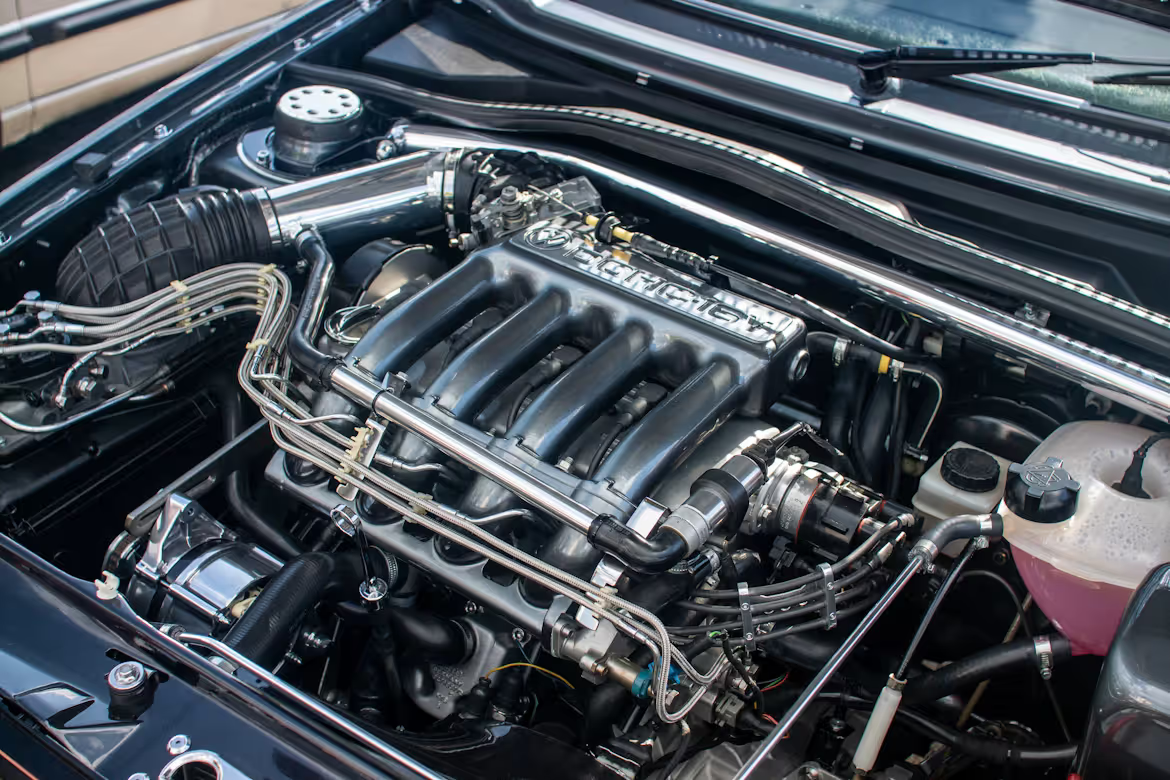
What Makes the Layout Different?
In a conventional front-engine performance car, a substantial portion of the vehicle's mass is positioned ahead of the passenger compartment. A rear-engine design places the powertrain much further back.
A mid-engine configuration takes a different approach by positioning the engine behind the driver but ahead of the rear axle.
This central position can help create a more balanced vehicle around its centre of mass. Instead of concentrating a large amount of weight at either extreme of the car, engineers can place it closer to the middle.
That can have important consequences when the vehicle changes direction.
A car's mass does not simply disappear when the steering wheel is turned. It has to rotate around its centre of gravity. Where that mass is located therefore influences how quickly and predictably the automobile responds.
The mid-engine layout provides engineers with a powerful foundation for controlling that behaviour.
Balance Before Brute Force
Performance engineering is often described through horsepower and acceleration, but handling balance can be just as important.
A well-balanced automobile can respond naturally to steering inputs, maintain predictable behaviour through corners, and allow its tyres to work more effectively.
The mid-engine architecture can support this objective by placing the powertrain close to the centre of the vehicle. This reduces the influence of large masses positioned far from the centre and can create a more responsive chassis.
The result is particularly valuable during cornering.
As the driver turns into a bend, the vehicle needs to rotate smoothly while maintaining tyre contact and stability. A carefully engineered mid-engine chassis can provide a highly responsive platform for achieving this balance.
But responsiveness is only useful when it remains predictable.
That is why mid-engine engineering requires such careful attention to suspension geometry, tyres, weight distribution, and electronic chassis control.
Traction Where It Matters
The position of the engine can also influence traction.
With the powertrain located close to the rear axle, engineers can place significant mass over the driven wheels. This can help the tyres generate traction during acceleration, particularly when exiting corners.
That characteristic became especially valuable as performance cars gained more power.
Rather than simply increasing engine output, engineers could improve how effectively the available power reached the road.
This is one reason the mid-engine layout became particularly attractive for high-performance automobiles. It offered a foundation that could accommodate increasingly powerful powertrains while maintaining a strong focus on balance and traction.
Modern electronic systems have expanded these capabilities further, allowing traction and stability systems to continuously manage the relationship between power, tyres, and road surface.

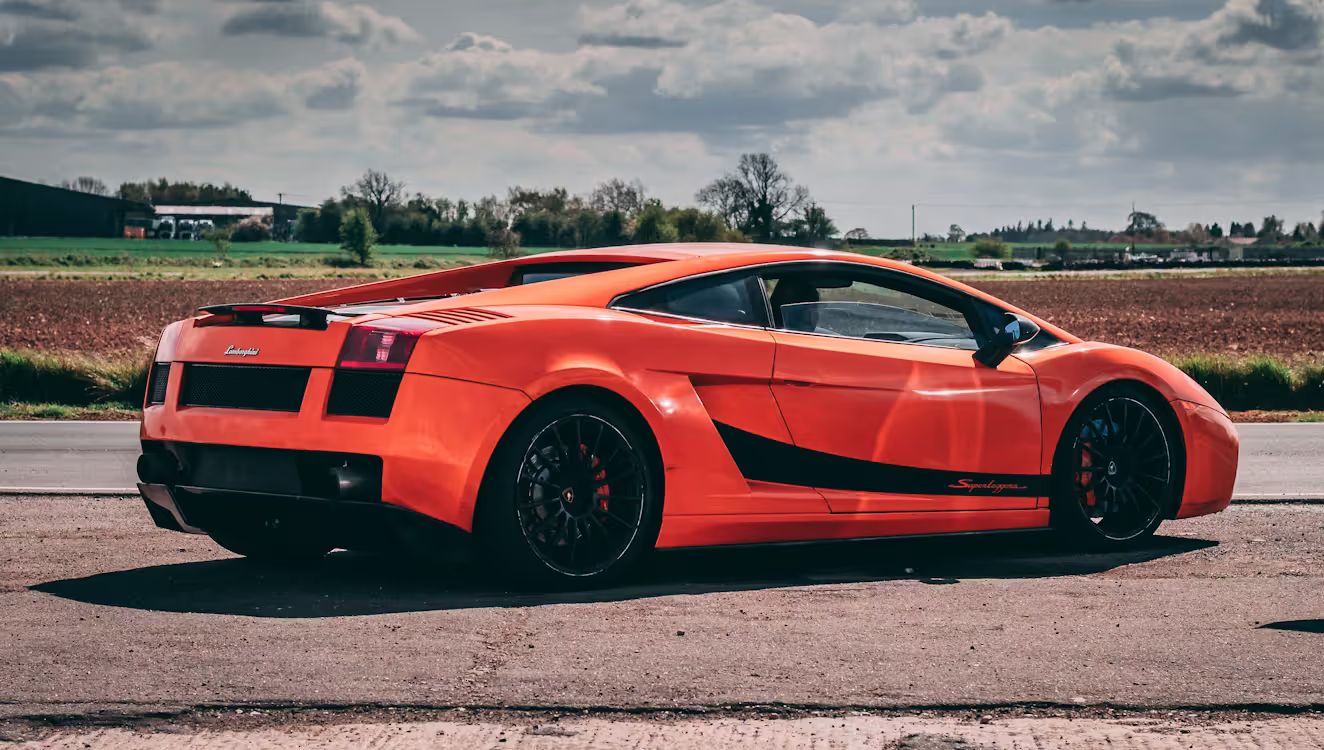
Why Cornering Became the Story
The real significance of the mid-engine layout becomes apparent when the road begins to curve.
Straight-line acceleration can be improved through power, gearing, and traction. Cornering requires a much more complex interaction between the chassis, tyres, suspension, aerodynamics, and driver.
The mid-engine architecture provides a strong starting point for this interaction.
A well-developed chassis can feel responsive without becoming unpredictable, allowing the driver to place the automobile accurately through a sequence of corners. Combined with modern suspension and aerodynamic technology, the architecture has become one of the defining foundations of contemporary supercar dynamics.
Packaging the Mid-Engine Automobile
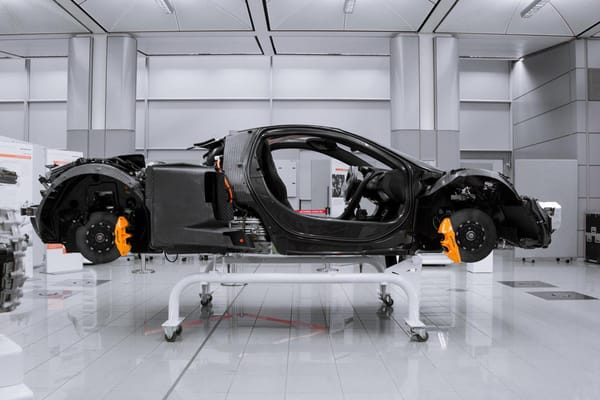
The advantages of placing the engine near the centre of the car come with significant engineering challenges. The powertrain occupies valuable space directly behind the passenger compartment, leaving designers and engineers to work carefully around cooling systems, exhaust components, suspension hardware, and luggage capacity.
Cooling is particularly important. A high-performance engine generates substantial heat, and positioning it behind the cabin requires carefully controlled airflow. Air intakes, ducts, radiators, and heat shielding must all work together without compromising the aerodynamic shape of the vehicle.
The cabin itself also becomes part of the engineering equation. A mid-engine layout can create a distinctive driving position and compact rear structure, but it requires careful packaging to maintain visibility, comfort, and practicality.
This complexity is one reason the architecture is generally associated with specialised performance automobiles.
The engineering solution is rarely simple.
"Moving the engine changed more than weight distribution. It changed what designers believed a performance car could be."
Motorsport's Influence
Motorsport played an important role in demonstrating what a centrally positioned powertrain could achieve. Racing engineers are constantly searching for ways to improve weight distribution, traction, and cornering performance, making the position of the engine a fundamental part of chassis strategy.
As competition pushed performance forward, lessons from racing gradually influenced road-car development.
The mid-engine layout became particularly attractive for manufacturers seeking to create road cars with the handling characteristics associated with competition machines. The connection between racing technology and road-going performance helped establish the architecture as a symbol of serious engineering.
Over time, the layout became more than an engineering choice.
It became part of the identity of the modern supercar.
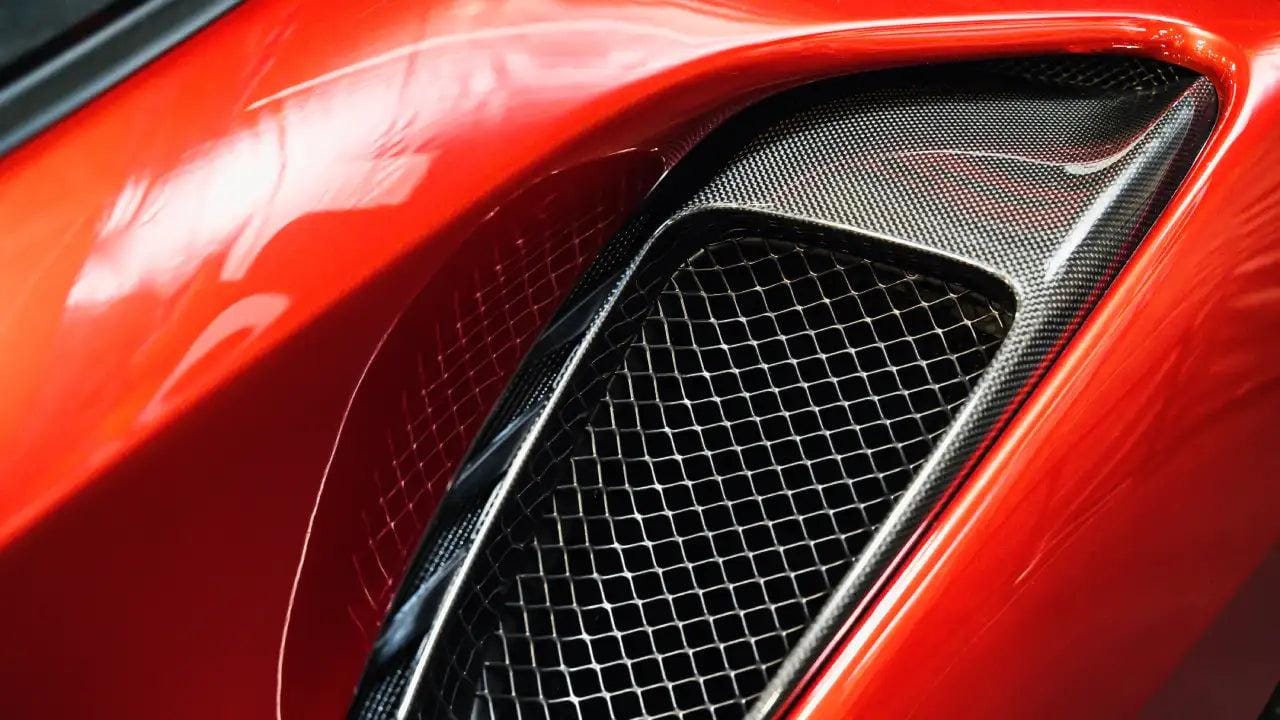
Why Mid-Engine Became a Supercar Signature
The architecture eventually became visually recognisable as well as technically significant.
Large side air intakes, compact cabins, dramatic rear bodywork, and low proportions became familiar characteristics of mid-engine performance cars. These elements were not created simply for visual drama. Many were direct consequences of the engineering package underneath.
The result was a distinctive visual language.
A mid-engine supercar could communicate its mechanical layout through its proportions before the viewer even knew what was beneath the bodywork.
This connection between engineering and design helped establish the architecture as one of the defining characteristics of the supercar.
It also created a clear distinction between different types of performance automobiles. A grand tourer might prioritise long-distance comfort and front-engine proportions, while a mid-engine supercar could communicate a more focused approach to handling and performance.
The Architecture Continues to Evolve
The arrival of hybrid and electric powertrains is creating new possibilities for performance-car architecture.
Hybrid systems can combine an internal-combustion engine with electric motors positioned in different parts of the vehicle, allowing engineers to influence power delivery and weight distribution in new ways.
Electric powertrains introduce even greater flexibility because motors can be positioned independently of a traditional engine and transmission arrangement. This means future performance cars may achieve some of the dynamic advantages historically associated with mid-engine layouts through entirely different architectures.
Yet the lessons learned from the mid-engine era remain important.
Centralising mass, controlling weight distribution, managing traction, and creating predictable handling will continue to matter regardless of the powertrain.
The engineering principles survive even when the hardware changes.
Why the Mid-Engine Idea Still Matters
The importance of the mid-engine layout goes beyond the number of automobiles that use it.
It represents a fundamental shift in how performance cars are engineered. Instead of treating the engine as something that simply needs to be packaged somewhere within the vehicle, engineers began considering its position as a central part of the vehicle's dynamic character.
That philosophy helped create some of the most influential performance automobiles of the modern era.
It also changed what enthusiasts expected from a supercar. Balance, responsiveness, traction, and cornering ability became just as important as straight-line performance.
The result is an architecture that remains deeply connected with the idea of the modern exotic automobile.
Conclusion
The mid-engine layout changed performance cars because it changed the way engineers thought about balance.
By positioning the powertrain close to the centre of the vehicle, designers gained a powerful foundation for controlling weight distribution, traction, and cornering behaviour. The architecture introduced significant packaging and cooling challenges, but the dynamic possibilities made those compromises worthwhile.
Motorsport helped demonstrate the potential of the concept, while road-car manufacturers transformed it into one of the defining characteristics of the supercar.
Today, electrification and advanced powertrain technology are creating new alternatives. Future performance cars may not need a conventional engine positioned behind the driver to achieve exceptional balance.
Discover the engineering ideas, technologies, and innovations that continue to shape the world's most remarkable performance automobiles.
About the Writer

Marcus Chen
Performance EV Editor covering electric supercars, next-generation propulsion, battery innovation, and the future of high-performance automotive engineering.
Discussion
More from this issue.
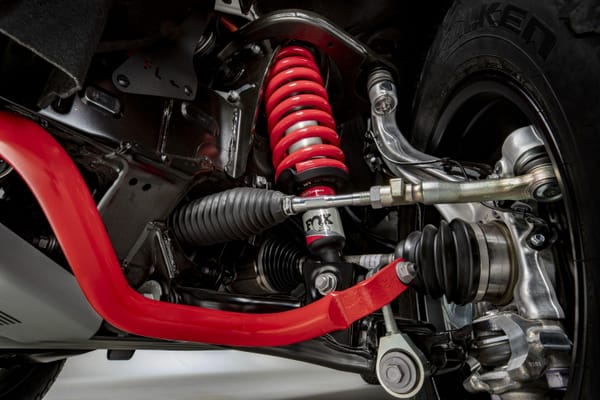
Why Suspension Is the Hidden Foundation of Performance.
Suspension rarely receives the attention given to engines or aerodynamics, yet it determines how effectively a performance car connects its power, tyres, and driver to the road.
 James Villiers

Inside the Engineering of the Bugatti Tourbillon.
The Bugatti Tourbillon represents a new era of hypercar engineering, combining a naturally aspirated V16 engine, hybrid technology, and uncompromising craftsmanship.
 Thomas Ashworth
How Carbon Fiber Changed High-Performance Engineering.
Carbon fiber transformed modern performance cars by reducing weight, increasing structural strength, and enabling engineers to build faster, safer, and more agile automobiles.
James Villiers
· Printed in pixels, with care.