
Inside the World of Collector Car Auctions.
Collector car auctions bring rare automobiles, passionate enthusiasts, and remarkable automotive histories together in one of the world's most fascinating marketplaces.
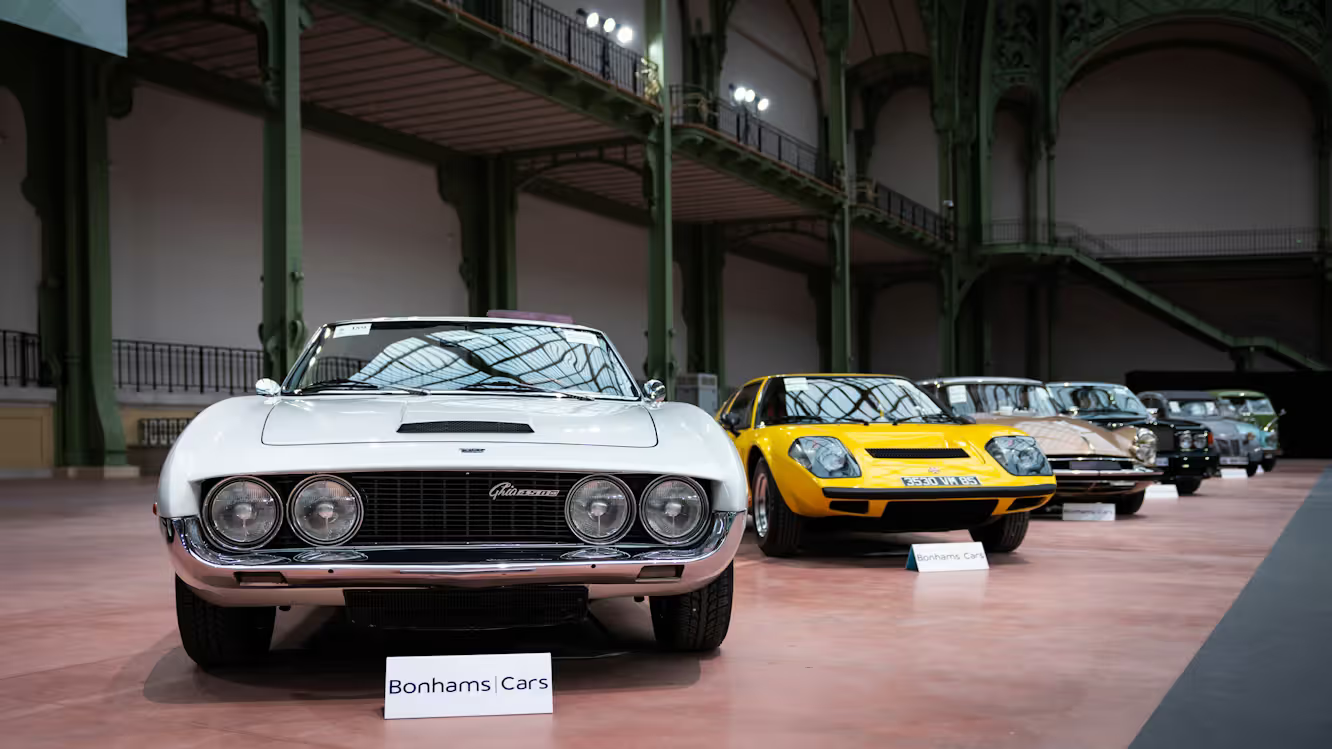
Few automotive environments create quite the same sense of anticipation as a collector car auction. Rows of beautifully preserved automobiles sit beneath carefully arranged lights while enthusiasts, collectors, historians, and prospective owners examine every detail.
But an auction is about much more than buying and selling cars.
Each automobile arrives with a story. Its design, production history, ownership records, restoration, competition history, and personal connections can all contribute to its significance. When the bidding begins, those stories become part of the atmosphere surrounding the car.
For collectors, an auction can therefore feel like a meeting point between automotive history and contemporary culture. A rare automobile that spent decades in private ownership can suddenly become the focus of an international audience, while another car may find a new custodian who intends to preserve its story for the next generation.

More Than a Marketplace
A collector car auction combines elements of a marketplace, exhibition, and social gathering. Before bidding begins, potential buyers have an opportunity to inspect automobiles closely, study their documentation, and understand their history.
This process is particularly important when dealing with historically significant vehicles. A car's condition is only one part of its story. Original components, previous restoration work, ownership records, and documented use can all influence how collectors understand the automobile.
The auction environment brings these details together in a highly visible setting.
An automobile that might previously have been known only within a small circle of enthusiasts can suddenly be examined by collectors from around the world. Its history becomes part of a broader conversation about design, engineering, craftsmanship, and automotive heritage.
This is one reason auctions remain such an important part of collector culture.
They provide a stage for automobiles that deserve to be remembered.
The Story Behind the Car
Every important collector automobile has a story, but not every story carries the same significance.
Some cars are important because of their engineering. Others represent a defining moment in a manufacturer's history or an important development in automotive design. Competition history can add another dimension, particularly when a vehicle participated in significant events or represents an important period in motorsport.
Personal ownership can also become part of an automobile's identity. A documented history of careful stewardship may demonstrate that a vehicle has been preserved with unusual attention to originality.
This is why auction descriptions often go beyond basic specifications. The model name, engine configuration, and production details establish the foundation, but the story gives the automobile character.
Collectors are not simply evaluating a machine.
They are evaluating a piece of history.
Provenance and Originality
For historically significant automobiles, provenance can be one of the most important elements of the story.
Documents, photographs, service records, factory information, and ownership history can help establish how an automobile has changed over time. These records provide context and help distinguish a carefully preserved vehicle from one whose history is uncertain.
Originality is equally important. An automobile retaining its original components and period-correct details can provide a much clearer connection to the era in which it was built.
That does not mean every restored automobile lacks significance. Expert restoration can preserve vehicles that might otherwise deteriorate beyond repair. The important distinction is transparency.
Collectors want to understand what has survived, what has been restored, and what has been changed.
A well-documented history allows the automobile to be appreciated honestly.

Presentation Changes Perception
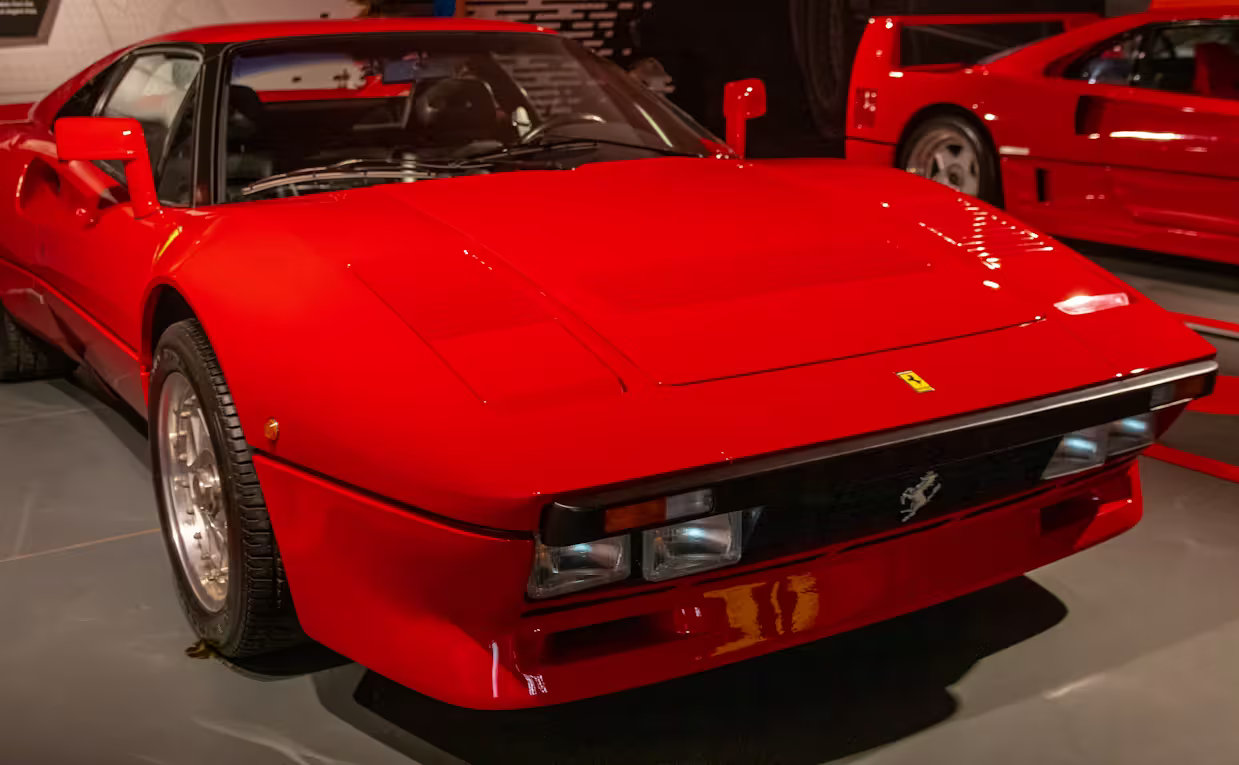
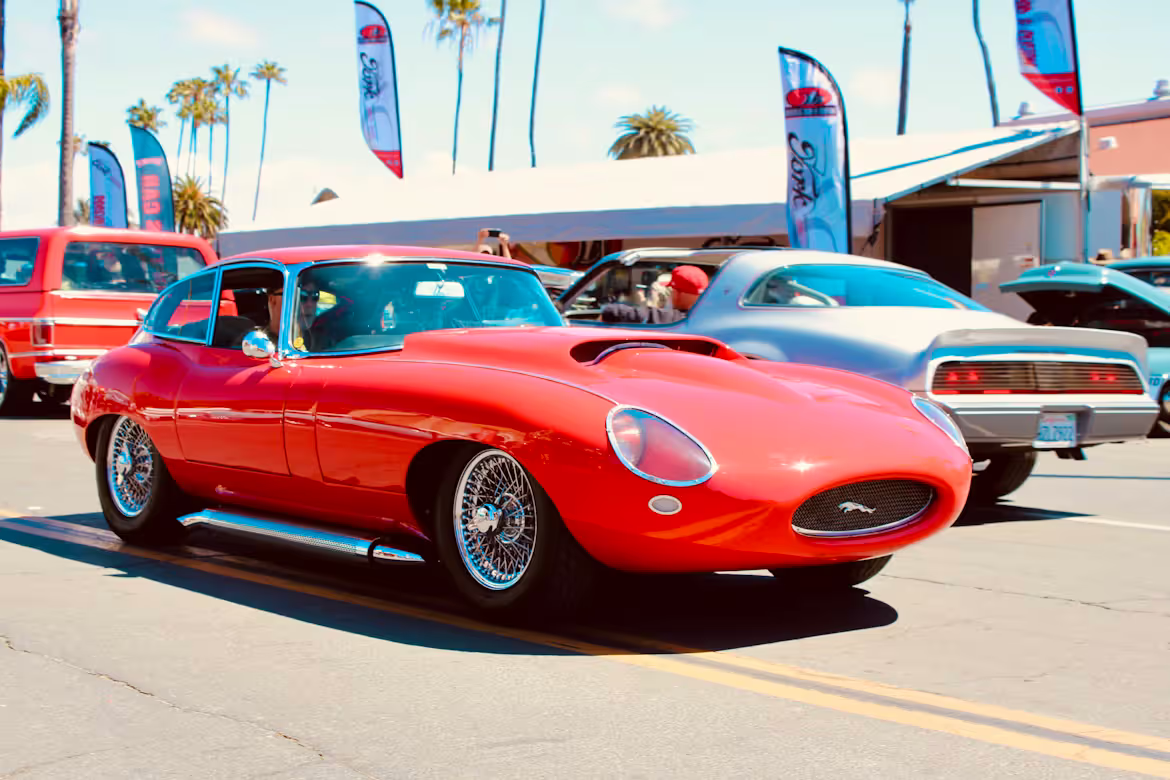
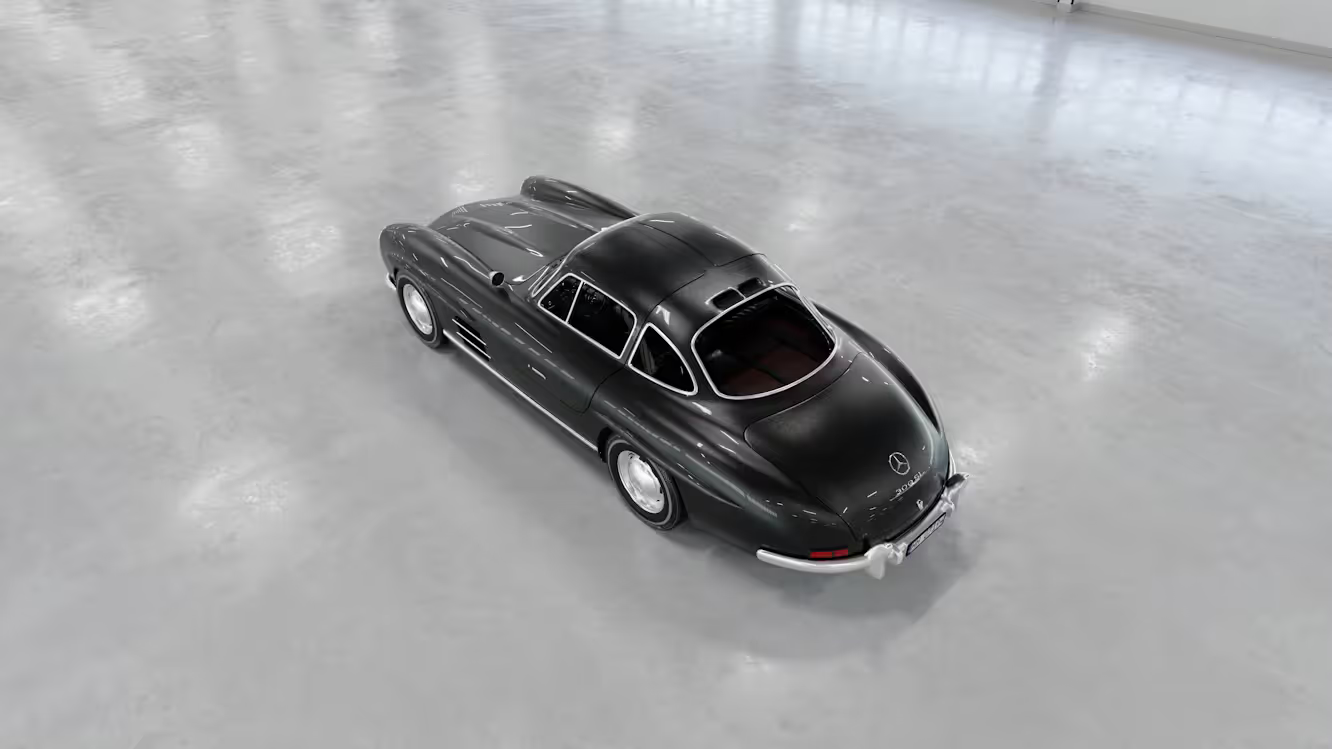
The way an automobile is presented can influence how visitors understand it. Careful lighting can reveal the shape of a body panel, while a clean and uncluttered display allows details to become the focus.
Good presentation does not replace authenticity, but it helps communicate the qualities that make an automobile significant.
A beautifully preserved interior becomes more meaningful when its craftsmanship can be examined closely. Original paintwork becomes part of the story when its condition is presented honestly. A historic racing feature becomes more interesting when photographs or documentation explain its purpose.
The Theatre of Bidding
There is a unique tension in the final moments before an auction begins. Conversations become quieter, attention shifts toward the stage, and everyone in the room understands that a particular automobile is about to begin a new chapter.
The bidding itself can be remarkably simple. A gesture, a raised paddle, or an online confirmation can represent a significant decision. Yet behind that simplicity is a combination of knowledge, confidence, emotion, and timing.
For collectors, the experience is not necessarily about winning at any cost. Experienced buyers understand the importance of knowing what makes a particular automobile meaningful and deciding where personal interest ends.
The atmosphere can be part of the appeal, but the automobile remains the reason everyone is there.
"An auction gives a historic automobile something every collector understands: the chance to begin another chapter."
Why Presentation Matters
A collector automobile cannot tell its entire story through specifications alone. Its presentation must communicate the details that make it distinctive.
Photography, documentation, inspection opportunities, and carefully prepared descriptions allow potential buyers to understand the automobile before making a decision. Small details can become important: the condition of an original interior, the finish of a dashboard, the presence of period-correct components, or evidence of previous restoration.
Good presentation should therefore be informative rather than theatrical.
The purpose is not to make an automobile appear more significant than it is. It is to give collectors enough context to understand what they are considering.
When presentation is honest and detailed, it strengthens confidence in the automobile and its history.

Auctions as Automotive Preservation
Collector-car auctions also play an important role in preserving automotive history. When significant automobiles change ownership, their new custodians often continue the work of maintaining, documenting, and presenting them.
A well-preserved automobile can eventually become part of exhibitions, driving events, private collections, or automotive gatherings where its history can be shared with a wider audience.
This creates an interesting cycle.
One generation preserves an automobile, another discovers its significance, and eventually another collector takes responsibility for carrying its story forward.
The auction is simply the point where that responsibility changes hands.
In this way, the collector market can contribute to the survival of automobiles that might otherwise disappear from public view.
The Digital Collector-Car Auction
The collector-car auction has also evolved beyond traditional auction halls. Digital platforms allow enthusiasts to discover automobiles, review documentation, communicate with sellers, and participate in auctions without being physically present.
This has expanded access to collector culture. Enthusiasts who may never attend a major automotive event can now follow historic automobiles from anywhere in the world.
Digital presentation also places greater importance on photography, documentation, detailed descriptions, and transparent communication. Without the ability to physically inspect a vehicle immediately, potential buyers depend heavily on the quality of the information provided.
The technology may have changed the environment, but the fundamental attraction remains the same.
A remarkable automobile still has the power to create curiosity.
A New Custodian, Not Simply a New Owner
The most meaningful way to view collector-car auctions is as a transfer of responsibility.
A historic automobile survives because someone chooses to care for it. That person may be a private collector, enthusiast, museum, or another organisation dedicated to preservation.
Ownership therefore becomes part of a longer story rather than the final destination.
The best collectors understand that they are temporary custodians of something that existed before them and may continue to exist long after them. Their role is to preserve its condition, respect its history, and ensure that future enthusiasts can experience it.
That philosophy gives collector-car culture much of its enduring character.
Conclusion
Collector-car auctions are fascinating because they bring together history, craftsmanship, culture, and human enthusiasm in one setting.
Behind every automobile is a story, and behind every successful transfer is an opportunity for that story to continue. Provenance, originality, presentation, and documentation help collectors understand the significance of the machines they encounter, while careful stewardship ensures those automobiles remain part of automotive history.
Digital platforms are changing how collectors discover and exchange cars, but the essential relationship remains unchanged.
Discover the automobiles, stories, and heritage behind the world of collecting.
About the Writer

Isabelle Fontaine
Automotive Heritage Editor covering collector cars, automotive history, concours events, and the iconic vehicles that continue to influence generations of enthusiasts.
Discussion
More from this issue.
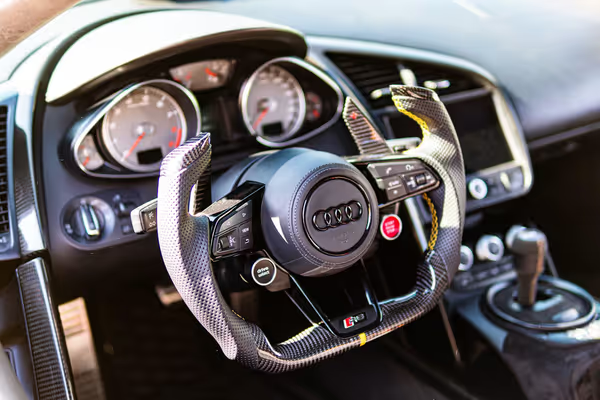
The Craft of Automotive Interiors.
An automobile's interior is where design becomes an experience, combining materials, ergonomics, craftsmanship, and atmosphere in a space built around the driver.
 Genevieve Laurent

Why the Porsche 911 Remains a Timeless Sports Car Icon.
For more than six decades, the Porsche 911 has balanced heritage, innovation, and everyday usability to become one of the world's most respected sports cars.
 Isabelle Fontaine

Mercedes-Benz 300 SL: The Birth of a Motoring Legend.
The Mercedes-Benz 300 SL combined innovative engineering, iconic gullwing doors, and motorsport success to become one of the most celebrated collector cars ever built.
Isabelle Fontaine
· Printed in pixels, with care.