
How the Supercar Evolved from Exotic Dream to Engineering Masterpiece.
From handcrafted V12 icons to hybrid hypercars, the supercar has continually evolved through innovation, design, and relentless engineering.

Few automotive categories have captured the imagination of enthusiasts quite like the supercar. These extraordinary machines have always represented the highest level of performance, design, and engineering available during their era. More than simply fast automobiles, supercars reflect the ambition of manufacturers willing to challenge convention and redefine what is technically possible.
The earliest supercars relied on dramatic styling, lightweight construction, and increasingly powerful engines to distinguish themselves from conventional sports cars. Their appeal extended beyond performance figures, becoming symbols of innovation and aspiration that inspired enthusiasts across generations. Owning or even seeing one was enough to create lasting memories, turning these automobiles into cultural icons as much as engineering achievements.
Over the decades, the definition of a supercar has continually evolved. Advances in aerodynamics, materials science, electronics, and hybrid technology have transformed how these vehicles perform without diminishing the excitement that has always defined the category. Modern supercars deliver levels of speed, precision, and reliability that would once have seemed unimaginable, yet they continue to embody the same spirit of pushing boundaries that inspired their earliest predecessors.
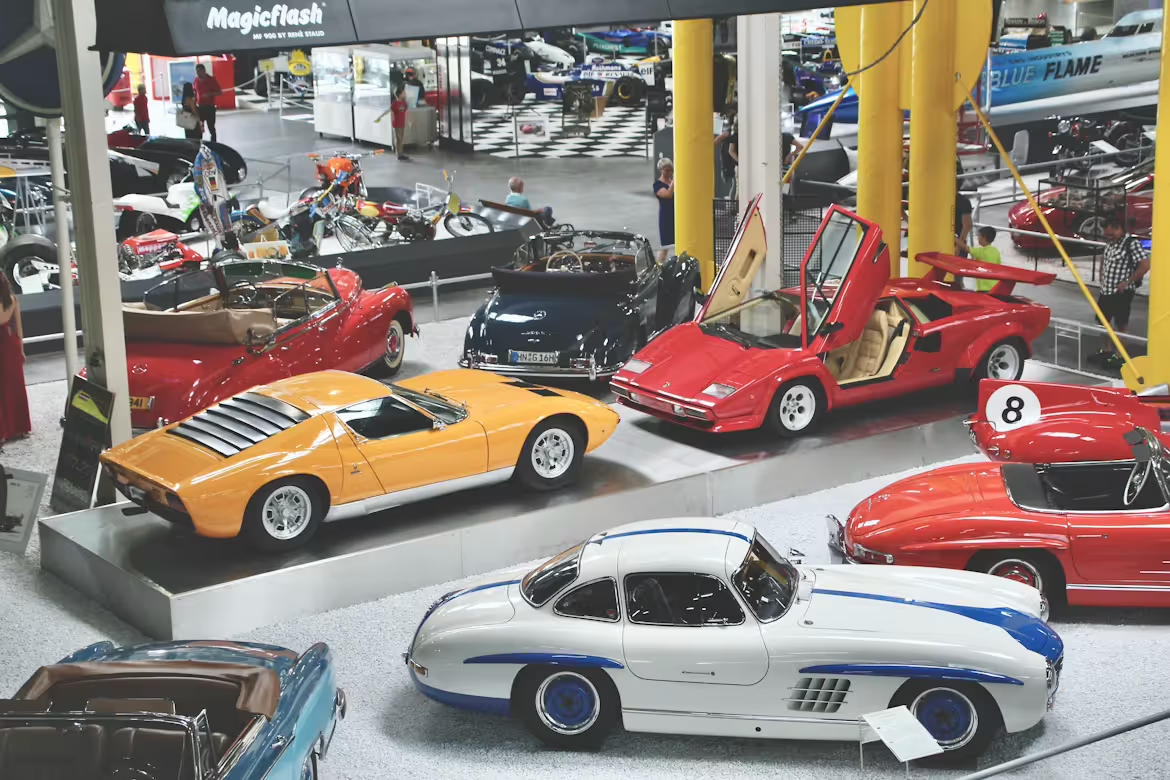
When Performance Became an Art Form
The emergence of the supercar marked a turning point in automotive history. Designers were no longer constrained solely by practicality or production efficiency. Instead, they began shaping automobiles that prioritised emotion alongside engineering, creating machines that looked as extraordinary as they performed.
Low-slung silhouettes, dramatic proportions, sculpted bodywork, and striking details became defining characteristics of the supercar. Every curve served a purpose, whether reducing aerodynamic drag, improving cooling efficiency, or creating visual drama. The result was an entirely new design language that quickly became associated with performance and exclusivity.
At the same time, engineers focused on achieving a delicate balance between power and weight. Lightweight materials, advanced suspension systems, and increasingly sophisticated chassis designs allowed drivers to explore higher levels of performance while maintaining confidence and control.
This combination of artistic design and engineering precision elevated the supercar beyond transportation. It became a statement of technological progress and creative ambition.
Every Generation Redefined Expectations
The history of the supercar is not defined by a single automobile but by continuous evolution. Each generation introduced breakthroughs that reshaped industry standards and challenged competitors to innovate further.
Early icons established the importance of mid-engine layouts and dramatic styling. Later generations embraced turbocharging, carbon-fibre construction, advanced aerodynamics, and electronic driver assistance systems that improved both performance and safety. Modern hybrid supercars now combine powerful combustion engines with sophisticated electric systems, delivering extraordinary acceleration while improving efficiency and responsiveness.
Despite these technological changes, one principle has remained constant. Every truly significant supercar has expanded the boundaries of what enthusiasts believed possible at the time of its introduction. Rather than following trends, these automobiles consistently create them.
This relentless pursuit of progress explains why the supercar continues to occupy such an influential position within automotive engineering. It serves as a proving ground where new technologies are refined before gradually influencing sports cars and luxury performance vehicles throughout the industry.

Engineering Beyond Horsepower
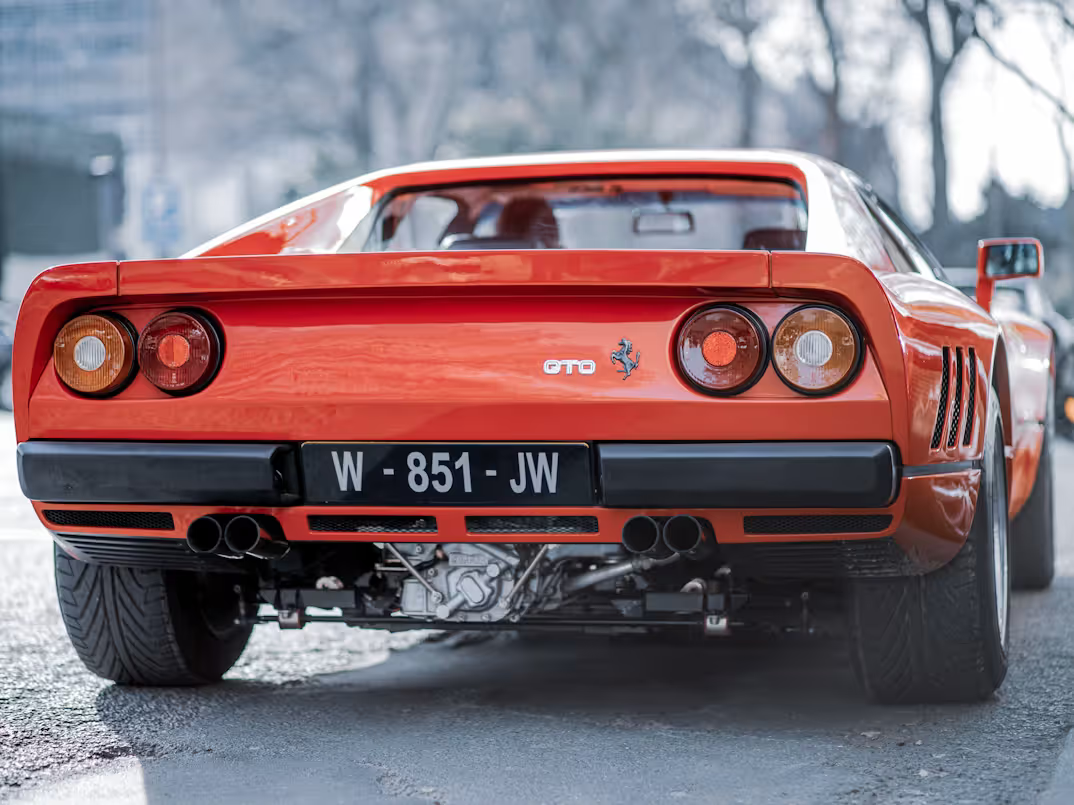
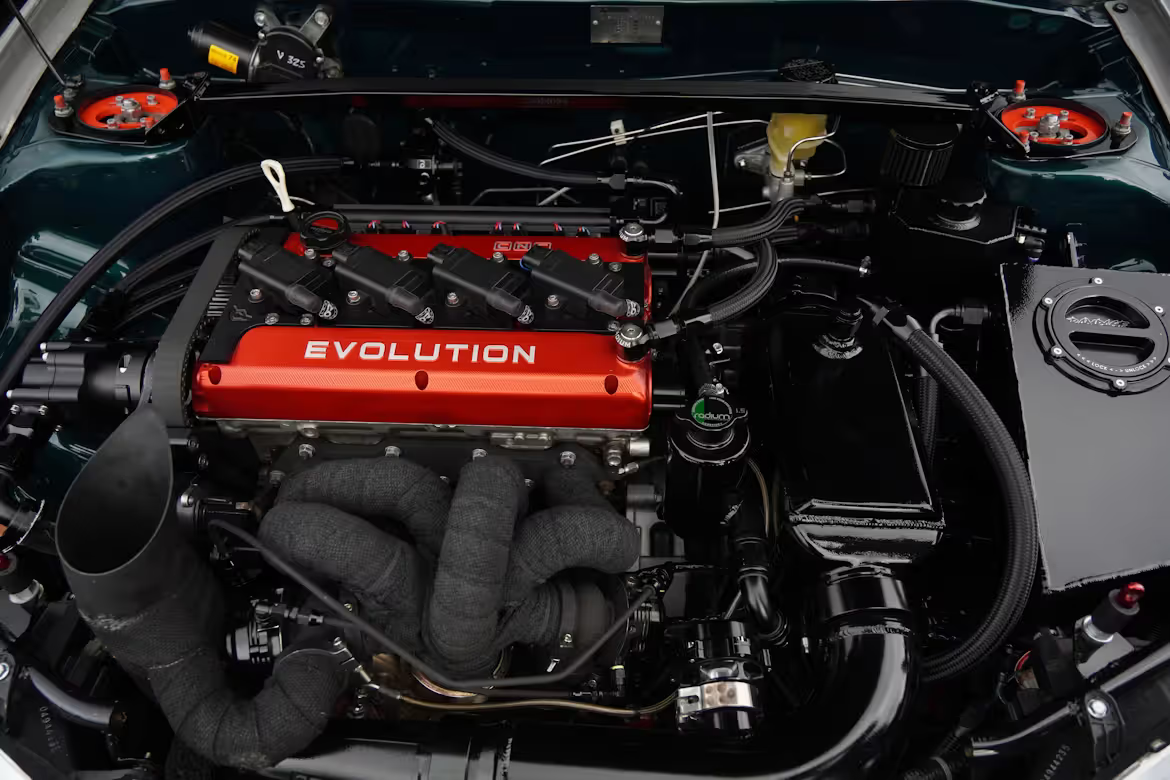
The modern supercar owes much of its success to advances that extend far beyond engine performance. While powerful engines continue to capture headlines, true performance now depends on how effectively every system works together. Lightweight construction, active aerodynamics, advanced suspension, and sophisticated electronics have become just as important as horsepower.
Carbon fibre transformed the industry by allowing engineers to create exceptionally strong yet lightweight structures that improve acceleration, handling, and safety simultaneously. Active aerodynamic systems continuously adjust airflow to balance downforce and drag, providing stability during high-speed cornering while reducing resistance on long straights.
Modern chassis management systems further enhance performance by analysing steering input, throttle position, braking force, and tyre grip hundreds of times every second. Rather than replacing driver skill, these technologies allow exceptional performance to be delivered with greater confidence and consistency.
Today's supercar therefore represents a complete engineering ecosystem where every component contributes to the overall driving experience.
"A true supercar is never defined by horsepower alone—it is the harmony of design, engineering, and innovation working as one."
The Digital Era of Performance
Technology has fundamentally changed how modern supercars are developed, tested, and driven. Long before a prototype reaches the road, engineers evaluate countless virtual simulations to optimise aerodynamics, structural rigidity, suspension geometry, and cooling performance.
Artificial intelligence, advanced computational modelling, and digital twins now allow manufacturers to predict vehicle behaviour with remarkable accuracy. This shortens development cycles while enabling engineers to explore solutions that would once have required years of physical testing.
Inside the cockpit, digital technology enhances rather than overwhelms the driving experience. Fully configurable instrument displays, intelligent drive modes, predictive stability systems, and adaptive suspension continuously respond to changing road conditions while keeping the driver at the centre of every decision.
Although modern supercars contain more software than ever before, their purpose remains unchanged: to deliver extraordinary performance with precision and confidence.
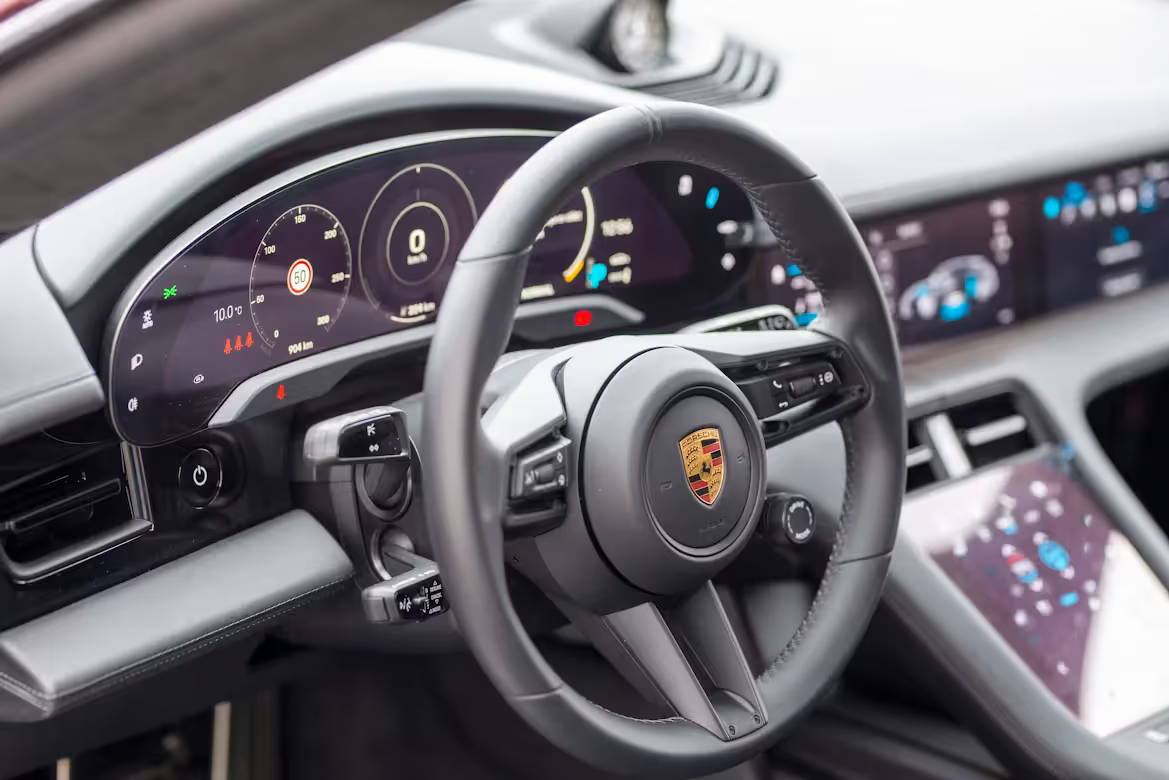
Why Emotion Still Defines Every Great Supercar
Despite decades of technological progress, the world's greatest supercars continue to succeed for one simple reason—they create an emotional response that extends beyond measurable performance.
A beautifully proportioned silhouette, the anticipation before pressing the start button, the confidence inspired by perfectly balanced handling, and the unforgettable experience of driving along an open mountain road all contribute to the lasting appeal of these remarkable automobiles.
Even as hybrid systems, active aerodynamics, and intelligent electronics become increasingly sophisticated, manufacturers continue searching for ways to preserve this emotional connection. They understand that enthusiasts remember how a car made them feel just as much as they remember its performance figures.
This balance between engineering excellence and emotional engagement explains why every generation of supercar continues to inspire new enthusiasts while remaining deeply connected to its heritage.
Looking Toward the Next Generation
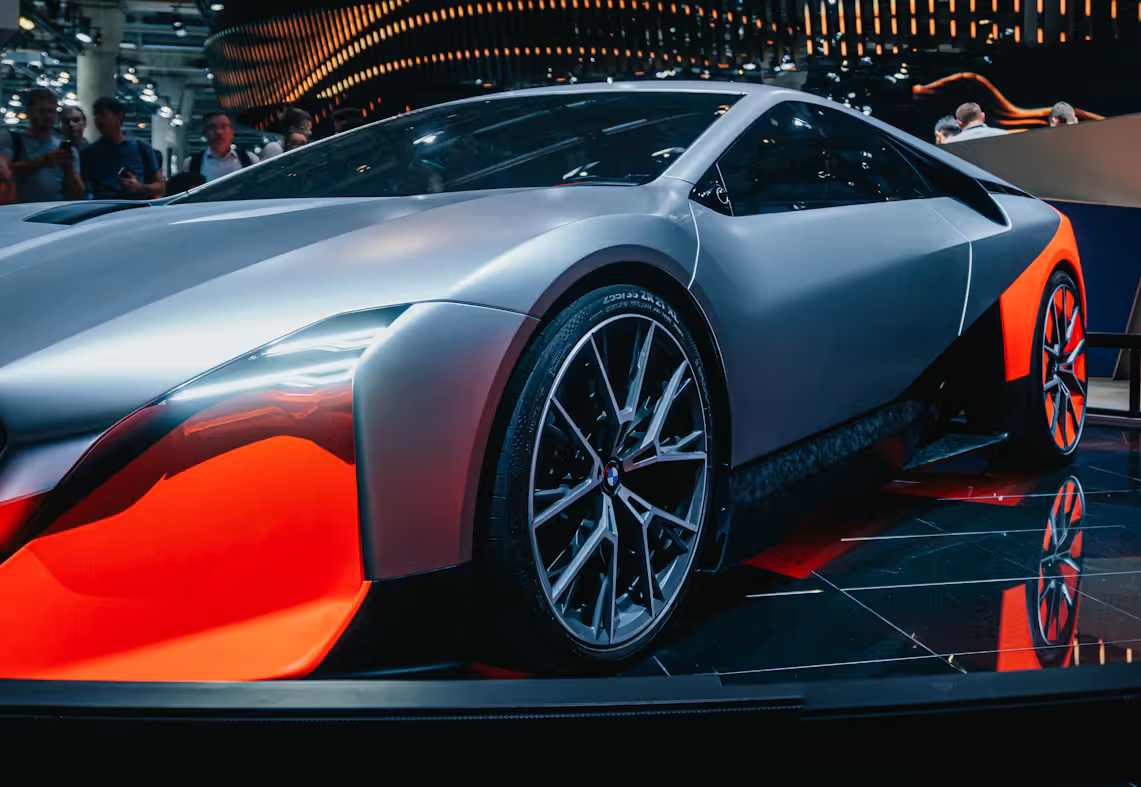
The next chapter of the supercar is already taking shape. Electrification, sustainable materials, advanced battery technology, and increasingly intelligent software are redefining what future performance automobiles can achieve.
Hybrid systems are becoming more sophisticated, delivering immediate electric torque while preserving the excitement of high-performance combustion engines. Fully electric supercars are demonstrating astonishing levels of acceleration and chassis control, while lightweight composite materials continue reducing mass without compromising structural strength.
At the same time, designers are exploring new aerodynamic concepts, digital interfaces, and manufacturing techniques that would have seemed impossible only a decade ago. Yet despite these innovations, the fundamental purpose of the supercar remains remarkably consistent: to push engineering boundaries while delivering an unforgettable driving experience.
The technologies may evolve, but the ambition behind the supercar never changes.
Conclusion
The supercar has travelled an extraordinary path from handcrafted exotic machines to highly sophisticated engineering masterpieces. Each generation has introduced new ideas, challenged established conventions, and inspired manufacturers to redefine the limits of automotive performance.
Its evolution reflects more than increasing speed. It tells the story of advances in design, aerodynamics, lightweight construction, electronics, and sustainable engineering—all working together to create automobiles that continue to captivate enthusiasts around the world.
As the automotive industry enters a new era of electrification and intelligent mobility, the supercar remains a symbol of innovation without compromise. It proves that progress is not simply about adopting new technologies, but about using them to create machines that continue to excite, inspire, and push the boundaries of what is possible.
Discover the engineering, design, and innovation behind the world's most extraordinary performance automobiles.
About the Writer

Alexander Moreau
Supercars Editor specializing in Ferrari, Lamborghini, McLaren, and Aston Martin. Covers performance, design, and the craftsmanship behind today's most celebrated high-performance automobiles.
Discussion
More from this issue.

The Rise of the Performance Wagon.
Performance wagons challenged the idea that practicality and driving excitement belonged to separate worlds, combining everyday versatility with serious performance.
 Alexander Moreau
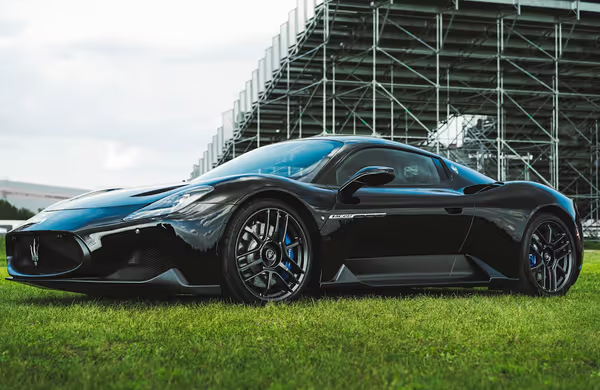
Why the Mid-Engine Layout Changed Performance Cars Forever.
The mid-engine layout transformed the way performance cars distribute weight, manage traction, and approach high-speed handling, becoming a defining architecture of the modern supercar.
 Marcus Chen
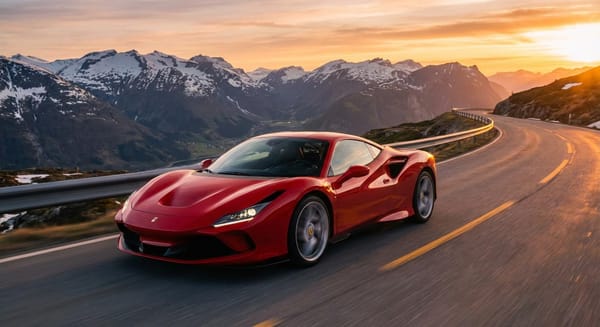
Why Ferrari Continues to Define the Modern Supercar.
For more than seven decades, Ferrari has represented the perfect balance of engineering, design, and emotion. Discover how the legendary Italian marque continues to influence the modern supercar through innovation, craftsmanship, and an unmistakable driving philosophy.
Alexander Moreau
· Printed in pixels, with care.