
The Enduring Appeal of Lightweight Sports Cars.
Reducing weight can transform a performance car, improving responsiveness, agility, and driver involvement without relying solely on greater power.

Performance-car development often appears to follow a familiar formula: more power, greater acceleration, larger brakes, wider tyres, and increasingly sophisticated technology.
But there is another approach that has remained remarkably effective for generations.
Make the car lighter.
Reducing mass can influence almost every aspect of a vehicle's behaviour. A lighter automobile can require less energy to accelerate, brake, and change direction. It can place fewer demands on its tyres and suspension while creating a greater sense of agility behind the wheel.
This philosophy has produced some of the most memorable sports cars in automotive history.
The appeal of a lightweight car is not simply found in its performance figures. It comes from the way the automobile responds to relatively small driver inputs. Steering can feel more immediate, braking more natural, and changes in direction more fluid.

Why Weight Matters
Every automobile must move its own mass before it can move forward. The heavier the vehicle, the more energy is required to accelerate it, slow it down, or change its direction.
Reducing weight therefore provides benefits across multiple areas rather than improving only one performance characteristic.
A lighter vehicle places less demand on its brakes. Its suspension has less mass to control, while its tyres have less work to do during acceleration and cornering. The result can be a car that feels more responsive without necessarily requiring extreme power.
This is particularly valuable on winding roads, where the ability to change direction quickly can be more important than maximum straight-line speed.
Weight also affects efficiency. A lighter automobile generally requires less energy to move, creating opportunities for improved fuel economy or, in electric vehicles, more efficient use of stored energy.
The benefits of reducing mass therefore extend beyond performance.
Lightness is an engineering advantage almost everywhere.
The Philosophy of Less
Lightweight engineering is not simply about removing components. It is about deciding which elements are essential and finding more efficient ways to achieve the same objective.
Engineers may use advanced materials, simplify structures, reduce unnecessary equipment, or redesign components to achieve the required strength with less mass.
This philosophy can produce surprisingly focused automobiles.
A lightweight sports car does not necessarily need enormous power or an extensive collection of electronic systems to feel exciting. Instead, its character comes from how efficiently it converts relatively modest inputs into movement.
That simplicity can become part of the emotional appeal.
The driver feels more directly involved because there is less mass and complexity separating an input from the vehicle's response.
Power-to-Weight Changes Everything
Power is one of the most frequently discussed measurements in performance-car development, but power alone does not determine how an automobile feels.
Power-to-weight ratio provides a more useful perspective. A powerful engine can deliver impressive acceleration, but if it is required to move a very heavy vehicle, some of that potential is spent overcoming mass.
A lighter automobile can extract greater performance from a smaller powertrain.
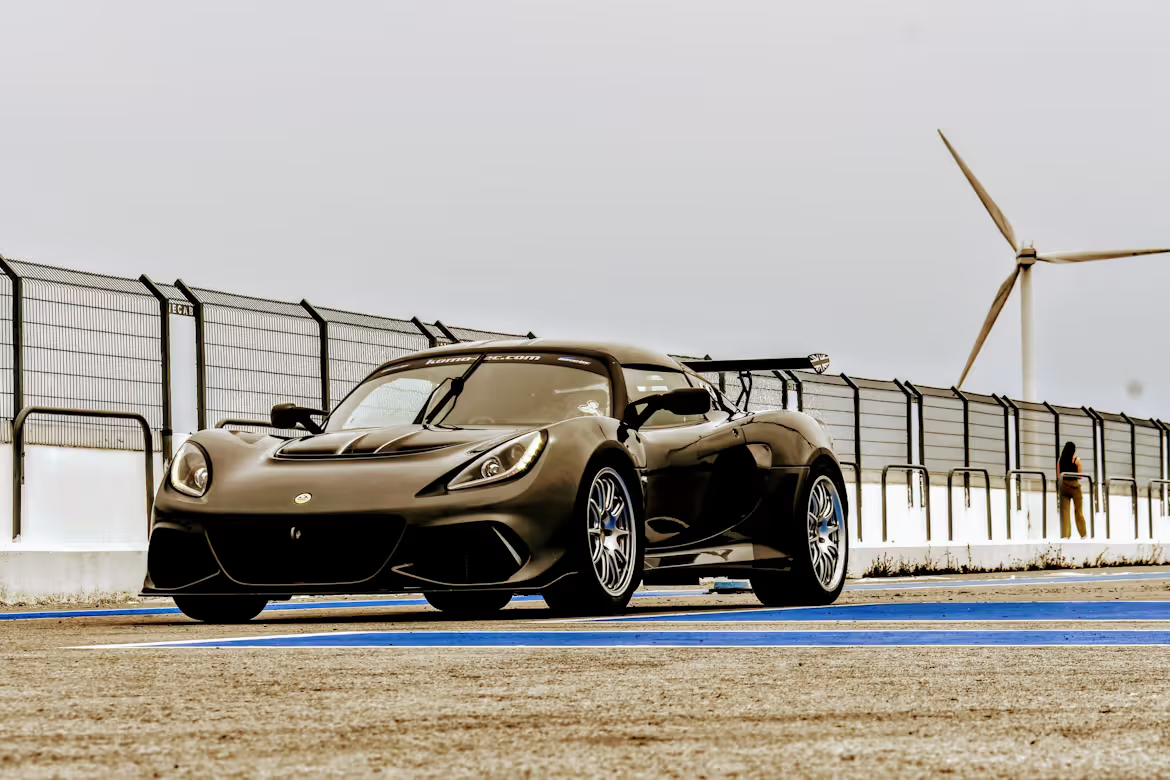
This principle helps explain why relatively modest sports cars can remain deeply engaging alongside much more powerful machinery. Their appeal may come from momentum, balance, and responsiveness rather than overwhelming acceleration.
On a winding road, maintaining speed through a sequence of corners can be more rewarding than repeatedly accelerating toward an enormous top speed.


Materials That Make Lightness Possible
Materials have played a central role in the pursuit of lower vehicle weight.
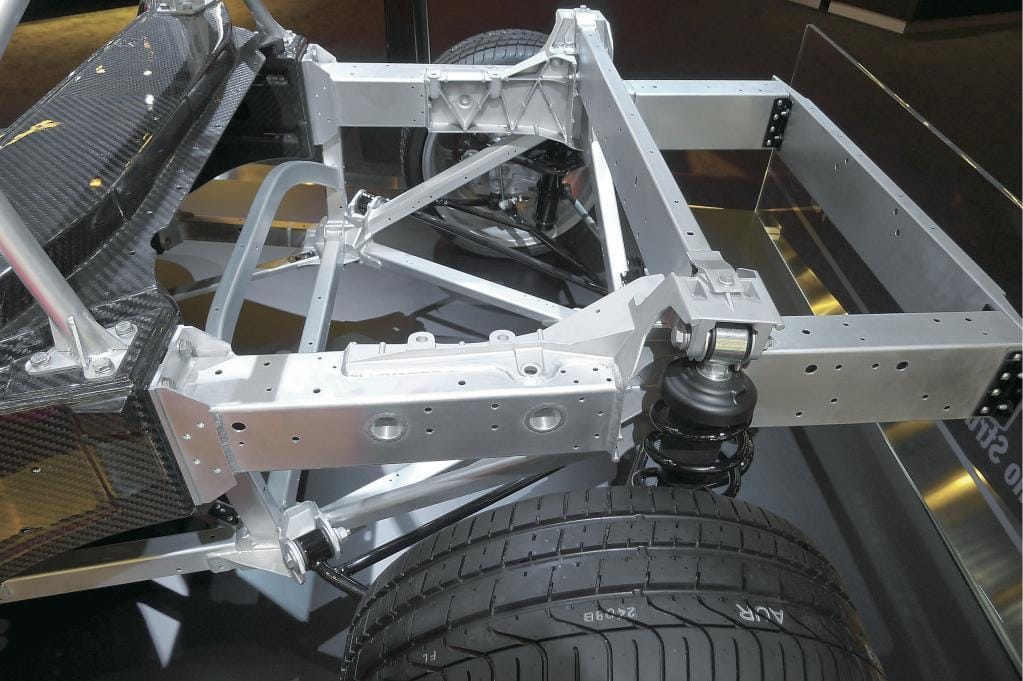
Aluminium allowed manufacturers to reduce mass while maintaining structural strength. Carbon fibre introduced even greater opportunities for weight reduction in high-performance applications, allowing engineers to create extremely rigid structures with carefully controlled mass.
Composite materials, advanced steels, magnesium, and other specialised materials have expanded the possibilities further.
But material selection is only part of the process.
Engineers must consider manufacturing complexity, durability, repairability, cost, safety, and the overall structure of the automobile. Removing weight without maintaining the necessary strength would achieve very little.
How Lightness Changes Handling
Reducing weight changes the way a car moves through almost every stage of a corner.
A lighter automobile generally requires less force to change direction, allowing engineers to create a chassis that feels responsive without relying on extremely aggressive settings. The result can be a car that reacts naturally to steering inputs rather than feeling as though it must overcome its own mass before responding.
Weight distribution also matters. Removing mass from the right areas can reduce the effort required from the suspension and help engineers achieve a more balanced chassis.
This becomes particularly noticeable on winding roads. Instead of relying on immense grip and power, a lightweight sports car can maintain momentum through corners, allowing the driver to focus on smooth inputs and precise positioning.
The experience becomes less about controlling enormous forces and more about working with the car.
"Lightness doesn't make a car feel slower. It makes every movement feel more immediate."
Why Light Cars Feel Different
A powerful automobile can overwhelm the senses with acceleration. A lightweight sports car tends to communicate in a quieter, more detailed way.
The driver notices how the car changes direction, how the suspension responds to a surface, and how the tyres react as the road changes. Because less mass is involved, these transitions can feel immediate and predictable.
This is one reason lightweight cars often remain engaging even when their outright performance is surpassed by much more powerful machinery.
They provide feedback rather than simply delivering speed.
For enthusiasts, that distinction can be important. Performance is not only about how quickly a car reaches a destination. It is also about how clearly the driver understands what the automobile is doing along the way.

The Driver Becomes Part of the Equation
Lightweight performance cars often encourage a different driving style.
Instead of relying heavily on power, the driver can focus on maintaining momentum, choosing smooth lines, and using the brakes and throttle carefully. Every input becomes part of the rhythm of the drive.
This can make relatively ordinary roads feel engaging. A sequence of corners becomes an opportunity to understand the balance of the chassis rather than simply an excuse to accelerate.
That involvement is one of the reasons lightweight sports cars have developed such a loyal following.
The automobile does not necessarily do everything for the driver.
It leaves enough of the experience to the person behind the wheel.
Lessons From Motorsport
Motorsport has consistently demonstrated the value of reducing weight. Racing teams operate under strict performance requirements where every unnecessary kilogram can influence acceleration, braking, tyre performance, and handling.
Lightweight materials developed for competition have gradually found their way into road cars. Carbon fibre, advanced aluminium structures, composite components, and increasingly sophisticated manufacturing methods have all benefited from lessons learned through demanding motorsport environments.
But racing also demonstrates that lightness must be carefully managed.
A component cannot simply be made thinner or smaller without considering durability and safety. Engineers must understand where mass can be removed and where structural strength must be preserved.
The most successful lightweight designs are therefore exercises in precision rather than minimalism for its own sake.
The Future of Lightweight Performance
Electrification presents a particularly interesting challenge for lightweight engineering.
Battery systems add significant mass, creating pressure for engineers to reduce weight elsewhere. Lightweight structures, advanced composites, efficient packaging, and improved manufacturing techniques can help offset some of that additional mass.
The objective will become increasingly important as manufacturers seek to create electric performance cars that feel agile rather than simply powerful.
New battery technologies may eventually reduce mass while increasing energy density, giving designers greater freedom to rethink vehicle architecture.
At the same time, software and chassis control can help engineers manage the characteristics of heavier vehicles.
But the fundamental principle remains unchanged.
The less mass a performance car has to move, the more efficiently it can respond.
Conclusion
The enduring appeal of lightweight sports cars comes from a simple engineering truth: reducing mass improves more than one aspect of performance.
Acceleration, braking, handling, efficiency, and driver involvement can all benefit from thoughtful weight reduction. More importantly, lightness can create an automobile that communicates clearly with its driver.
That is why the lightweight philosophy continues to matter even in an era obsessed with power and technology.
The fastest car is not always the most rewarding.
Sometimes the most memorable performance comes from a machine that simply weighs less, responds naturally, and allows the driver to become part of the experience.
Discover the engineering principles, materials, and technologies that continue to shape the world's most engaging performance automobiles.
About the Writer

James Villiers
Performance Engineering Editor focusing on engines, aerodynamics, chassis development, lightweight construction, and the technologies behind today's fastest road cars.
Discussion
More from this issue.
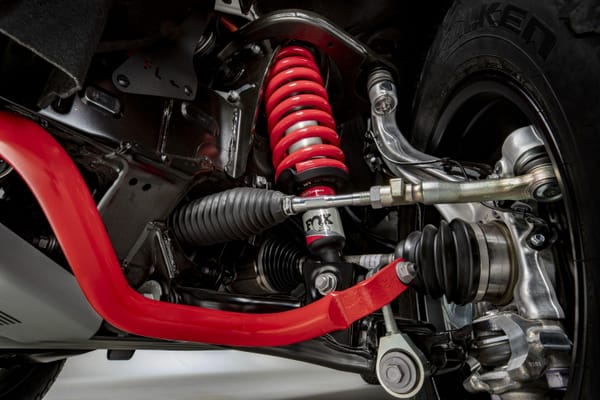
Why Suspension Is the Hidden Foundation of Performance.
Suspension rarely receives the attention given to engines or aerodynamics, yet it determines how effectively a performance car connects its power, tyres, and driver to the road.
 James Villiers

Why the Mid-Engine Layout Changed Performance Cars Forever.
The mid-engine layout transformed the way performance cars distribute weight, manage traction, and approach high-speed handling, becoming a defining architecture of the modern supercar.
 Marcus Chen

Inside the Engineering of the Bugatti Tourbillon.
The Bugatti Tourbillon represents a new era of hypercar engineering, combining a naturally aspirated V16 engine, hybrid technology, and uncompromising craftsmanship.
 Thomas Ashworth
· Printed in pixels, with care.