
The Evolution of Steering: From Mechanical Feel to Digital Precision.
From direct mechanical systems to sophisticated electronic assistance, steering has evolved dramatically while remaining at the heart of the driver's connection with the road.
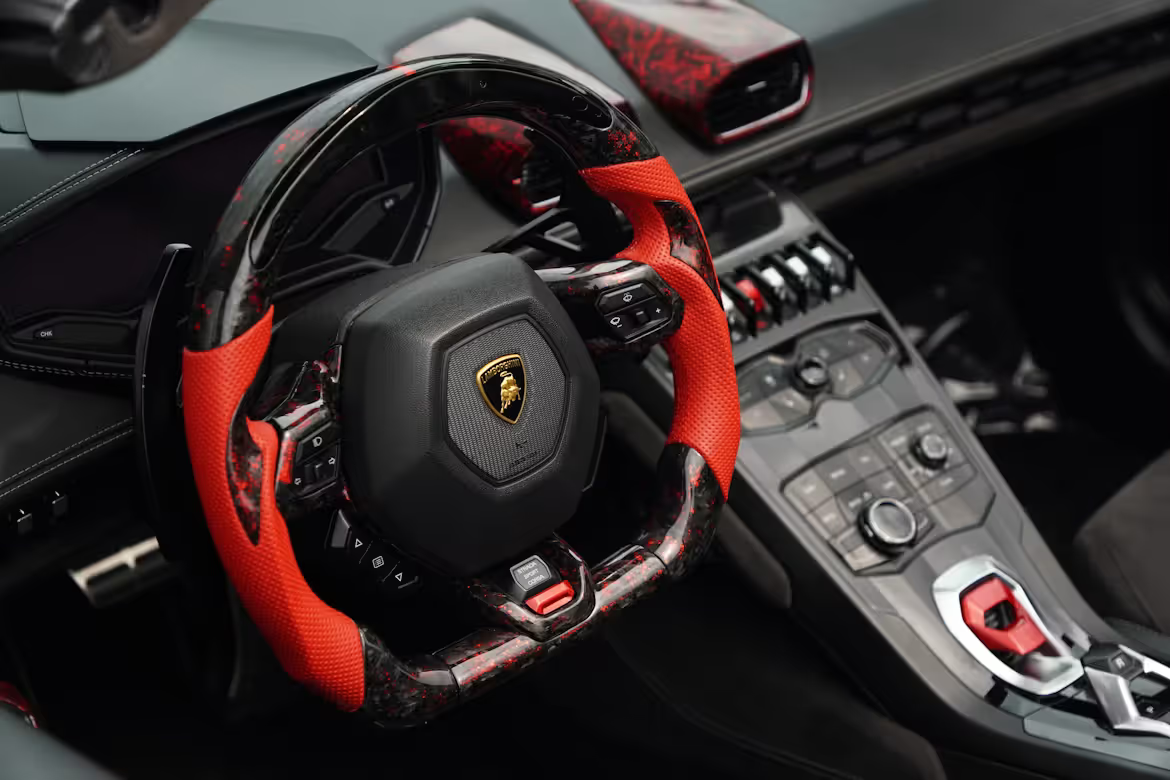
Few interactions between a driver and an automobile are as fundamental as turning the steering wheel. Every corner, lane change, parking manoeuvre, and change of direction begins with a simple physical input that connects the driver to the movement of the vehicle.
Yet behind that apparently simple action is a remarkably sophisticated engineering system.
Steering technology has evolved from direct mechanical mechanisms to hydraulic assistance and, eventually, electronically controlled systems capable of adjusting their characteristics according to driving conditions. Modern automobiles can provide effortless assistance at low speeds and precise control at higher speeds, often without the driver consciously considering the technology responsible.
For performance cars, however, steering represents something more than convenience.
It is part of the conversation between driver and machine.
The best systems do not simply point the car in the desired direction. They communicate how the automobile is responding to the road, giving the driver confidence to make precise inputs.

When Steering Was Purely Mechanical
Early automobile steering systems relied heavily on mechanical connections between the steering wheel and the front wheels. The driver's input was transmitted through components such as steering columns, gears, linkages, and steering arms.
This arrangement provided a direct relationship between steering input and vehicle movement, but it also required considerable physical effort, particularly when manoeuvring heavier automobiles at low speeds.
As vehicles became larger, heavier, and more powerful, engineers needed to find ways to reduce the effort required from the driver without sacrificing control.
The solution was assistance.
But adding assistance created a new engineering challenge: how do you make steering easier without removing the sense of connection that makes driving engaging?
That question continues to influence steering development today.
The Rise of Power Assistance
Hydraulic power steering transformed everyday driving by using hydraulic pressure to help amplify the driver's steering input. Manoeuvring a heavy vehicle became considerably easier, particularly during parking and low-speed driving.
For performance automobiles, however, calibration became crucial.
Too much assistance could make the steering feel disconnected and vague. Too little could make the vehicle unnecessarily demanding. Engineers therefore had to determine how much assistance was appropriate at different speeds and how the system should respond to changes in steering input.
This created a new discipline within chassis engineering: steering could no longer be judged purely by mechanical accuracy.
It had to be judged by feel.
What Makes Steering Feel Good?
Steering feel is difficult to define because it involves both measurable vehicle behaviour and human perception.
A good steering system responds predictably to the driver's input. It should allow the driver to understand how much the front tyres are working and how the vehicle is responding as a corner develops.
This does not necessarily mean the steering must feel heavy. Weight and feedback are different characteristics.
A light steering system can still be precise and communicative, while a heavy system can feel artificial if it provides little useful information.
For performance cars, the goal is to create a relationship where the driver's inputs feel natural and the vehicle's response is easy to understand.
That connection can transform a technically capable automobile into an engaging one.
Calibrating a Performance Car
Steering calibration becomes particularly important when engineers are developing a performance automobile.
The steering ratio determines how much the front wheels move in response to steering input. A quicker ratio can make the car respond more immediately, while a slower ratio may provide a calmer and more progressive character.
Suspension geometry also plays an important role. Steering cannot be developed in isolation because tyres, suspension components, alignment, chassis stiffness, and weight distribution all influence the driver's perception.
This is why two automobiles with similar steering hardware can feel completely different.
The system is only one part of the experience.
The real character comes from how the entire vehicle works together.

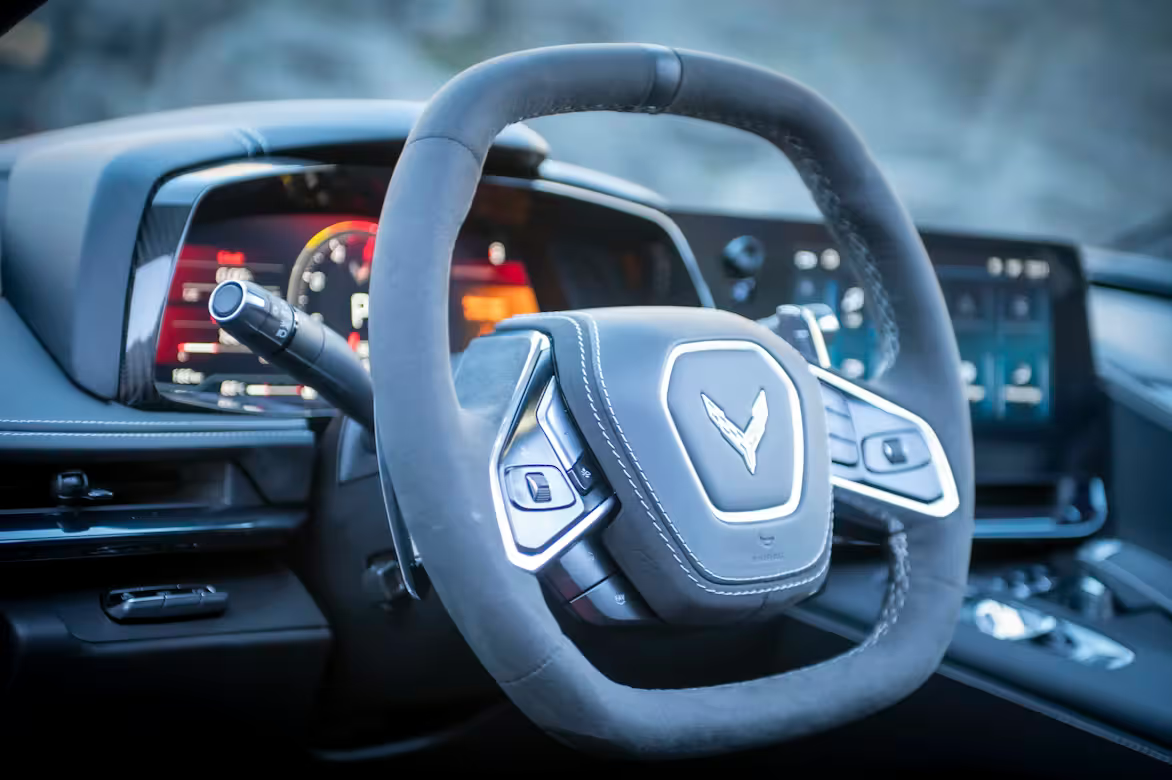
Hydraulic Assistance Meets Electric Precision
Hydraulic power steering became a defining technology for generations of automobiles, but it was not without limitations. Hydraulic systems require a pump and associated hardware, which consume energy even when steering assistance is not heavily needed.
Electric power steering introduced a different approach. An electric motor provides assistance according to the driver's input and vehicle conditions, allowing the system to operate more efficiently and giving engineers greater control over its calibration.
The change also opened new possibilities for performance-car development.
Engineers can adjust assistance according to speed and driving mode, creating a lighter character during low-speed manoeuvres and a more deliberate response when driving quickly. Software can influence the character of the system without requiring fundamental changes to the mechanical hardware.
This flexibility has become one of the defining advantages of modern steering technology.
"The best steering does more than change direction. It tells the driver what the car is doing."
When Software Becomes Part of Steering
Modern electronic steering systems allow software to become an important part of the driver's experience.
Different driving modes can alter steering weight and response, while electronic systems can continuously adapt assistance according to speed and operating conditions. Engineers can also use software to fine-tune the relationship between steering input and vehicle response.
This creates an enormous calibration opportunity.
But greater flexibility also creates a challenge. A steering system can be technically precise while still feeling artificial if the calibration does not communicate useful information to the driver.

Why Feedback Still Matters
As vehicles become increasingly sophisticated, steering feedback remains one of the qualities enthusiasts care about most.
A driver wants to understand what the front tyres are doing. As grip changes through a corner, subtle variations in steering resistance and vehicle response can provide information about how the car is behaving.
This is especially important during enthusiastic driving.
The driver does not need every mechanical vibration to reach the steering wheel. Excessive information can become distracting. Instead, the ideal system communicates the information that helps the driver make better decisions.
This is why steering feel cannot be reduced to a single measurement.
It is a combination of accuracy, response, consistency, weight, and communication.
The best systems make these qualities feel almost invisible because the driver simply feels connected to the car.
The Possibility of Digital Steering
The future of steering could introduce an even more significant transformation. Steer-by-wire technology can separate the steering wheel from a traditional mechanical connection to the front wheels, allowing electronic signals to control steering systems.
Such technology creates new possibilities for vehicle packaging, steering ratios, and adjustable driving characteristics. It could allow manufacturers to tailor steering response according to different situations without relying on a fixed mechanical relationship.
But it also creates an important philosophical question.
If the traditional mechanical connection becomes less direct, how do engineers preserve the sense of connection that enthusiasts value?
The answer will likely depend on sophisticated feedback systems capable of recreating useful information through carefully controlled electronic responses.
Technology may change the mechanism.
The driver's need for confidence will remain.
Steering in the Electric Era
Electrification adds another dimension to steering development. Electric vehicles offer different weight distributions, packaging opportunities, and powertrain characteristics, requiring engineers to reconsider how the chassis communicates with the driver.
A low-mounted battery can influence the vehicle's centre of gravity, while different motor layouts can alter weight distribution and traction characteristics. Steering calibration must therefore work with an entirely different set of vehicle dynamics.
Yet the objective remains familiar.
The driver should understand where the car is going and how it is responding.
Whether the automobile is powered by an internal-combustion engine, a hybrid system, or electric motors, steering remains one of the primary interfaces between human and machine.
Conclusion
Steering has travelled a remarkable distance from the purely mechanical systems of early automobiles to today's sophisticated electronically assisted technology.
Hydraulic systems made driving easier. Electric assistance introduced greater efficiency and calibration flexibility. Software has now become an important part of how steering characteristics are created, while steer-by-wire technology could redefine the physical relationship between driver and front wheels.
Yet the fundamental purpose has never changed.
A driver needs to trust the car.
The most successful steering systems achieve that trust by combining precision with communication. They make the vehicle feel predictable without becoming lifeless, responsive without becoming nervous, and technologically advanced without losing the human connection at the centre of driving.
The hardware may continue to evolve.
But good steering will always begin with one simple idea: the driver should feel connected to the road.
Discover the engineering principles, materials, and technologies shaping the world's most engaging performance automobiles.
About the Writer

James Villiers
Performance Engineering Editor focusing on engines, aerodynamics, chassis development, lightweight construction, and the technologies behind today's fastest road cars.
Discussion
More from this issue.
Why Suspension Is the Hidden Foundation of Performance.
Suspension rarely receives the attention given to engines or aerodynamics, yet it determines how effectively a performance car connects its power, tyres, and driver to the road.
 James Villiers

Why the Mid-Engine Layout Changed Performance Cars Forever.
The mid-engine layout transformed the way performance cars distribute weight, manage traction, and approach high-speed handling, becoming a defining architecture of the modern supercar.
 Marcus Chen

Inside the Engineering of the Bugatti Tourbillon.
The Bugatti Tourbillon represents a new era of hypercar engineering, combining a naturally aspirated V16 engine, hybrid technology, and uncompromising craftsmanship.
 Thomas Ashworth
· Printed in pixels, with care.