
When a Supercar Becomes a Car You Can Actually Live With.
The most compelling modern supercars balance extraordinary performance with comfort, usability, and the ability to make everyday driving feel special.

The traditional image of a supercar is built around extremes. Low bodywork, dramatic proportions, enormous performance, and a driving position that makes every journey feel like an event. These qualities are part of what makes supercars so compelling, but they have also created a long-standing compromise: the more focused a car becomes, the harder it can be to live with every day.
Modern supercars are challenging that assumption.
Advances in suspension technology, electronics, materials, cabin design, and powertrain engineering have allowed manufacturers to create automobiles that can deliver extraordinary performance without becoming exhausting outside a racetrack. A modern supercar can be capable of astonishing acceleration on one road and remarkably composed during an ordinary journey on another.
That change represents an important evolution in the category.
The goal is no longer simply to build the fastest possible machine. It is to create a performance automobile that can make almost any journey feel special while remaining approachable enough to use regularly.
The Traditional Supercar Compromise
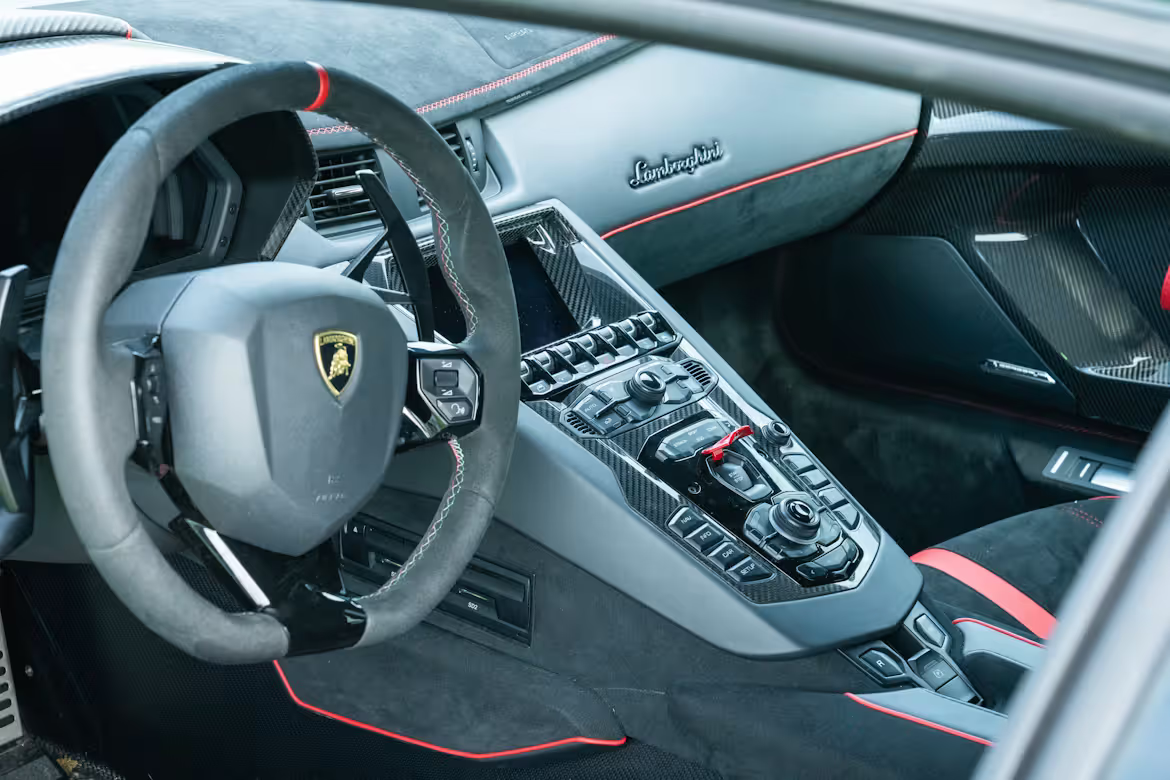
For much of automotive history, owning a supercar meant accepting certain inconveniences. Extreme performance often came with firm suspension, limited visibility, difficult entry and exit, minimal storage, and interiors designed primarily around the driving experience.
Those compromises were part of the appeal for some enthusiasts. A focused machine demanded involvement from its driver and made even a short journey feel memorable. But they also limited how often such automobiles could realistically be used.
Modern engineering has changed the balance.
Adaptive suspension systems can alter the character of a vehicle depending on the road. Electronic systems can make throttle and transmission responses more predictable, while improved seating and cabin insulation make longer journeys considerably easier.
The result is not a diluted supercar.
Instead, it is a more sophisticated interpretation of the same idea.
The automobile can remain extraordinary when driven hard while becoming far more relaxed when conditions demand it.
Making Extreme Performance Approachable
One of the biggest changes in modern supercars is the way technology has made enormous performance easier to access.
Sophisticated traction and stability systems can help manage power delivery, while advanced transmissions shift rapidly without requiring constant driver intervention. Variable driving modes allow the character of the automobile to change depending on whether the driver is travelling through a city, cruising on a highway, or exploring a winding road.
These systems do not necessarily remove involvement. When carefully calibrated, they allow the driver to choose how much of the automobile's capability to experience.
A relaxed setting can make the car smooth and predictable. A more aggressive configuration can sharpen throttle response, steering, suspension, and transmission behaviour when the road opens up.
This adaptability is one of the defining characteristics of the modern supercar.
It can be intimidating when you want it to be.
And remarkably friendly when you don't.
Comfort Without Losing Character
Ride quality is one of the most difficult areas to balance in a high-performance automobile. A suspension system designed exclusively for maximum cornering performance can become uncomfortable on imperfect roads, while an overly soft setup can reduce the precision expected from a supercar.
Adaptive suspension has changed that equation by allowing engineers to create multiple personalities within the same vehicle.
The car can remain controlled during enthusiastic driving while becoming more compliant when travelling over uneven urban streets or long motorway sections. Improved damping technology and sophisticated chassis control further refine the relationship between comfort and handling.
The result is a broader performance envelope.
Instead of forcing the driver to choose between comfort and excitement, the modern supercar can provide both—just at different moments.


Visibility, Ergonomics, and Technology
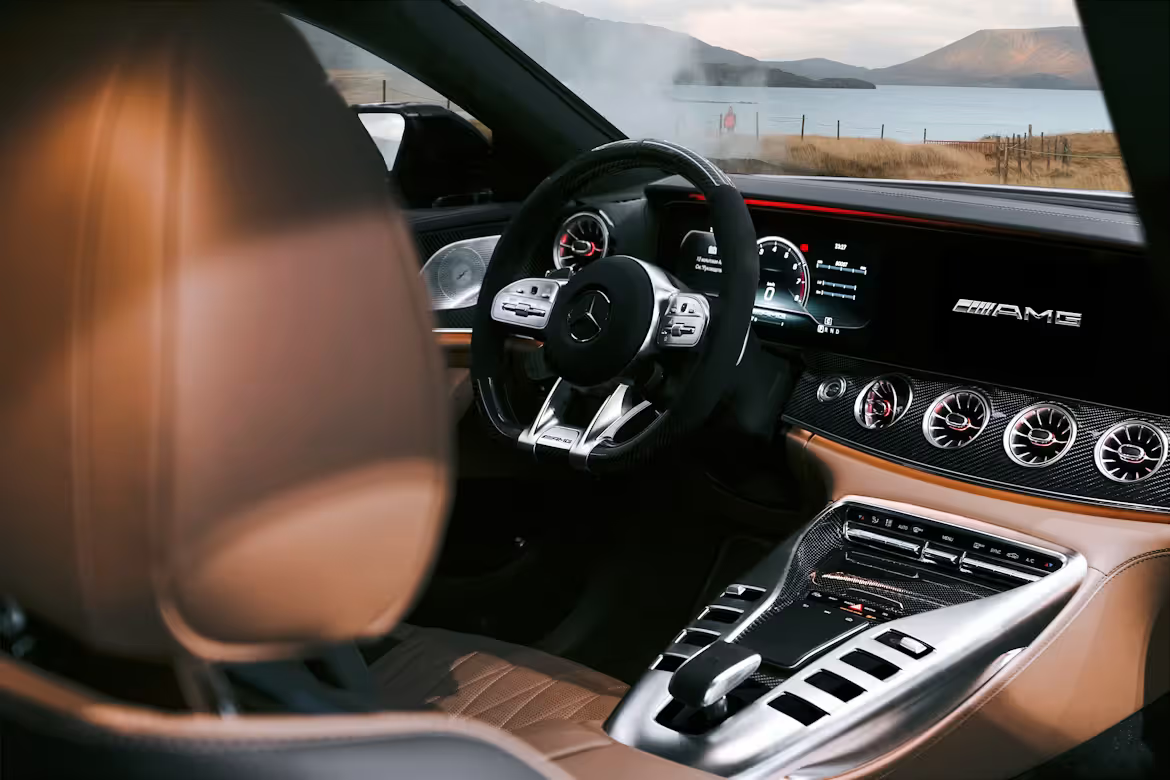
Performance is only useful when the driver can confidently place the car on the road. Modern supercar designers therefore pay close attention to visibility, seating position, steering geometry, and the arrangement of controls.
Earlier generations could make basic manoeuvres feel like an event. Modern cameras, parking sensors, improved mirrors, and carefully designed driver interfaces have made low-slung performance cars considerably easier to manage in everyday environments.
The cockpit itself has also become more intuitive. Important controls are positioned within easy reach, while configurable displays can provide navigation, vehicle information, and performance data without overwhelming the driver.
These improvements may not appear as exciting as an increase in horsepower, but they have an important effect: they make the driver more comfortable using the car regularly.
"The best modern supercars don't make performance easier to admire. They make it easier to enjoy."
Everyday Performance
A supercar does not need a racetrack to demonstrate its character.
Modern performance automobiles are designed to provide meaningful feedback even at ordinary road speeds. Steering precision, throttle response, chassis balance, and the sound or sensation of the powertrain can make a short drive feel rewarding without requiring extreme speeds.
This is particularly important on public roads, where outright performance can only be used within appropriate limits. The experience becomes less about reaching a numerical limit and more about appreciating how naturally the automobile responds to the driver's inputs.
A well-engineered supercar can therefore remain engaging during a quiet morning drive, a winding countryside journey, or a longer trip between cities.
Its performance becomes part of the character rather than something that must constantly be demonstrated.

Practicality Without Losing Character
Practicality has traditionally been one of the weakest areas of the supercar. Limited luggage space, compact cabins, low ground clearance, and difficult access can make everyday use challenging.
Modern engineering has gradually addressed some of these limitations.
Better packaging can provide additional storage without dramatically changing the proportions of the vehicle. Lift systems can raise the front of low-slung cars when negotiating steep entrances, while improved seating and cabin layouts make longer journeys more comfortable.
None of these features turns a supercar into a family vehicle—and they are not supposed to.
Instead, they remove unnecessary obstacles between the driver and the experience.
That distinction matters. Practicality in a supercar is not about making it ordinary. It is about making extraordinary performance easier to experience more often.
Usability Can Strengthen the Experience
There is an interesting relationship between usability and emotional appeal. When a supercar is difficult to operate, the owner may reserve it for special occasions. When the same automobile becomes easier to live with, it can become part of everyday life.
That creates more opportunities to build memories.
A spontaneous evening drive, a weekend road trip, or an early-morning journey through the countryside becomes possible without extensive preparation. The automobile remains special, but it no longer needs a special occasion.
This may be one of the most important developments in the modern supercar.
The greatest performance machine is not necessarily the one that produces the most impressive numbers.
It may be the one that makes you want to drive it tomorrow.
The Future of Everyday Supercars
Future supercars will likely become even more adaptable. Electrification will provide new possibilities for smooth low-speed operation and instant performance, while increasingly sophisticated software will allow vehicles to adjust their character according to road conditions and driver preferences.
Advanced materials can reduce weight, while intelligent suspension and aerodynamic systems can continue expanding the gap between everyday comfort and extreme performance.
The challenge will be preserving the emotional character that makes a supercar desirable in the first place.
Technology should remove unnecessary compromises without removing personality.
The ideal future supercar will therefore remain visually dramatic, technically extraordinary, and emotionally engaging—but it will also be capable of fitting naturally into the life of the person who drives it.
Conclusion
The modern supercar has evolved beyond the idea that extreme performance must automatically mean extreme inconvenience.
Through adaptive suspension, sophisticated electronics, improved ergonomics, better visibility, intelligent packaging, and increasingly refined powertrains, today's performance cars can offer extraordinary capability while remaining surprisingly approachable.
That does not make them less special.
It makes them more usable.
And when a supercar can be driven regularly rather than simply admired occasionally, its greatest achievement may not be how fast it can go.
It may be how often it makes an ordinary journey feel extraordinary.
Discover the design, engineering, performance, and experiences behind the world's most extraordinary automobiles.
About the Writer

Alexander Moreau
Supercars Editor specializing in Ferrari, Lamborghini, McLaren, and Aston Martin. Covers performance, design, and the craftsmanship behind today's most celebrated high-performance automobiles.
Discussion
More from this issue.

The Rise of the Performance Wagon.
Performance wagons challenged the idea that practicality and driving excitement belonged to separate worlds, combining everyday versatility with serious performance.
 Alexander Moreau
Why the Mid-Engine Layout Changed Performance Cars Forever.
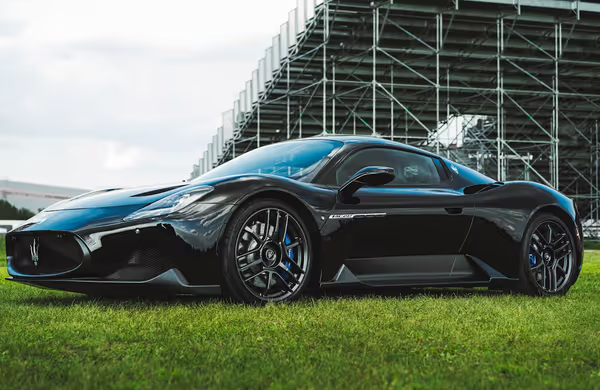
The mid-engine layout transformed the way performance cars distribute weight, manage traction, and approach high-speed handling, becoming a defining architecture of the modern supercar.
 Marcus Chen
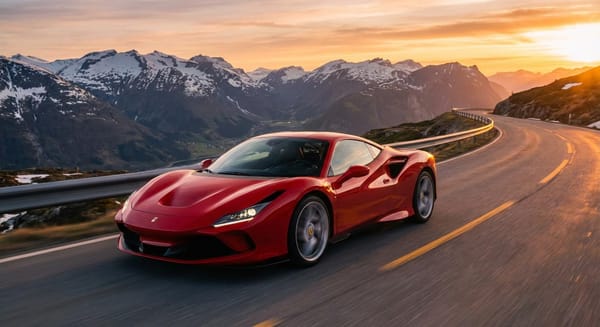
Why Ferrari Continues to Define the Modern Supercar.
For more than seven decades, Ferrari has represented the perfect balance of engineering, design, and emotion. Discover how the legendary Italian marque continues to influence the modern supercar through innovation, craftsmanship, and an unmistakable driving philosophy.
Alexander Moreau
· Printed in pixels, with care.